
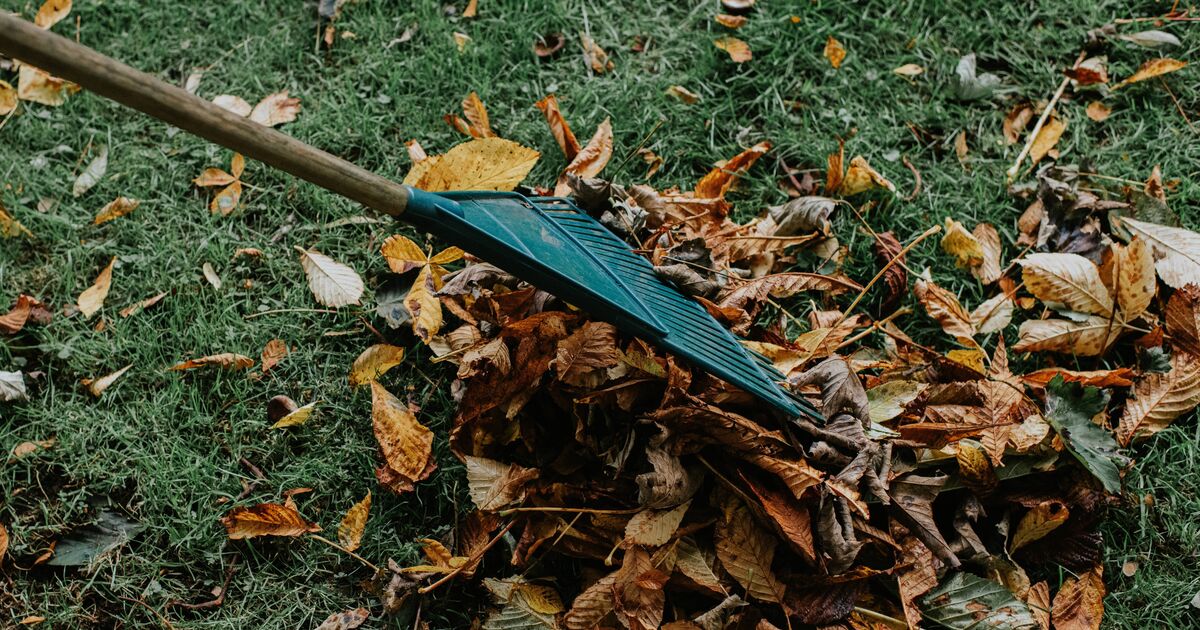
Gardeners are being urged not to clear autumn leaves from their lawns as their “business is far from over.” According to ecological writer Alys Fowler, they are “called leaves for a reason” and can prove beneficial to the plants from which they fell. She explains this is because they help soil retain more carbon.
Alys suggests that this benefits not only your lawn but your entire garden by enhancing mineral and water absorption. The leaves also provide shelter for insects, beetles and worms, she notes. Whilst the leaves may initially appear untidy, the experienced gardener points out that winter winds will naturally disperse them. Worms can then decompose them and incorporate them deeper into the soil.
Writing in Gardeners’ World magazine, Alys states: “They’re called leaves for a reason; to be left alone to do their essential work. They may look spent, but their business is far from done, both for the plant they left and the wider world around them.”
She continued: “Soil can hold up to 30 per cent more carbon if the autumn leaves are left to rot. Carbon feeds the soil food web, particularly mycorrhizal fungi, which improves not only the trees’ ability to take up water and minerals, but also the lawn and wider garden.”
Alys points to the elephant hawk moth, with its striking pink and olive green colouring, as an example of wildlife that depends on decomposing leaves. She explains that leaf litter serves as an essential habitat where moths such as the elephant hawk can form cocoons.
However, Lawn Association chairman David Hedges-Gower warns that leaves can “suffocate and kill” grass, claiming that leafmould has the potential to destroy even the most robust lawns.
He argues that allowing leaves to decompose in your garden will necessitate overseeding come spring, along with regular watering to preserve its condition. He does, however, acknowledge that raking leaves and placing them on garden beds can help lawns withstand winter conditions.
He stated: “Neglecting our lawns by leaving fallen leaves not only harms them but creates unnecessary work each year, increasing our unsustainable footprint. Unlike other garden areas, lawns require attention year-round.”
David maintains that “protecting” your lawn should be a “priority” as it contributes to creating a sustainable outdoor environment and “enhances your garden’s beauty year round”. He advocates for making lawn maintenance both manageable and environmentally friendly.
The Royal Horticultural Society notes that leafmould, particularly when sufficiently decomposed, can serve as seed-sowing compost or garden compost. Leafmould that has been decomposing for less than two years can be utilised as mulch, soil improver, autumn top-dressing for lawns, or winter covering for bare soil.
It can, however, become contaminated with weeds, meaning gardeners creating their own leafmould compost should exercise caution. Additionally, leaves collected from streets may be tainted with litter and should be inspected before being added to a leafmould heap.
Comments are closed.