
Think about what it’s like to be a gardener — peacefulness, joy, a place filled with things you grew with your own hands.
What if that same experience became digital?
“You disconnect yourself from the world, you go into the shadows of your yard, or the corner of your balcony or your apartment, and you spend hours cultivating things to life,” says Carmi Levy, a technology analyst and journalist based in London, Ont..
Digital gardens are online thought-webs that allow users to track their thoughts and find links between them. Unlike blogs, there is no order to a digital garden — they grow organically and encourage non-linear thinking that changes and grows over time.
Anne-Laure Le Cunff, founder of Ness Labs and a neuroscientist at King’s College London, U.K. created a gardening guide within her public digital garden called “Mental Nodes.”
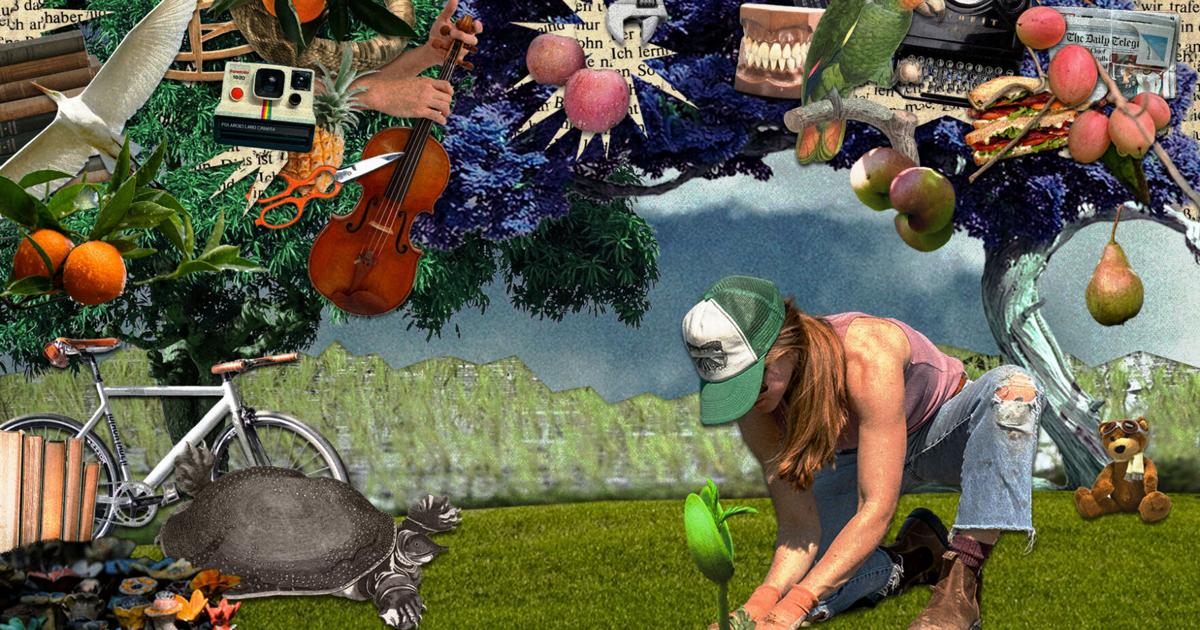
Her garden guide consists of three elements: seeds, trees and fruits.
Seeds are the basis of a digital garden — they’re the quick, messy notes you take right away when you want to add a thought. The most important thing isn’t that they’re well-worded or even insightful, it’s that they’re your own unique thoughts.
If you took notes on a movie scene you loved, your notes wouldn’t just be a recount of the scene, but why you loved the scene and what it made you think about.
Trees form when links start to sprout between thoughts: every note will be connected to another. If you created a seed for a movie saying, “I enjoyed watching the love between characters develop,” the word “love” could be hyperlinked to another page where you planted a seed way back about the meaning of love.
From there, each prior connection, like romance book reviews or Valentine’s Day ideas relating to “love,” gets linked back to the ‘meaning of love’ seed. It’s like Wikipedia for your brain.
Finally, there are the fruits of our thought-logging labour. From the many connections formed through the linked “trees,” it is easy to see how your thoughts come together to form an idea.
Some digital gardens create a visual web that shows which topics have more links and where your interests lie. In looking at the connections to “love,” for example, you might now have an essay idea on how your perspective of love has changed throughout your life.
The idea of the digital garden was first created in 1998 by Mark Bernstein to explore the internet in a fun and free way. It wasn’t until 2010 that the concept began to re-emerge.

All photos are from the 2025 Do Not Disturb Issue photoshoot, Oct. 8, 2025.
Veronica Miranda / GAZETTE
Levy says that the re-emergence of digital gardens is easy to understand given the state of the real and digital worlds in recent years.
“There’s no question that planet Earth is a pretty tough place to be,” he says.
“It makes a lot of sense for people who are looking for refuge from all of this chaos to seek that protection in digital spaces,” says Levy.
He describes how, although previous generations may have used blogs or social media as a place of refuge, they no longer serve that purpose because social media has been “morphed into this algorithmically driven mess.”
Levy says that digital gardens, however, serve as a way to disconnect and engage with what brings you joy.
“Unlike social media, it isn’t about getting more followers: it’s not about having more likes or reactions or comments or responses. Ultimately, it’s about just being in the moment and getting in touch with your creative side.”
He notes that, in particular, “mindful media consumption stands in direct contrast to doomscrolling.”
The average person spends nearly 2.5 hours scrolling on social media every day. Sophie Hopper, a third-year criminology and sociology student, says she scrolls usually to distract herself.
“I don’t repost things, or like, comment, or anything. It’s kind of just mindless entertainment, a stimulant,” says Hopper.
Rachel Davies, a third-year sociology student, describes TikTok as a “time filler” and says, “I just don’t remember what I’ve seen.”
Short-form content has completely changed the way we consume. In a day, the average person processes as much as 74GB of digital information — across TV, phones, billboards, and other forms of media — the equivalent of watching 16 movies.
“Even though we’re probably consuming more content than we ever have in history, we’re not truly engaging with it,” Levy says.
And the effects of mindless scrolling aren’t going unnoticed.
Jorja Babalis, a third-year philosophy student, said she’s noticed “a decline in everyone’s attention span, and ability to generate their own thoughts, or even creative thoughts.”
However, Babalis believes digital gardens could be helpful.
“I do think the digital garden is a really smart concept, and I think it’s important that you should always write down your thoughts about what you’re consuming.”
Levy says that digital gardens can help us become more mindful, happier, consumers.
“Being more mindful about that process protects and directs us away from the corrosive impacts of doomscrolling, and it gets us back in touch with why we read, why we watch, why we listen, why we consume in the first place.”
Comments are closed.