
Kim Frisbie
| Special to Palm Beach Daily News
It’s hard to find anyone who doesn’t love to give or receive flowers. Whether adding a touch of color to your hallway or kitchen table or sending well wishes to a friend, flowers are always a welcome gift. They provide a universal tribute to joy: celebrating all of life’s momentous occasions from birth to death and every important or trivial event in between. The global cut flower trade is worth over $29 billion, and we in the U.S. import 82% of our flowers.
But while we’re all immersed in arranging cut flowers for party or centerpiece displays, we rarely stop to consider the underlying environmental impacts of these beautiful, exotic imports. First, there’s the extended travel time: Most of our cut flowers are imported to the U.S. in refrigerated airplane holds from Colombia, Ecuador, and Kenya. Colombia alone generates about 360,000 metric tons of CO₂ each year just to export flowers. Upon arrival, flowers are transported in fleets of refrigerated trucks to destinations across the country, burning fuel and releasing hydro-fluorocarbons (HFCs) consisting of H2, fluoride, and C2. HFC’s are thousands of times more toxic than CO₂.as greenhouse gasses.
Second is the massive water consumption. Production of a single rose requires 3.43 gallons of water. Multiply that by billions of stems grown and exported, and the water footprint becomes staggering, especially in drought-prone countries. Kenya’s Lake Naivasha’s water reserves have dropped by nearly 40% due to the recent boom in flower production.
The industry’s use of toxic chemicals adds yet another layer of damage. To maximize yields, greenhouses are packed tightly with plants and saturated with chemical “bombs” to kill pests, disease, and weeds. Workers labor in these environments with little protection, exposed daily to dangerous residues. These chemicals leach into surrounding soil and waterways, poisoning nearby aquifers and aquatic life. And don’t think consumers are spared: tests have found over a hundred active pesticide substances lingering on imported flowers, many far exceeding their acceptable operator exposure level.
Clofentezine, a known carcinogen, has been recorded at nearly four times its allowable limit. Since flowers aren’t sold as food, there is no regulation on pesticide use in their production, and imported blooms can carry up to 50 times more pesticide residue than permitted on fruits or vegetables. You might want to think twice before taking a deep inhale of those lovely roses you just received.
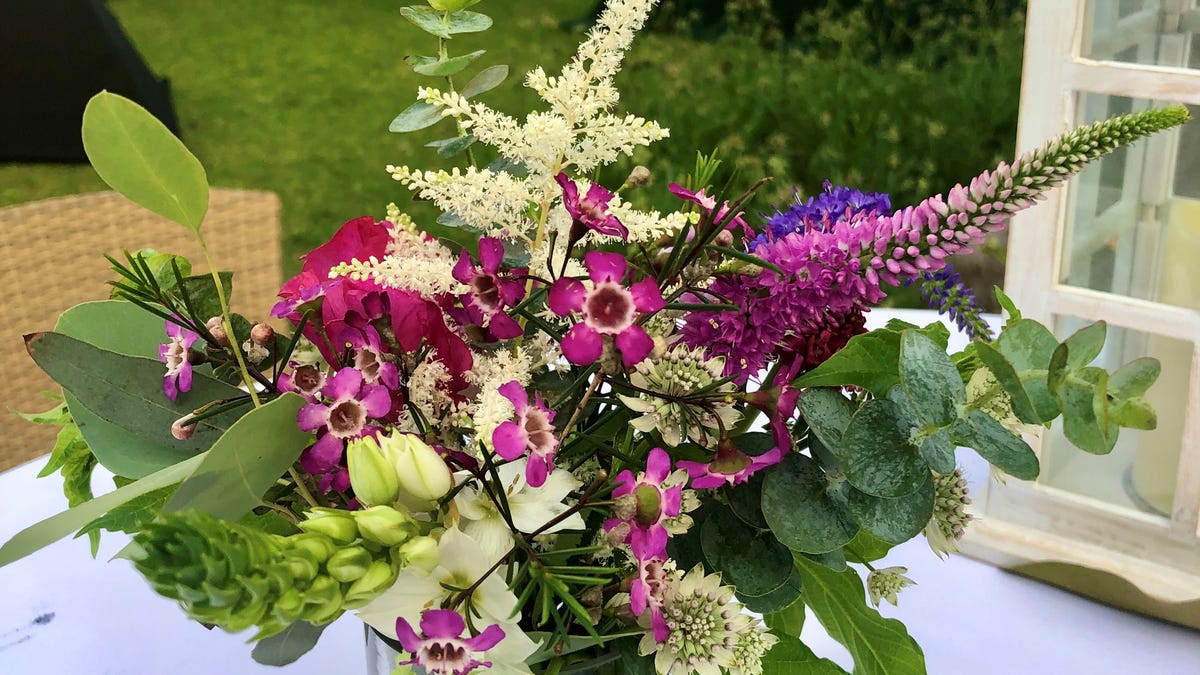
There is, however, a better way. Buying from local flower farmers shifts the entire equation. These blooms typically travel fewer than a hundred miles and reach market within a day or two of being cut. They’re fresher, longer-lasting, and often include native or adapted varieties that nourish pollinators and other wildlife.
Most small growers avoid synthetic chemicals, making their flowers safer for homes and far gentler on the planet. Buying local also creates something the global flower trade never will: relationships. Farmers and customers become partners in sustaining beauty that doesn’t harm the earth. Growers share their love for the bees, butterflies, and beneficial insects that make their work possible, and customers begin to value not only the flowers but the living world that supports them.
Water use changes dramatically as well. Smaller farms carefully monitor rainfall and use efficient methods like drip irrigation, which delivers moisture directly to roots rather than spraying it into the air. Not a drop is wasted.
Most local growers are passionate environmental stewards. They cultivate soil health and lean on natural systems instead of chemical shortcuts. Living pathways and biodegradable mulches suppress weeds without herbicides. Diverse insect populations keep pests in check. Healthy soil builds strong plants capable of resisting disease without fungicides. A vibrant garden, like any healthy body, thrives when its immune system is strong.
The Grown Not Flown movement was born in July 2021 as a simple hashtag: #GNFsupportlocal, aimed at celebrating small-scale flower farmers. It quickly grew into a digital platform linking growers with people who value seasonal, sustainably raised flowers. Behind every bouquet lies a story of dedication, stewardship, and deep respect for the land. These growers do not chase profit or volume. They grow slowly, intentionally, with love and purpose, offering an antidote to an industry built on speed, profit, and chemical dependence.
Many of these farmers expand their operations through diversification, building resilient businesses that support their land and their communities. They are farmers first, driven by care for their soil and their neighbors. The Grown Not Flown team understands the struggles and rewards of small-scale agriculture because they live it. Their mission is to put seasonal, local flowers at everyone’s fingertips, making it easy for consumers to choose responsibly.
Most local flower farmers mirror the beekeepers, vegetable growers, and artisans who are redefining sustainability in their own fields. They are not simply producing a commodity, they are cultivating hope. Their work strengthens biodiversity, local economies, and the ties between people and place. Grown Not Flown exists to help consumers find these growers and choose local first.
Choosing local flowers won’t topple the global industry overnight, but every single purchase matters. Small shifts in consumer behavior create ripples that nurture healthier ecosystems and more resilient communities. Visit your farmers’ market. Meet the people who grow your food and your flowers. Support those who tend the soil with care. Each bouquet, each conversation, each act of choosing local helps heal the world, one stem at a time.
Comments are closed.