
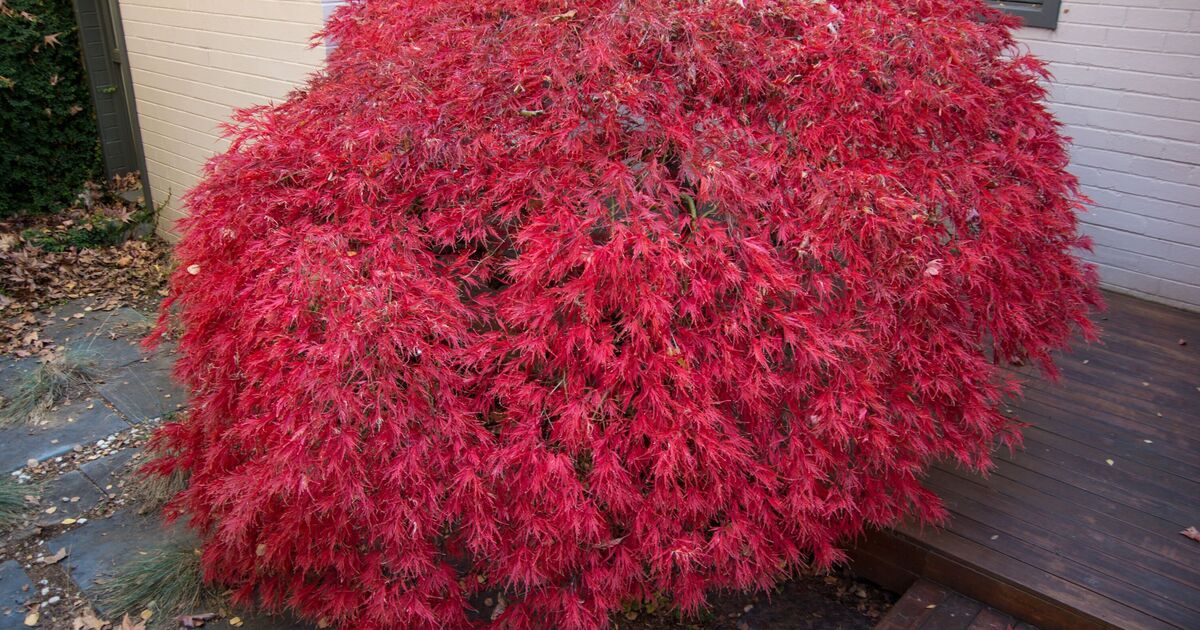
As winter approaches and outdoor greenery starts to fade, certain cherished plants will need additional care to survive the coldest months of the year. Among these are Japanese maple trees, celebrated for their stunningly vibrant foliage during autumn. Yet, they require particular attention throughout winter to guarantee spectacular displays when spring arrives. Two gardening pros have shared one piece of essential advice for winterising Japanese maple trees.
Fiona Jenkins from myjobquote.co.uk explained that trees and shrubs are often subject to damage during the winter months, as harsh, cold and aggressive weather isn’t kind. A lot of trees and plants tend to pull through without any help, but Japanese maples are prone to damage and dieback, so it’s important we know the steps to take care of them during this time.
Whether gardeners are planting a new Japanese maple or tending to an established tree, they should add a layer of composted mulch or another organic material around the base of the tree in autumn. This not only looks attractive, but prevents weeds, provides essential nutrients, and insulates the roots.
Matt Jordan, horticultural specialist at The Greenhouse People, explained: “Protecting your Japanese maple tree’s roots from freezing weather conditions is essential in winter.
“Apply a thick layer of mulch, about 10 cm, over the roots of your tree to protect it from the cold. When laying down your mulch, be sure not to place it right up against the trunk, as this might make it more accessible to pests and can cause rot. Rather, leave some space around the trunk and place the mulch under the leaf canopy.”
Fiona also recommended adding mulch to prevent the tree from becoming damaged. She said, “Invest in some mulch to keep your plant roots protected. By spreading up to around four inches of mulch over the root area, you can avoid damage from harsh weather conditions.
“Ensure your plant is sufficiently and heavily watered before the worst parts of winter begin, allowing it to have enough hydration to survive the cold. However, try not to overwater during other seasons as this can cause root problems. Water your Japanese maple during spring, summer and autumn when the soil is almost completely dry.”
When it comes to what not to do, Fiona noted that gardeners ought to give fertiliser a miss when getting their acer trees ready for the colder months. She urged, “Don’t use fertiliser on your plant after the summer months. Ensure the last plant feeding is around two months before you’d expect frost. This will avoid any damage to new growth.”
Using fertilisers prompts Japanese maples into immediate growth, which isn’t advisable since early autumn frosts and late spring freezes can harm or destroy the tree.
When it is appropriate to feed Acer trees, gardeners must steer clear of high-nitrogen options. Japanese maples thrive and develop stronger stems when their growth remains steady and measured.
Excessive nitrogen leads to unnaturally rapid growth that compromises the plant’s structural integrity.
Comments are closed.