
Struggling with Poor Soil? Try This EASY Fix!
In many gardens, there’s that one spot where nothing seems to grow well. The soil just doesn’t support healthy plants, no matter what you do. It’s a common problem for gardeners, and it can be frustrating. But here’s a method that can completely transform poor soil into a rich, microbe-packed environment in just a few days. We’re going to break down how to turn an unproductive garden bed into a thriving spot, using simple steps and natural materials.
The first step involves charcoal. Charcoal might not seem like the obvious choice for gardening, but it’s actually perfect for soil health. Charcoal has a unique structure that makes it an ideal home for beneficial microbes, and these microbes are what we want in our soil. They improve the soil’s health, help plants absorb nutrients, and can stay active for years, making your bed richer over time. To prepare the charcoal, we need to break it down into small pieces. This might take some time, but it’s a crucial step. The smaller the charcoal pieces, the more surface area for microbes to settle on.
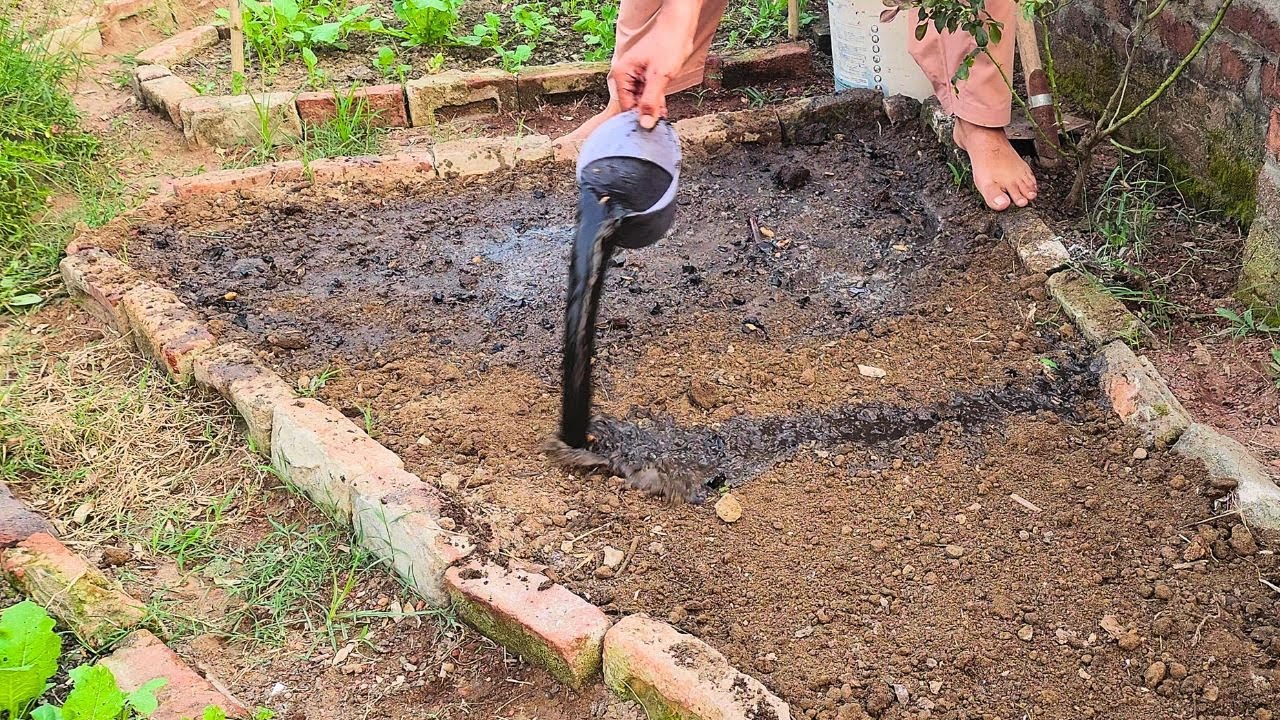
do you have a garden bed or patch with soil that just doesn’t seem to support Healthy Growth it’s something a lot of gardeners face and it can feel like nothing will work but there’s a way to transform your soil from lifeless and compact to nutrient-rich and thriving with beneficial microbes in just a few days this method will give your garden bed a fresh start creating a vibrant home for your plants we’re going to go through each step to make this happen the first step is a little time consuming but completely worth it you’ll need charcoal which will be the long-term home for beneficial microbes charcoal has a unique structure that can house and protect microbes for years offering a stable environment that will continuously enrich your soil start by breaking the charcoal into small pieces it doesn’t need to be super fine but you want smaller pieces to create plenty of surface area for microbes to attach to once your charcoal is in pieces it’s time to activate it and add beneficial microbes put the crushed charcoal into a 5G bucket and pour in non-chlorinated water or rainwater if you have it available the reason we avoid chlorinated water is that it can kill off some beneficial organisms so non-chlorinated is ideal now add some fully or partially decomposed manure or compost this manure or compost will be loaded with microbes and it’s what we’ll use to populate the charcoal Co with life stir everything well to make sure the charcoal is evenly soaked and mixed with the compost then cover the bucket Loosely with a lid let this mixture sit for about a week giving the microbes time to multiply and settle into their new charcoal home during this week the microbes will multiply rapidly drawn to the charcoal’s porous structure this setup will create a powerful microb Rich material you can add to your garden soil but before you’re ready to apply it we need to prepare the bed itself to receive all those new beneficial organisms and nutrients after a week your charcoal mixture should be full of life and ready to go now it’s time to get your bed prepped if the soil in your bed is compacted grab a shovel and start loosening it up compacted soil makes it hard for roots to grow and by turning the soil you’ll create a fluffy texture that’s perfect for plant and roots and soil organisms with the soil loosened you’ll want to add a few essential amendments to give your plants a nutritious Foundation compost is fantastic because it provides both nutrients and organic material helping soil structure bone meal is another great addition as it offers a slow release of essential nutrients like phosphorus and calcium which are crucial for root and plant growth spread both the compost and bone meal over the bed and mix them well into the soil once everything is mixed and leveled it’s time for the final step applying your micro loated charcoal mixture take the mixture from the bucket and mix it thoroughly to ensure everything is evenly combined then spread the mixture evenly over the prepared bed this charcoal layer will become a long-term microbial Reservoir in your garden nourishing plants and improving soil quality for years by spreading it over your bed you’re creating a living nut ENT Rich environment where plants can Thrive the microbes will continue breaking down organic matter in the soil steadily releasing nutrients and creating a self-sustaining ecosystem your garden bed is now filled with nutrients and thriving with life ready to support strong and healthy growth you’ve taken lifeless poor soil and transformed it into something rich and full of potential creating a home for beneficial organisms that will keep the bed healthy over time remember when you try this method you’re setting up your garden for long-term success the microbes and the charcoal will continue to improve soil quality season after season giving you a productive Garden for years to come if you want to keep learning about soil building techniques fertilizers and other Garden tips be sure to like share and subscribe to the channel for more gardening tips and tutorials
34 Comments
Thanks!
Next …sell vegetables for profit …..buy shoes !
exactly what l was looking for thank you will definitely try it.l have sandy soil
If your water is chlorinated fill up a wheelbarrow full and leave it in full sunlight to use UV light to kill it all off after about 24hours you should be good
Like 🎉
Why so complicated? Just add compost.
At least add sugar (if not molasses) too 🙂
Isn’t that biochar not charcoal?
Trust me, no amount of this is going to off set the amount of booze driven urine my flower bed receives every night.
I always garden barefoot
bagged bbq charcoal?
Just be careful not to breath in that bone meal.
I'll try this, thanks!
Loved every second of this.
Used to use ashes from the wood stove and as much compost as I could mix in. Then I went to building in-ground compost pits. You can cover in a bit of dirt and plant while it rots down.
Actually you don't need any of these things , one can grow perfect plants in plain sand or potting soil with 100% chemical fertilizers, no guesswork , less work, lower cost , no germs splashing up from the manure to the food, perfect safe results every year.
Com post🤣🤣🤣🤣🤣🤣
This works very well if you live in India.
Lubricating the soil with used motor oil will enable plant roots to penetrate the hardpan caliche type soil lol
Your first clue that this is nonsense is how you've already seen 50 videos on this topic.
Can you also use this mixture in my compost bin?
For orchards (figs,cherrys and peaches in this case), when i cut off excess branches in autumn, is it better to shred them and add to soil, or charcoal them and then add to the soil? Also for vegetables fields and beds?
Liquid seaweed feeds soil
Everything very good, but why do I need a 5 gallon bucket if that's the only measurement in the whole video?
Microbes? Or fungal mycorrhiza? Fungus comes in the compost and makes nutrients available to plants. It was the symbiosis between plants and fungus that allowed plants to invade land from the sea when life first evolved. The symbiosis still happens. It explains why chemical fertilizers are just a short term fix without organics. Mulch stops all the good fungal food from burning off in the sun. Just something I picked up somewhere. . .
Are those just regular charcoal briquettes like you put on your grill?
can straight people also do this?
You don't need the bucket. Just turn it into the soil and water and put some more mulch on tope to keep it moist
The main reason why charcoal is good for poor soils is less the bacteria angle but rather the fact that it will absorb and retain nutrients so that the crops you plant can access them better. This characteristic of absorbing things is the same reason charcoal is used in water filters, it grabs and retains dissolved substances from the water. You put the nutrients back into the soil when rehabilitating it, but they can get washed out over time especially when adding it suddenly as we do when fertilizing. The charcoal retains and then releases the nutrients slowly back into the soil so more of it stays to benefit your plants. Any bacteria or fungi charcoal may house is more of a secondary benefit. In fact initially some soil bacteria will find the charcoal toxic due to complex organic residues as a result of it being burned. It's why before pressure treated lumber, posts used to be partly burned first before burying, they would last longer due to resistance to decay the charred part has.
This process looks incomplete! I would have thought that once the charcoal mixture had been applied, a thin layer of soil, mulch or cardboard covering would be vital to prevent the charcoaled soil from drying out, thus killing the microbes. What are people's thoughts?
Using store bought BBQ charcoal ?
There is a shelf life for chlorinated water. Meaning, if you leave it be for (x) days, the chlorine will dissipate. In case you want to use tap water. Just add time. Now, who took science and knows how many days? I'm a musician…
terra preta
so i take it you want the smelly manure(rather than the manure that has the smell cooked out of it)?