
#ContainerGardening #GardenDesign #PottedPlants
Unlock the limitless potential of your outdoor space with this deep dive into the art of container gardening. Forget the idea that a stunning garden requires a large plot of land. In this inspirational journey, we explore four breathtakingly different garden worlds, all created exclusively with pots. From a lush, layered jungle path and a formally sculpted paradise, to a bohemian collector’s retreat and a dramatic, color-themed courtyard, you’ll discover the core principles of professional landscape design and learn how to apply them on any scale.
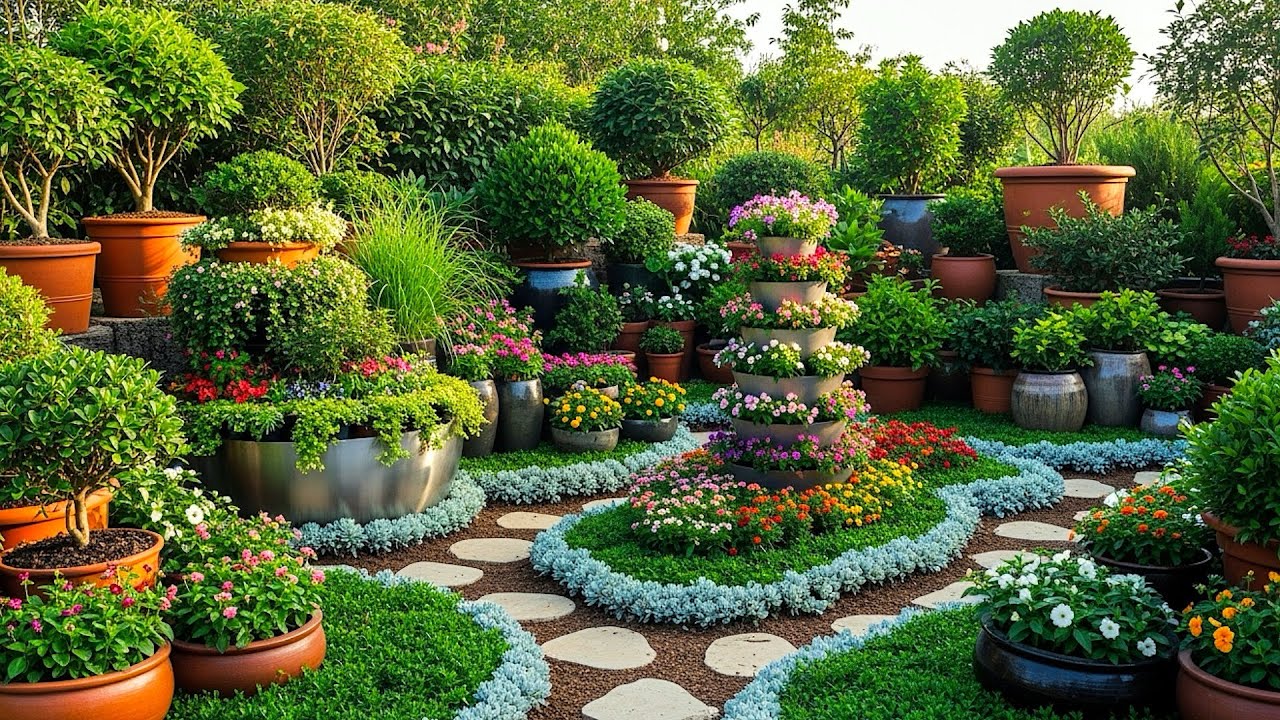
Welcome to Concept with Justin. [Music] What if a garden wasn’t just a plot of land, but a world you could build piece by piece? A world that doesn’t require acres of soil, but rather your own creativity and a collection of humble vessels. Today, we invite you to step beyond the traditional garden bed and into the boundless realm of container gardening. This is not merely about placing flowers in pots. This is about landscape architecture on a miniature scale. It’s about becoming the creator of your own living art gallery, where every pot is a frame and every plant a masterpiece. [Music] Heat. [Music] Heat. [Music] [Applause] [Music] [Music] Heat. [Music] Hey. Hey. [Music] Our [Music] first journey leads us down a winding stone path, not into a garden, but through one. This is a masterclass in creating an immersive experience. The feeling here is one of lush, untamed abundance, a secret jungle discovered in a backyard. The design genius lies in its verticality and layering. Notice the tall bamboo shoots in the large ornate stone planters. They aren’t just plants. They are architectural columns. They draw the eye upward, creating a sense of a high canopy and making the space feel grander and more enclosed. This vertical element is crucial. It establishes the garden scale and provides a backdrop for the ride of color and texture happening below. The choice of bamboo is deliberate. Its slender, graceful form adds height without creating a heavy, oppressive wall of green, allowing light to filter through and dapple the path. For your own space, think about what can provide this architectural role. It could be a tall ornamental grass, a slender cyprress, or even a climbing vine on a trellis. [Music] [Music] [Music] Now, let’s bring our eyes down to the heart of the garden, the mid layer, where the story truly unfolds. This is where you witness a symphony of foliage. The stars of this layer are the kolas plants with their stunning leaves of burgundy, lime green, and fiery orange. They are like living embers scattered throughout the greenery, providing vibrant color without relying solely on flowers. This is a key takeaway for a garden that looks stunning all season long. Don’t underestimate the power of foliage. Flowers may come and go, but the color and texture of leaves provide a constant reliable beauty. The kolus is masterfully paired with the deep greens of ferns and other foliage plants, creating a rich tapestry of textures. The delicate feathery fronds of the fern contrast beautifully with the broad velvety leaves of the kolus, creating a visual and tactile depth that is endlessly fascinating. When you select your plants, think like a painter choosing pigments. Mix colors, but also mix textures. [Music] Heat. [Music] Heat. [Music] Hey, [Music] hey, hey. [Music] Hey, hey, hey. [Music] [Music] [Music] The magic of this space is also in its flow, both literally and figuratively. The flagstone path is not a straight rigid line. It meanders. This gentle curve is an invitation. It slows you down, encouraging you to pause and appreciate the individual vignettes created along the way. It makes the garden feel like a journey of discovery. Each turn of the path reveals a new combination of plants, a new focal point. The pots themselves are part of this journey. They are not uniform. We see ornate classical stone, simple terracotta pots, and even a rustic wooden barrel. This eclectic mix adds a sense of history and evolution as if the garden has been lovingly collected and curated over many years. This is a wonderful lesson in authenticity. Your garden doesn’t need perfectly matched sets. The variety in containers can add character and tell a story that is uniquely yours. [Music] [Music] Heat. [Music] Heat. N. [Music] Finally, let’s talk about the use of elevation to create a sense of a living landscape. This is not a flat collection of pots on a patio. The garden is built into a gentle slope and the designer has used this to their advantage, creating natural terraces. Pots are clustered at different heights, some nestled into the hillside, others placed on higher ground. This simple act of staggering the heights creates incredible depth and prevents the seam from feeling like a static display. It mimics how plants grow in nature with layers of undergrowth, midsize shrubs, and taller trees. You can replicate this in your own space, even on a flat surface. Use simple props like overturned crates, small benches, or sturdy blocks to elevate pots in the back of your arrangement. This will allow every plant to be seen and will instantly transform your collection of individual pots into a cohesive, dynamic, and breathtaking landscape. [Music] [Music] From the wild organic abundance of a jungle path, we now transition into a world of exquisite order, symmetry, and sculpted beauty. If the first garden was a passionate poem, this one is a classical sonnet. The feeling here is one of tranquility, precision, and formal elegance. It’s a testament to the idea that container gardening can also be highly structured and controlled. The most striking feature is the central tiered flower tower. This is a living sculpture, a magnificent focal point that immediately commands attention and anchors the entire design. Its verticality draws the eye and its conicle shape is repeated in the smaller topiaries dotted throughout the garden, creating a powerful sense of rhythm and harmony. This is a brilliant strategy for creating impact in a small space. Concentrate your most dramatic element in the center and build the rest of the design around it. [Music] Hey, hey, hey. Heat. [Music] Heat. [Music] [Applause] [Music] Heat. Heat. [Music] [Music] The design of this garden is built on the principles of formality, symmetry, tree and repetition. Notice how the curved garden beds, though filled with containers, mirror each other. They create a graceful flowing line that guides the eye through the space. The edges of these beds are sharply defined by a low growing silverleaf plant which acts like a frame, making the colors of the flowers inside pop even more. This use of a crisp, clean border is a classic formal garden technique, and it translates beautifully to container arrangements. The repetition of plants and pot shapes creates a calming, predictable pattern that is very soothing to the eye. We see the same style of terracotta pots and the same types of manicured green shrubs used throughout which unifies the entire scene and gives it a sophisticated cohesive look. [Music] [Music] Let’s look closer at the plant choices here. Unlike the wild mix of our first garden, the selection here is more curated and controlled. The primary focus is on meticulously clipped topiaries and ball-shaped shrubs. This requires patience and a long-term vision. It’s about the art of pruning and shaping, of gently guiding nature into a desired form. This type of gardening provides a different kind of satisfaction, the joy of seeing a plant grow and evolve under your careful guidance over months and years. These strong evergreen structures provide the gardens bones ensuring it has visual interest even in the offse. The flowers in this context act as seasonal jewels filling the spaces between the evergreen architecture with vibrant temporary color. This balance between permanent structure and fleeting beauty is the hallmark of a truly great garden design. Heat. Heat. [Music] Heat. Heat. [Music] The overall effect is one of serene grandeur. This garden is not trying to mimic wild nature. It is celebrating the beauty of human artistry and partnership with nature. It’s a space designed for quiet contemplation, a peaceful retreat from the chaos of the outside world. The lesson for us is that container gardening has an incredible range of expression. If your personal style leans towards order, elegance, and clean lines, you can absolutely achieve that with pots. Think about creating a strong focal point, using symmetry in your layout, and repeating key plant and pot shapes. Don’t be afraid to embrace structure. By carefully placing your containers, you can create rooms and pathways just as you would in a large inground garden, bringing a sense of classical, timeless beauty to any space. No matter the Nice. [Music] [Music] Now let us venture into a third realm. One that speaks of creativity, resourcefulness, and personal expression. If our formal garden was about elegant control, this space is a celebration of bohemian charm and eclectic collections. This garden feels deeply personal, like a story unfolding. It demonstrates that you don’t need expensive materials or a grand plan to create something truly magical. The most ingenious feature here is the use of simple, humble concrete cinder blocks. What could be an unsightly construction material is transformed into a modular, sculptural, and incredibly versatile display system. They are used to create shelves, platforms, and varying heights, turning a flat area into a dynamic, multi-level stage for the plants. This is a powerful message. Look around you. The tools for creating beauty are often in the most unexpected places. [Music] Heat. Heat. [Music] [Music] [Music] We see a delightful mix of plant types coexisting harmoniously. Drought-loving succulents and cacti are happily neighboring thirsty herbs like rosemary and flowering annuals like patunius. In the background, a large fiddle leaf fig, typically an indoor plant, enjoys the fresh air. This eclectic mix works because it’s unified by the gardener’s passion. It’s a reflection of a person who loves plants of all kinds, and the arrangement tells that story. The lesson here is to embrace what you love. Don’t feel constrained by having to stick to one. Style. Your garden can be a vibrant tapestry of all your favorite plants, a living scrapbook of your botanical journey. [Music] The choice and placement of containers further enhances this eclectic collected overtime feel. We see a beautiful array of blue and white patterned ceramic pots, classic terracotta, simple glazed containers, and rustic wooden crates. Some pots are elevated on the cinder blocks, others on wooden stands, while a whole family of small succulent pots is clustered together on the ground. This creates a series of small vignettes or mini scenes within the larger garden. Your eye is invited to wander from one grouping to the next, discovering new details at every level. This is a fantastic way to approach your own container garden. Think in terms of creating small curated collections. Group plants and pots that have a similar color, texture, or feel to create little pockets of interest throughout your space. [Music] [Music] Hey, hey, hey. [Music] [Applause] Heat. Heat. [Music] [Music] What this garden teaches us above all is the power of accessibility and creativity. It is perhaps the most achievable of all the gardens we’ve seen. It doesn’t rely on a sloping hillside or a grand symmetrical layout. It’s built on a simple patch of grass and gravel. Its beauty comes from the clever use of everyday materials and a fearless combination of plants. It’s a powerful reminder that a stunning garden is not about how much money you spend, but about how much love and imagination you pour into it. So before you rush to the store, look around your own home and garage. An old wooden ladder, a stack of bricks, unused blocks. They can all be the building blocks of your beautiful, personal, and utterly unique container garden sanctuary. [Music] For our final exploration, we step into a space that is defined by a single, bold, and brilliant decision. The choice of a dominant color. This garden is a symphony in blue. The vibrant cobalt blue glazed pots are the unifying element that ties this entire landscape together. This is an incredibly powerful design technique. By repeating one strong color in your containers, you can create an instant sense of cohesion and intention, even with a wide variety of plant types. The blue acts as a thread that weaves through the entire scene, connecting disparate areas and creating a stunning unified visual statement. It is both dramatic and serene, evoking the feeling of a Mediterranean courtyard or a tranquil seaside retreat. [Music] The genius of using a single strong pot color is how it enhances the plants themselves. Notice how the fiery oranges, sunny yellows, and crisp whites of the flowers seem to vibrate against the deep blue. The blue provides a cool, rich backdrop that makes the warm colors appear even more brilliant. It’s a classic color theory principle in action. Complimentary colors intensify each other. The same is true for the foliage. The deep burgundies of the smoke bush and the bright chartreuse of the sweet potato vine are made more dramatic and luxurious by their proximity to the cobalt. When planning your garden, consider adopting a color theme for your pots. It doesn’t have to be blue, of course. It could be a warm terracotta, a sleek black, or a clean white. The key is consistency, which will give your garden a sophisticated, professionally designed feel. [Music] [Music] Heat. [Music] Heat. [Music] Heat. Heat. [Music] [Applause] [Music] [Music] I don’t [Music] Hey, hey, hey. [Music] Oh, hey. [Music] This garden also masterfully combines the grand scale with intricate detail. We see massive oversized blue planters that anchor the corners of the patio, making a bold statement and housing small trees and large shrubs. These large containers create the bones of the garden. In between, smaller pots are clustered together filled with a mix of flowers and foliage that create pockets of detailed interest. This interplay of scale is what makes the garden so dynamic. It has both powerful focal points and intimate moments for quiet appreciation. The use of pedestals to elevate some of the key planters also adds a touch of classical elegance and drama, turning them into true sculptural elements within the landscape. [Music] The space itself is thoughtfully laid out. The slate patio provides a neutral textured ground plane that complements the stone wall in the background. The pots are not just scattered randomly. They are arranged to define the edges of the patio, creating a sense of an outdoor room. They guide movement through the space and soften the hardscaping. Two standard trees and large pots create a symmetrical frame, a sort of gateway that invites you deeper into the garden. This is a crucial lesson. Use your containers to shape your space. They can create boundaries, frame a view, or guide visitors on a specific path. They are not just decorations. They are the functional building blocks of your outdoor living area. This blue symphony is a stunning example of how a single clear vision executed with confidence can result in a garden that is both breathtakingly beautiful and deeply personal. [Music] As our journey through these four living worlds comes to a close, what have we learned? We’ve walked the untamed path of a layered jungle oasis, discovering the power of verticality, and the beauty of mixed foliage. We’ve stood in awe of a formal sculpted paradise, appreciating the serene elegance of symmetry, structure, and a central focal point. We’ve been charmed by the creative spirit of a Bohemian retreat, inspired by the genius of repurposing everyday objects and celebrating a diverse personal collection of plants. And we’ve been captivated by a symphony in blue, understanding how a single bold color choice can unify an entire landscape and create a sophisticated dramatic mood. [Music] [Music] [Music] Each garden, though vastly different, was built upon the same fundamental principles. They all use varying heights to create depth and interest. They all played with the contrast of textures from feathery ferns to broad glossy leaves. They all understood the language of color, whether it was a wild riot or a curated palette. And most importantly, they were all created within the bounds of containers. They prove beyond a doubt that you do not need a vast expanse of earth to cultivate a world of beauty. Your canvas can be a patio, a balcony, a flight of stairs, or a small courtyard. The pot is not a constraint. It is a frame. It allows you to control the soil, to move your garden with the seasons, to place a plant in the perfect spot of sun. So, we ask you to look at your own outdoor space, not for what it is, but for what it could be. Do you see a blank canvas? Do you hear the echo of a wild jungle, the whisper of a formal sonnet, the joyful song of a creative collection, or the bold harmony of a single color? The choice is yours. There is no right or wrong answer, only what speaks to your soul. This is more than just gardening. It is an act of creation, a daily meditation, a way to connect with the rhythm of nature in a deeply personal way. It’s the quiet joy of watching a new leaf unfurl. the satisfaction of combining colors and textures into a living painting. [Music] Don’t be intimidated by the perfection of these images. Every great garden begins with a single pot. Start there. Choose one vessel that you love. Select one plant that makes you smile. Place it where it can catch the light and tend to it. Then perhaps add another and another. Let your garden grow organically. One story, one pot at a time. Your personal Eden is not a distant dream. It is a collection of containers waiting for a story. Your story. Begin today. [Music]
3 Comments
ก้สวยดี
TÔI RẤT THÍCH NHỮNG HÌNH ẢNH MÀ KÊNH ĐĂNG TẢI . XIN CHÂN THÀNH CẢM ƠN KÊNH .
Beautiful ❤❤❤ thank you for sharing this video.