
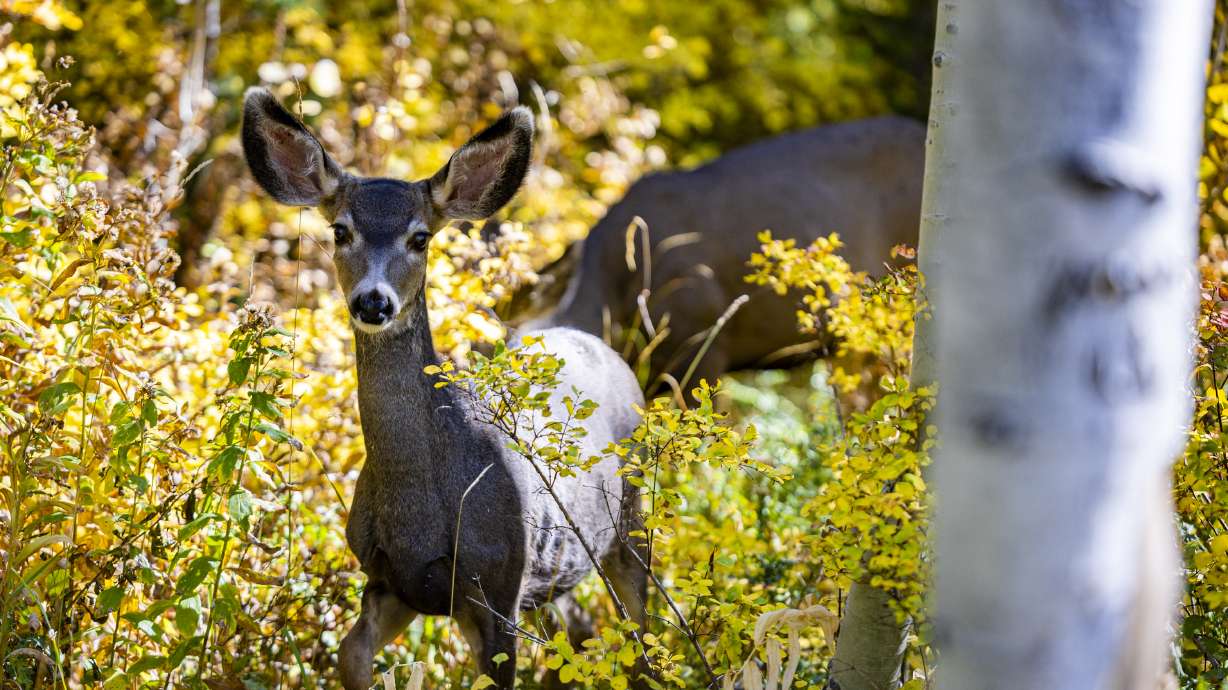
SALT LAKE CITY — If you have deer in your yard, you already know how destructive they can be. They trample plants, rub their antlers on young trees, and treat your garden like an all-you-can-eat buffet.
So how do you keep deer out of home landscapes?
If you’re moving into a new area and haven’t planted yet, the best strategy is prevention. Choose plants that deer are less likely to browse. Colorado State University has a great fact sheet with suggestions on deer-resistant plants, and it’s worth checking out before you put anything in the ground.
But for those who already have deer problems, the question becomes: how do you keep them away—or at least, reduce the damage?
Read more: Daylight saving time can up the chances of hitting a deer
Repellents are the easiest place to start. The University of Colorado notes that a simple mixture of eggs and water can help deter deer and last up to 30 days before you need to reapply. Repellents that use hot sauce or capsaicin can work as well. Just make sure you’re spraying when temperatures are above freezing so you don’t harm your plants. The CSU fact sheet offers more detail on these options.
Beyond repellents, some homeowners try loud, sudden noises to scare deer off. There are devices made for this, but deer do get used to the same sound quickly, so you’ll need to rotate what you use, which can also bother your neighbors or even violate HOA rules.
In the warmer months, motion-activated sprinklers are another option. They can startle deer as they enter the yard. Again, deer can adapt, so alternating between noise and water may help.
The most reliable—though most expensive—solution is fencing. An eight-foot-tall fence will usually keep deer out. In less visible parts of the yard, you can get by with wooden posts and heavy hardware cloth or hog wire. You can also fence off only the most vulnerable areas, like vegetable gardens or young orchards.
And don’t forget male deer. Bucks can cause significant damage when they rub the velvet off their antlers, stripping bark from young tree trunks. Wrapping those trunks with chicken wire or sturdy netting can help protect them.
Read more: Holiday gardening gift ideas from the KSL Greenhouse team
We want to hear from you.
Have a story idea or tip? Send it to the KSL NewsRadio team here.


Comments are closed.