
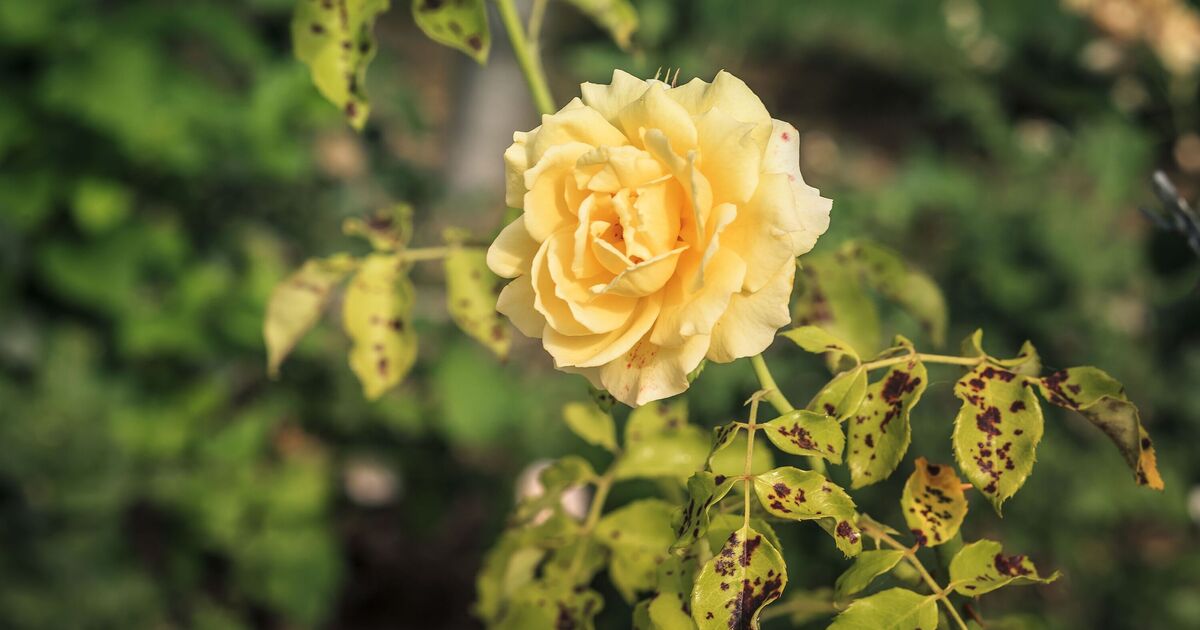
Roses are renowned for their stunning blooms, but gardeners must remain vigilant during autumn when a devastating disease can strike, potentially preventing the plants from flowering again. Louis Hooft, a plant expert and founder of Moowy, has warned that rose bushes need urgent inspection for black spots on their foliage, as this signals the “most common and troublesome” infection affecting these beloved garden plants.
He said: “Black spot is a fungal disease affecting rose bushes, manifesting as circular black spots on the plant’s leaves. If left untreated, affected leaves will turn yellow and fall off. However, these unsightly black spots can eventually merge and spread, causing the entire plant to lose its leaves. Black spot can also infect young canes and flowers, leading to further damage and a decline in flower production.”
Whilst black spot disease won’t directly kill roses, it will severely compromise the plant’s strength, leaving it dangerously exposed to additional diseases, pests and the approaching winter chill that can kill them off.
The concerning aspect of black spot disease is its rapid transmission, which is precisely why early detection and swift action are absolutely crucial.
Should black spot disease go untreated, the rose plant will lack sufficient vigour to generate blooms and may shed all its foliage, potentially leaving your garden barren and flowerless come next year.
How to prevent black spot disease?
Black spot disease primarily spreads through moisture, which explains why it becomes far more prevalent during autumn amid the cool, rainy conditions.
Louis explained: “Black spot develops between autumn and winter when the fungal spores grow in piles of fallen leaves and infected canes. Then, the wind and rain spread the mature spores onto your roses’ foliage, and this is when you’ll notice irregular black spots on the plant’s leaves and young stems, eventually leading to defoliation.”
The most effective prevention method is to exercise caution when watering, ensuring you only apply water directly to the base of the soil.
Avoid overhead watering to prevent moisture from reaching the leaves, and refrain from using sprinklers on roses during autumn.
If not already completed, prune and tidy up roses in autumn to ensure adequate air circulation, allowing them to dry much more quickly.
Nevertheless, one excellent natural protective measure is to apply mulch, as it can help retain moisture and prevent black spot disease from taking hold in your garden.
Louis added, “Mulch acts as a barrier, preventing soil from splashing onto the plant. Because if spores are present in the earth, the mulch will help stop black spot from spreading to the roses. However, avoid adding rotting wood to your compost, which can create a moist environment conducive to other fungal diseases. Always apply well-rotted compost.”
Always make sure to apply compost to roses, but other good mulches to consider are shredded bark, wood chips, pine needles, straw and even hay.
Make sure to avoid using fallen rose leaves or other plant debris when mulching roses, as they can carry black spot disease, and should always be placed in the bin instead of your compost.
Comments are closed.