
Download my FREE 32-page Garden Design Workbook: https://benstrong.com.au/designforabundance
Want support with your food garden? https://benstrong.com.au/garden-strategy-sessions
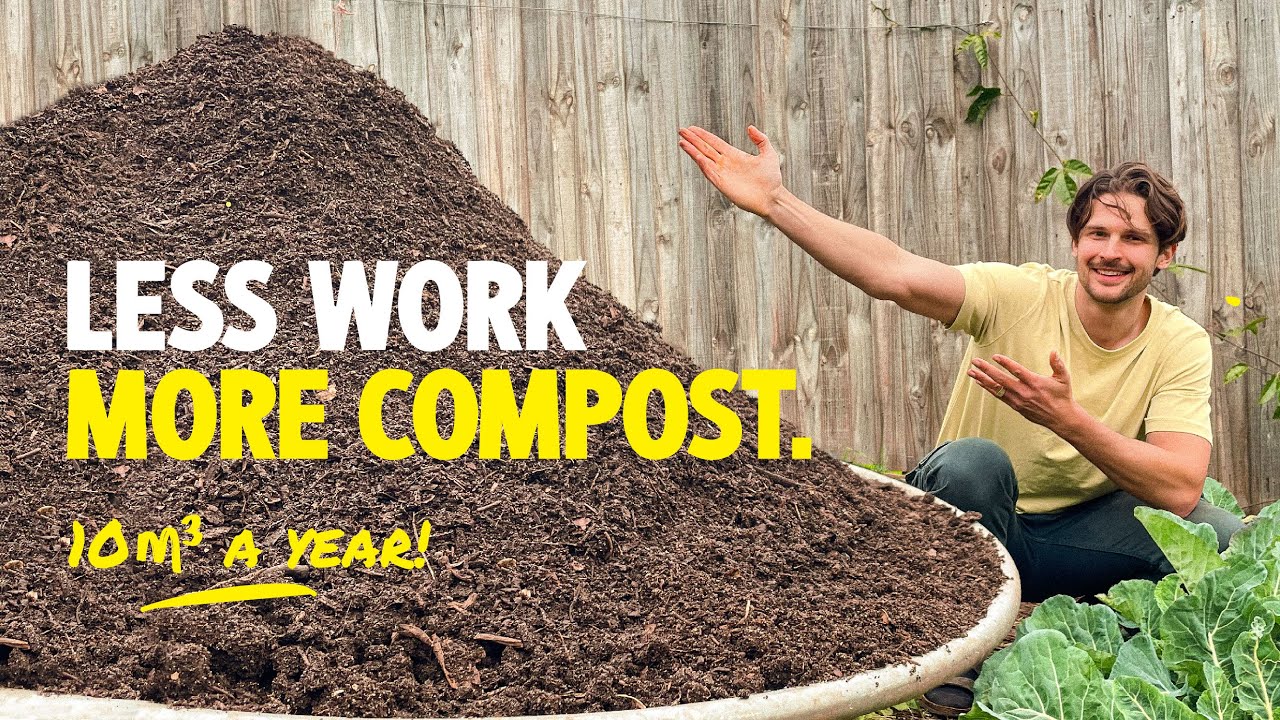
Want to know how to make compost at scale without it becoming a full-time job? I walk you through my low-effort, high-yield backyard compost system that helps me produce enough nutient-rich compost to sustain our vegetable garden year-round.
From sourcing materials like wood chips and coffee grounds to leveraging our chickens’ tireless work ethic and harnessing heat, this episode covers everything you need to know to scale up your compost production with minimal effort and cost. Plus my game-changing tool that’s taken my compost to the next level.
Don’t forget to like, comment, and subscribe!
Follow my channel for more on homesteading, vegetable gardening, sustainable living and building self-sufficiency.
00:00 – Introduction: Making Heaps of Compost with Minimal Effort
00:40 – My Backyard Compost System Overview (Compost Bays & Area)
01:24 – Sourcing Bulk Materials: Waste Streams (Wood Chips & Coffee Grounds)
02:18 – Composting With Chickens: Their Role and Benefit
03:38 – Building a Compost Pile vs. Cold Composting
03:59 – The Heat Factor: Hot Compost Explained
05:12 – Turning Your Compost Pile: Frequency & Timing
06:14 – Sifting Compost: My Game-Changing Tool
07:41 – Summary: My Compost System Tips
08:13 – Conclusion: Thanks for Watching
#Compost #GardeningTips #SustainableLiving #BackyardGarden #OrganicGardening #Permaculture
[Music] The reality of producing enough organic vegetables
to feed Maddy and I is that I need to produce a lot of compost—about 10 cubic meters a year, which
is like 30 of these. I’m a full-time architect, so there are only so many hours in the week that
I can dedicate to making compost. It has taken me a lot of trial and error to come up with a
backyard composting system that’s high-yield, high-quality, low-effort, and
zero-cost. In this episode, I’ll be walking you through my composting
system and the six key elements to consider if you’re looking to scale up your own compost
production. Watch to the end because I’m going to share the one piece of equipment that
has been a game changer for my compost. So, this is my property. You can see
my house, garage, compost bays in the driveway, and the greenhouse. But most
importantly, you can see the compost area, which also doubles as our chicken run. I’ve
located the area here because it’s a shady spot covered by fruit trees, close to the
garden, and not visible from our house. I’ll explain all of this in more detail, but
at a high level, this is how my system works: All the material gets dumped into this section to
begin the composting process. Once it’s filled up, I’ll move it down to the next section to make
room for more material. This process continues, and the compost makes its way down the hill until
it reaches the other end of the compost area, by which time it’s fully broken down
and ready to go out into the garden. What materials do I use? Well much of what I
compost comes from the garden and the kitchen scraps, but those alone are not sufficient to
create the amount of compost my garden needs. So in order to scale up my system, I’ve found
two waste streams I can reliably tap into for free. The first is woody mulch from my local tip,
which is a great high-carbon material, and the other is coffee grounds, a great high-nitrogen
material that a local company collects from cafes all around Melbourne and delivers to
gardeners for free. I’ve built some bays in my driveway so that I can easily store
large amounts of these materials. For you, think about what waste streams
you might be able to tap into, whether it’s autumn leaves, wood
chips, sawdust, or even animal manures. [Music] Chickens are not an essential part of compost
making, but they are an important part of my system because they save me a lot of time and
money and improve the quality of my compost. As soon as I bring any new material into the
compost area, they start scratching, spreading, and mixing it all around. This is beneficial
for three reasons: first, they’re getting the process of decomposition started straight away
by increasing the surface area of the material; second, as they scratch, they also poop, adding
their nitrogen-rich manure to the pile; and third, as they scratch, they spread the material out,
which allows all the material to get evenly wet when it rains. Moisture is so important in a
compost pile, but getting all your materials soaked through can be time-consuming,
which I used to do with a wheelbarrow. By making compost in the rainy season, I
can skip this step, saving a lot of time. Speaking of the rainy season, this
video has been bloody challenging to make because of the weather.
They’re getting the process of decomposition started. This is so unpleasant!
The third reason is subtle but important. So, we will make this video at all costs. If
you’re enjoying this video so far, I’d love it if you gave it a like and subscribed. It would
really help my channel. Okay, back to the video. [Music] So, this is a bunch of material that I’ve been
building up over the past few weeks. In it, there are grass clippings, woody mulch, coffee
grounds, kitchen scraps, and here I’ve got their manure from their coop that I’m going to spread
on it as well. I could leave it all spread out, and it would break down over time, but what
I’m going to do is build it up into a big pile. That’s going to allow me to introduce
the next element in my system, which is heat. Let me tell you about how hot composting works.
When you assemble all the material into a pile, what you’re doing is reducing the surface area
of the material exposed to the outside air. As the microbes feed on it, their heat will actually
cause the pile to get hotter if the pile is big enough. As the pile gets hotter, it becomes more
hospitable for the microbes, and their population increases, so the pile gets hotter again. If
you’ve got the balance of materials right, this process should top out at about 55 to
65°C. This seems to be the agreed optimal range for maximizing decomposition while minimizing
the amount of nutrients lost to off-gassing. It’s also the temperature range at which you
can kill weed seeds and plant pathogens. So, here’s my finished pile. It only took me about
15 minutes to make this, and that was greatly assisted by the fact that the material was already
nice and wet from the rain we had last night. Now that it’s done, I’m going to cover it with a
tarp and leave it to heat up and decompose. The tarp also locks the moisture in, stops it from
getting too wet, and keeps the chickens off. To turn or not to turn is a question
I’ve asked myself many times during my years of making compost. On one end of the
spectrum, you have the lazy gardener approach, where you just pile it all up, let it break
down, and wait somewhere between six months to a year. On the other end of the spectrum,
you’ve got the high-effort 18-day compost, where you’re turning the compost every day or
every two days. I’ve tried both, and I think both can work. But for my system, I’ve landed closer
to the lazy gardener approach, and here’s why: I use woody mulch, which takes a long time to
break down and requires fungal activity. Fungi do not like to be disturbed. But if I don’t turn
the pile at all, the material on the outside won’t break down at the same speed as the material on
the inside. For me, what works best is to turn my pile twice because it’s a balance between not
disturbing the fungi too much and allowing the material to break down evenly. I try to wait one
to two months between turns, and I usually find that it takes four to six months to have finished
compost. This pile here is about a month old, so I’m going to cover it with a tarp and leave it for
another one to two months before I turn it again. So, this is a finished pile of compost. It’s
about six months old and ready to go out into the garden. But before I distribute it, I’m going to
sift it. I’m about to show you the fastest way to sift compost, and I can sift about a cubic meter
of compost in 20 minutes—game changer! But let me know if you think you can sift faster. This method
has saved me so much time and money because, without it, I wouldn’t be able to make all
my own seed-raising mix. I’ve seen a lot of different contraptions out there, but
I think all you really need is a simple, elegant A-frame sifter. It’s just two timber
frames, which in this case I actually found on the side of the road, with a bit of steel welded
mesh over the top. That’s it! The key to getting this to work is to make sure your compost
is dry enough; if it’s too wet, this won’t work well at all. This is where the chickens come
in handy again because if my compost is too wet, I can get the chickens to scratch through
it. They’ll break up clumps, spread it out, and help dry it out. The other thing they do
at this stage is pick out any worms that might be in the compost. If I’m sifting compost for my
seed-raising mix, I’ve got this extra frame here, which I can put on top, that has a finer mesh.
You can see that what I’m left with is finely sifted compost. Once the compost is sifted, it
comes back out into the garden to complete the nutrient cycle, feeding the soil and, in turn,
helping our plants thrive. A lot of it will be spread on garden beds, and the rest will
go into the greenhouse to start seedlings. [Music] So, here’s a summary of the most important
elements that have allowed me to scale up my compost system: 1. I set up my compost
area close to where I garden and combined it with my chicken run. 2. I source
materials from local waste streams. 3. I use chickens for their manure and their
tireless work ethic. 4. I use heat to break down the piles faster. 5. I turn infrequently
and let time do the work. 5. I use an A-frame for speedy sifting. If you have any questions
or want to know more about my compost system, let me know in the comments. Thanks for
watching, and don’t forget to subscribe!
20 Comments
Oh comon fred
Great look at an approachable composting system!
Thanks for posting this, nice presentation
where can vermiculture fit into this. do you mix the two?
Love the garden system. Well thought out, tried and tested, very integrated, multipurpose and minimal effort. Everything a home garden should be. Personally I've opted to focus mainly on meat ducks in my backyard but gardening and composting is still a big part of that system ( even though its organized in a different way.) It allows me to produce food for the ducks, optimize the pasture and maintain the aesthetic quality of my yard.
i was a kid from a village. Travelled and find a job in athens.
then return to my village again having a remote job that makes me top 5% salary in greece.
Now i spent all my money i make, and all i will make.
I created an semi automated garden, and my first summer had more than a tone of veggies with 0 cost.
saved like 1000 euros from groceries (and it was the expiriment year)
i lost 3 kilos and converted my fat into muscles,
i have lower rates of anxienty (as i am software engineer with strict deadlines)
the community loves me more, as i gave free my extra veggies i could not consume.
I now plan to take chickens and grow the garned more.
Its just a 60.000 euros investement, and now, i dont need anything.
the investemnt includes solar panels and battereis in order to keep some environmental factors stable without any cost of electricity.
if every house with garden do the same, the economic crisis will drop like imidiatly!! BUt people prefer to go to starbucks only for the instagram stories
Can I start with your first sentence. Why do you need that much compost?
Chickens are important because they eat all the tiny insects. In some part of the world these insects will multiply in your compost to a degree where the compost doesn't even grow in size any more, regardless of how much you add. It's a double win, because the chickens eat the insects that eat the compost material, therefore the chickens get fed and the compost grows quicker. However, if your goal is only to get rid of your organic waste, then the insects will be a solution.
The only part I didn't like was the chickens eating the worms. The worms are helping to break down the compost. But I guess it's inevitable.
Very informative video thanks
How long do you keep your pile in the 1st section before you move to the 2nd pile (heat and turns)?
Love this, but looks like it is so much work
Chookies are great garden helpers! They are great at turning over and spreading out mulch. Would your doggy (or a friends) be enticed with treats to dig the mulch all back together into a big pile for you? 🙂
Amazing set up, I want to do the same as you, but why is yoru chick not flying out, mine chicken fly to everywhere
Una pregunta , veo el gallinero al lado de donde haces el compost, que medidas tiene el gallinero.
Es q es muy parecido a mi gallinero, y tengo un espacio al lado, por eso es mi pregunta…gracias.
Saludoa desde las Islas Canarias.
Inteligência!!! Perfeito, as galinhas são perfeitas .
Já me veio uma ideia! Se utilizassem porcos para fazer essa mistura ???
Gotta love chickens. Not only do we get tasty eggs and meat from them but they also make good pets.
Congrats! Great video! I use the lazy method for now, but I need to try this out as well!
Less work
More compost
-Chipotle😂