
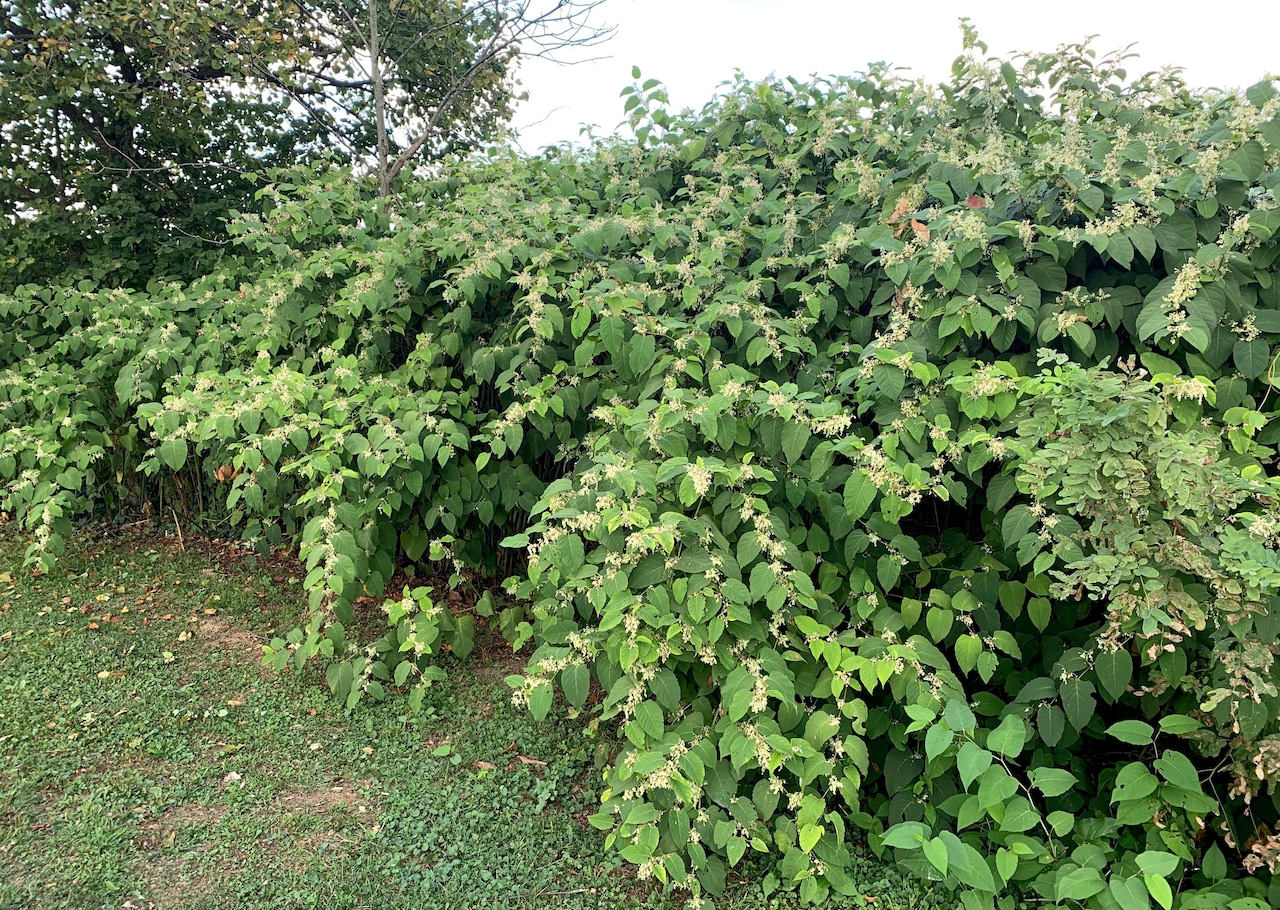
The growing problem of invasive plants has ignited a buzzstorm of local and national efforts to get rid of our worst weedy offenders and stop new invaders from gaining a foothold.
But one strategy that isn’t part of the mainstream effort is something humans are better at — using things until they’re gone. In other words, if we can’t beat the invaders, can we eat them or make use of them in some other way?
It’s not such a far-fetched idea.
A new book from St. Louis’ Missouri Botanical Garden suggests it’s possible to do just that — and in some cases, it’s already being done.
“Love Them to Death: Turning Invasive Plants into Local Economic Opportunities” (edited by Dr. Wendy L. Applequist, Missouri Botanical Garden Press, 2025) says there’s even a new name for people aiming to eat invasives into oblivion, “invasivores.”
Journalist James Gorman coined the phrase in a news article describing Florida events designed to encourage the eating of invasive lionfish.
Dozens of cookbooks share recipes for invasive plants and animals, and an “Eat the Invaders” website has emerged to champion the invasivore cause.
The “Love Them to Death” book describes numerous “weeds” that are tasty, nutritious, and already being eaten in some cultures.
For example, the young shoots of one of Pennsylvania’s worst roadside/creekside weeds – Japanese knotweed – are prized in Asian cultures as one of the season’s first fresh greens.
With a flavor described as a cross between asparagus and rhubarb, Japanese knotweed shoots also can be used in place of rhubarb in a pie or pickled for use in various sweet/tangy recipes.
Kudzu vines and roots — a super-fast grower that’s been elbowing northward into Pennsylvania — produce a powder that’s been used a commercial food-thickener in Japan since the 1600s.
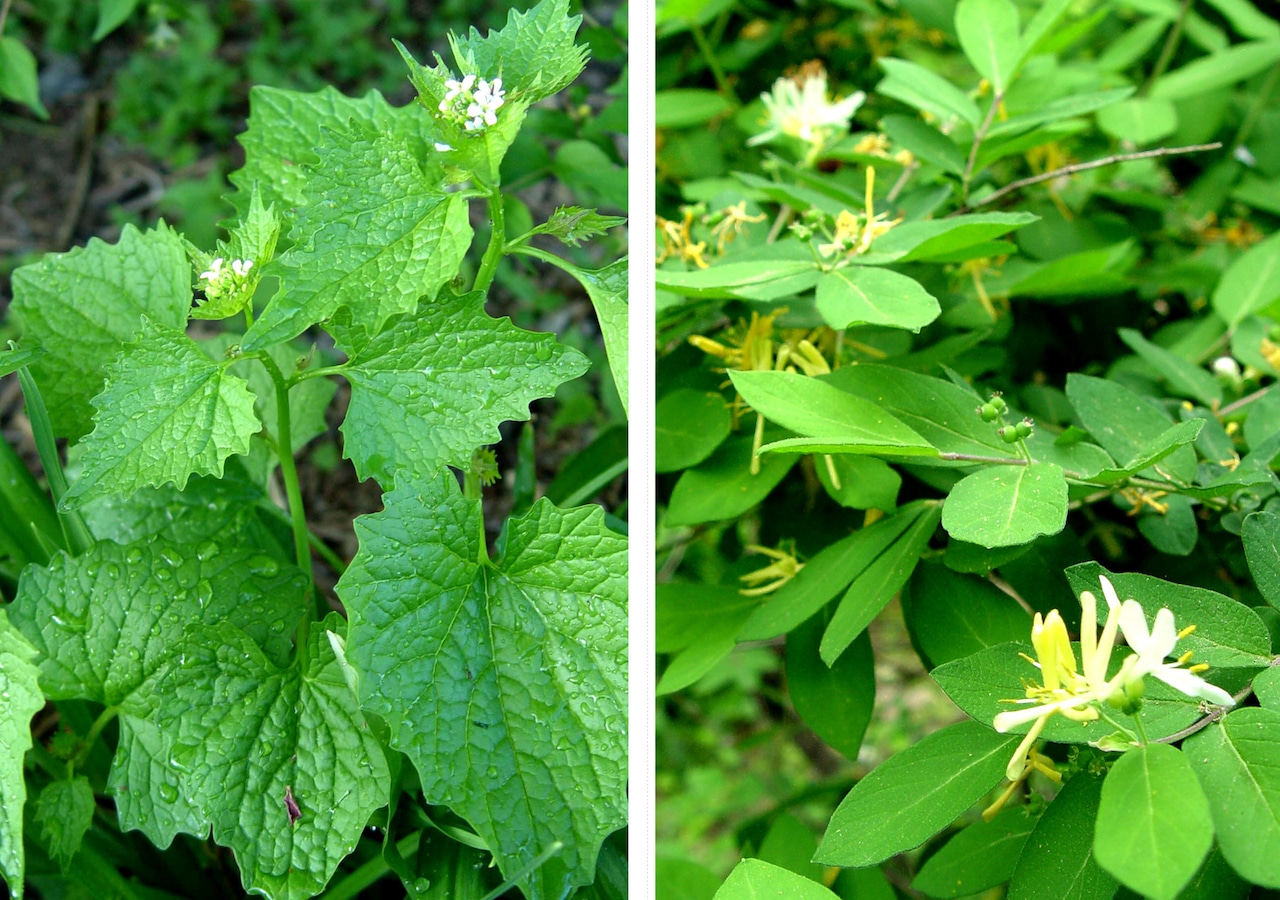 Garlic mustard leaves, left, and Japanese honeysuckle blossoms, right, are both eaten in some cultures already.George Weigel
The flowers of Japanese honeysuckle — on Pennsylvania’s Noxious Weed List along with knotweed and kudzu — have a light honey flavor that’s useful in tea, vinegar, beer, kombucha, and syrups.
And even many common yard weeds are edible, the book’s Missouri Botanical Garden research-scientist authors say.
They mention chickweed sprouts that can be used in salads, baked dishes, and soups, and garlic mustard leaves, which taste like a cross between mustard greens and garlic and are useful in flavoring dips, sauces, salads, pesto, and stir-fries.
Not so coincidentally, one reason many of our “weeds” are here in the first place is that they were introduced as edibles.
British colonists in the 17th and 18th centuries, for example, introduced such one-time European edibles as broadleaf plantain, Queen Anne’s lace, curly dock, dandelion, and sweet fennel into U.S. gardens.
Besides describing the possibility of eating our way out of trouble, the authors point to plenty of other invasive-plant uses.
Applequist, the book’s editor, says many invasives have clinical backing for one or more medicinal uses.
She cites St. Johnswort in treating depression, barberry root bark for its anti-bacterial properties, Japanese honeysuckle flowers for treating pneumonia, Japanese knotweed for respiratory infections, and mugwort as a topical agent for vaginal infections.
Applequist adds that many more invasives have long been used in Chinese medicine, including autumn olive, akebia vines, Chinese wisteria, giant reed grass, privet, puncturevine, and tree-of-heaven.
One chapter of the book is devoted to how invasives can be used for building materials, such as kudzu fibers that make a ropelike component that strengthens other materials; bamboo shoots that can be bundled, interwoven, and layered, and Bradford pear branches that can be woven into fencing.
Other invasive-plant uses include: invasive grasses as biofuel or in thatched roofing; invasive vines (wisteria, Oriental bittersweet, Japanese honeysuckle, porcelain berry, kudzu, etc.) that can be woven into baskets; tansy, buckthorn, Japanese knotweed, and Norway maple that can be used to make dye, and mulberry, milkweed, rose-of-sharon, stinging nettle, burning bush, and tree-of-heaven that can be used to make paper.
All of this will require some major rethinking in how we view invasives, though, writes Applequist.
The starting point, the book argues, is ditching the term “invader” and the premise that “alien” plants are bad and native ones are good.
“Many introduced plants coexist with native plants in new habitats without doing obvious harm,” writes Applequist. “Some authors have argued that calling them ‘invaders’ just because they are not native conveys needless fear and hostility and may inspire control methods that do more harm than good.”
Ethnobotanist Tusha Yakovleva, in the book’s chapter on Japanese knotweed, says knotweed was purposely introduced to America in the late 1800s by cattle farmers, who viewed it as a nutritious and natural grazing source for their herds. By the early 1900s, knotweed was even displayed as a durable ornamental shrub in the New York Botanical Garden.
Then its grow-out-of-control tendencies became obvious.
“Fear quickly bloomed into blame,” writes Yakovleva, “and knotweed was deemed a terrorist, charged with attacking homes and communities … An industry rose up to defend against (it), utilizing any measures to eradicate the plant. Glyphosate became the knotweed eradicator’s primary partner.”
Since then, Yakovleva says that “the scuffles with knotweed turned to battles, then to all-out war,” making knotweed “the poster child for invasive species threatening growth around the world.”
She points to 2021 estimates that the United States alone is spending $21 billion per year trying to combat assorted invasive plants and animals.
Rather than focusing solely on the usually futile effort to eradicate invasives, the book cites the alternate views of plant ecologists Dr. Mark Davis and Dr. Matthew Chew, who advocate focusing on plants’ function rather than origin.
“It is time for scientists, land managers, and policy-makers to ditch this preoccupation with the native-alien dichotomy,” Davis and Chew write, “and embrace more dynamic and pragmatic approaches to the conservation and management of species – approaches that are better suited to our fast-changing planet.”
As seed-bank specialist Katie Carter King writes in the book’s chapter on kudzu, “Kudzu isn’t going anywhere. Rather than work to eradicate it, why not try to understand the latent possibilities it holds?”
The idea of eating away invasives isn’t going to be as “straightforward as just finding populations and picking and selling,” the book concedes.
For one thing, people tend to be averse to trying new foods.
Applequist points out some other hurdles:
1.) Laws restrict collecting plants from public lands or private property without permission and regulate the transport of many of the worst invasives.
“These regulations are well-intentioned and mostly reasonable, meant to prevent the serious harm that can be done by improper practice,” Applequist writes. “Accidentally dropping a single fruit or seed from a sack could disperse an invasive plant to new habitats, such as your yard.”
2.) For commercial uses, food-safety laws come into play. Meeting those might be particularly hard for plants collected from the wild – ones that might have been contaminated in an unknown way or sprayed with an herbicide.
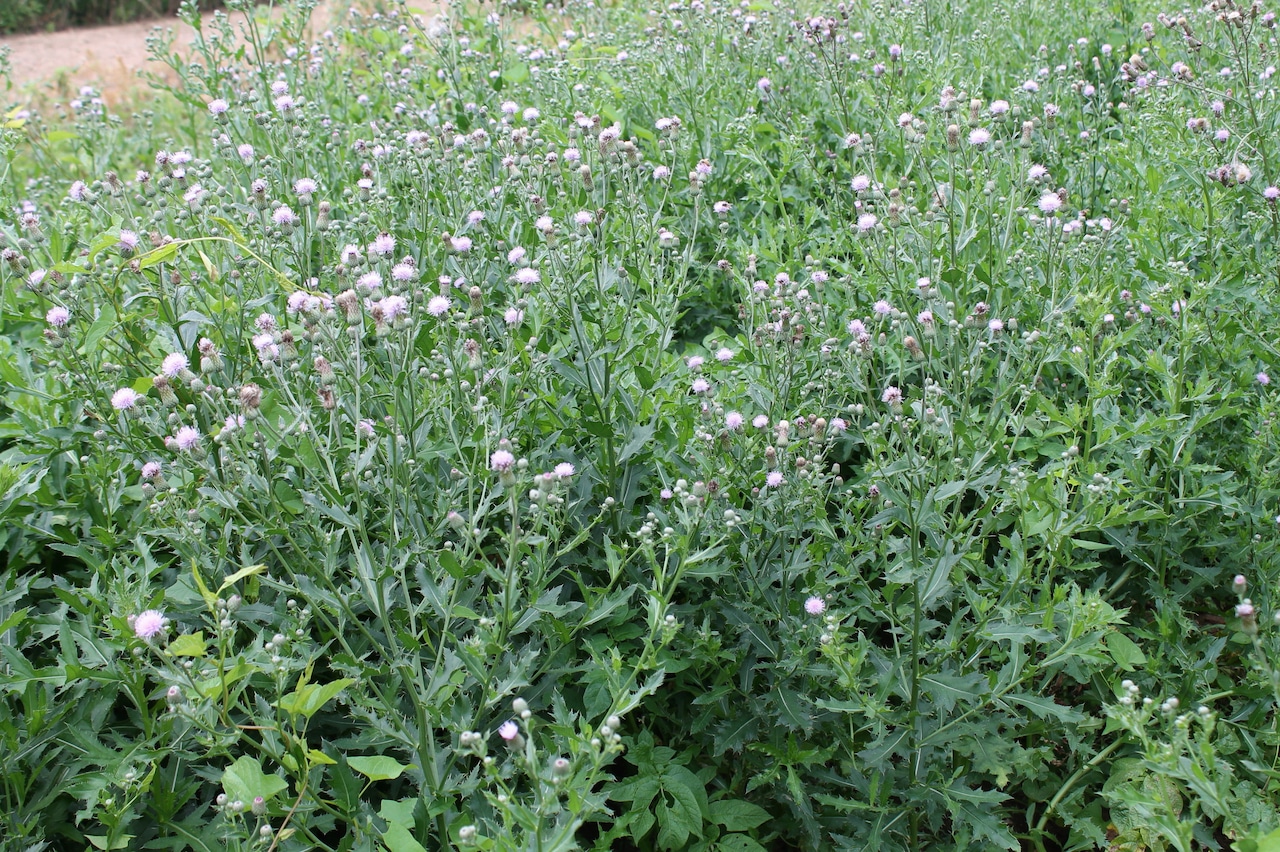 Thistle is a weed that can come back with a vengeance if you don’t kill or remove every last piece of it.George Weigel
3.) It’s possible that gathering an invasive might make the spread worse. Anyone who’s partially removed an outbreak of thistle, for example, knows that it grows back with increased vengeance from parts left behind.
4.) If a commercial venture invests in a new invasive-plant use, what happens when the supply starts to dwindle?
Applequist mentions the possibility of “deliberate spread of a species by people who are making money from it and want it to continue to thrive.”
Even if widespread commercial use doesn’t happen, “recreational invasivory” might be enough to make local dents in invasive populations, the book suggests.
“Eating invaders” can still be a win-win that puts food on the forager’s table while knocking back small, satellite populations in a back yard or neighborhood natural area.
“In problem areas, there is a lot of material,” Applequist writes. “Nobody minds if it gets ripped up. And if a really intensive harvest completely wipes out a local population, that’s not ‘environmental damage’ but a bonus.”
“Any healthy forest or grassland supplies us with many gifts, if we can learn to see them,” says Applequist. “The message of this book is certainly not that invasive species offer us more, but that even lands we have damaged do still have gifts to offer.”
If you purchase a product or register for an account through a link on our site, we may receive compensation. By using this site, you consent to our User Agreement and agree that your clicks, interactions, and personal information may be collected, recorded, and/or stored by us and social media and other third-party partners in accordance with our Privacy Policy.
Comments are closed.