
Key Takeaways
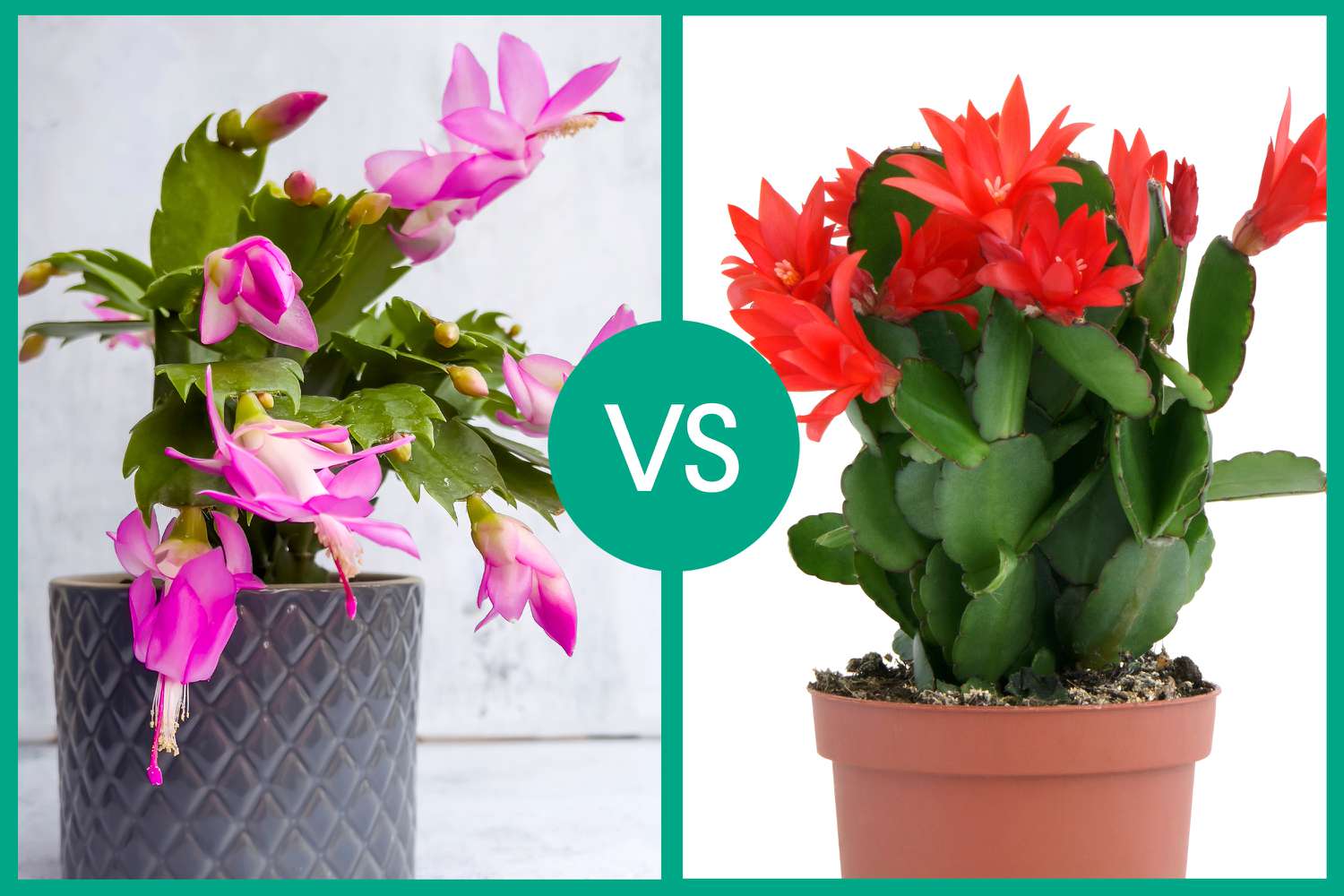
Thanksgiving and Christmas cacti look alike but differ in leaf shape and bloom time—Thanksgiving cacti have pointed, serrated leaves and bloom in late fall, while Christmas cacti have rounded edges and bloom closer to winter holidays.Both types thrive with moderate watering, bright indirect light, and a bit of humidity, mimicking their tropical origins; well-draining soil and balanced fertilizer are key to healthy growth.To trigger blooming, adjust their light and temperature—give them long nights, cooler air, and minimal disruption once buds appear.
If you’re looking for a festive plant to bring cheer to your home this holiday season, the Christmas cactus and Thanksgiving cactus offer brilliant, low-maintenance blooms. Telling the difference between these two varieties of plants in the Schlumbergera genus can be tricky, but is essential so you know how to care for your plant and when to expect blooms. We asked plant experts to explain the differences between the two and share their best tips for helping your cactus thrive year after year.
Niwar Nasim, owner of Nasim Landscape in Puyallup, Washington
Kaustubh Deo, owner of Blooma Tree Experts in Seattle
Identifying Characteristics
One way to determine if a plant is a Christmas cactus versus a Thanksgiving cactus is to look at the shape of the plant. Christmas cacti have smooth, scalloped stems, while Thanksgiving cacti have pointed, pronounced stems.
“Christmas and Thanksgiving cacti might look similar at first glance, but you’ll notice Thanksgiving cacti have these sharp, serrated edges on the leaves, almost like they’re cut with precision,” says Niwar Nasim, owner of Nasim Landscape in Puyallup, Washington. “The Christmas cactus has softer, rounded edges—a little less intense, you could say.”

Christmas cactus leaves.
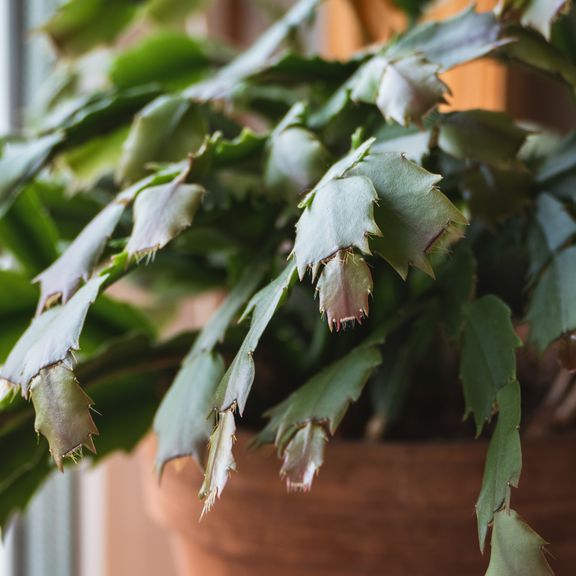
Thanksgiving cactus leaves.
Christmas cactus leaves.
Credit:
Herman Vlad/Getty Images
Thanksgiving cactus leaves.
Credit:
Nadya So/Getty Images
Blooming Period
Another difference between Christmas and Thanksgiving cacti is in their blooming periods. True to their names, Thanksgiving cactus plants bloom earlier in the season, in late fall. Christmas cacti bring bright blooms later, during the winter months.
“Thanksgiving cacti tend to surprise you with their blooms around late November, kicking off the season, while Christmas cacti take their time, showing up closer to Christmas itself, sometimes even early January,” Nasim says.
Flower Characteristics
Another way to identify a Christmas cactus versus a Thanksgiving cactus is by looking at the blooms. “Thanksgiving cacti produce horizontal blooms in different colors, whereas Christmas cacti have vertical, tubular flowers, usually in red or purplish-red,” says Kaustubh Deo, owner of Blooma Tree Experts in Seattle. Thanksgiving cacti blooms come in shades of white, pink, yellow, and orange.
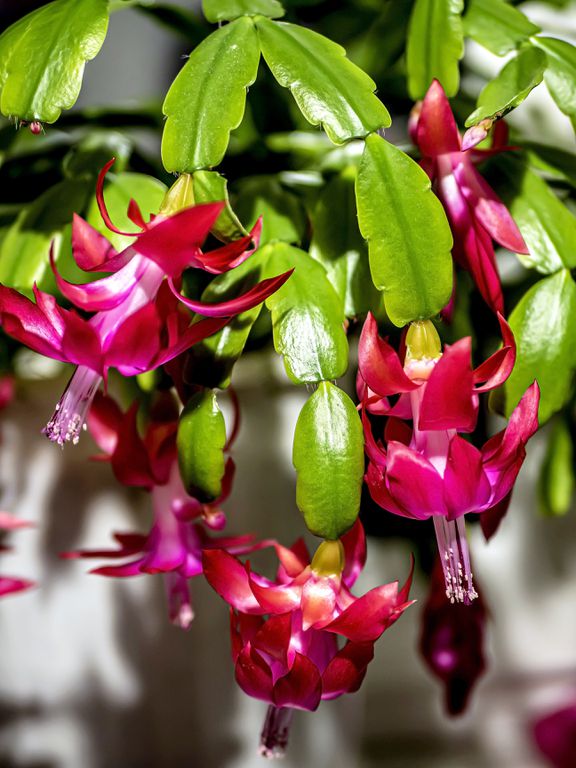
Christmas cactus flowers.
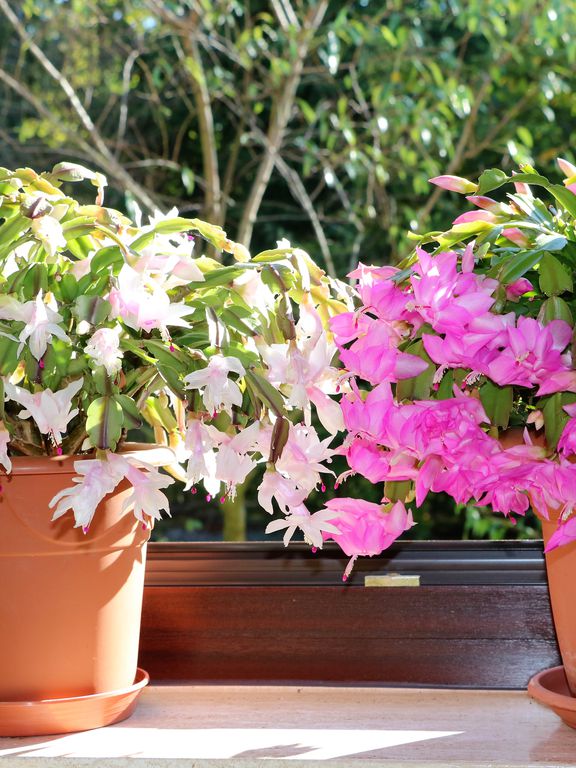
Thanksgiving cactus flowers.
Christmas cactus flowers.
Credit:
petrovval/getty images
Thanksgiving cactus flowers.
Credit:
ClaraNila/Getty images
Because the two plants share so many physical similarities, Thanksgiving cacti are often lumped together with Christmas cacti. However, because the care and maintenance are generally the same, this isn’t typically an issue and only matters if you’re trying to time your blooming period. You will need to encourage blooming for a Thanksgiving cactus a bit earlier than a Christmas cactus.
Care and Maintenance
Watering Needs
Christmas and Thanksgiving cacti need moderate moisture, requiring watering when the top inch or two of soil is dry. Water thoroughly, moistening the entire root ball.
“Less is more here,” Nasim says. “Let the soil dry out between waterings. Think of it as respecting their boundaries!”
Light Requirements
Thanksgiving and Christmas cacti grow best with bright, indirect sunlight. If your cactus is indoors, a window facing the north or east offers an ideal setup for indirect light. Too much direct sunlight can burn the leaves of the cacti.
Temperature and Humidity
Both varieties of these festive holiday cacti grow best with consistently warm temperatures and some humidity, in keeping with their native habitat in Brazilian rainforests. If your plant is indoors in winter with dry heat, spray it with mist for some moisture.
“A little humidity goes a long way,” Nasim says. “A light misting here and there can help, especially in dry spaces.”
Thanksgiving and Christmas cacti grow best in warm temperatures between 60 to 75 degrees Fahrenheit, according to Nasim. A little cooler temperatures at night can also help the cacti thrive, encouraging beautiful blooms.
Growing Conditions
Thanksgiving and Christmas cactus plants grow best in well-draining soil, which helps prevent root rot. A commercial cactus mix or regular soil with some added perlite can satisfy these holiday succulents.
“These cacti do best in well-draining soil,” Nasim says. “I like to add a bit of sand or perlite to lighten things up; it gives the roots breathing room. Heavy soil traps water—something these cacti aren’t fans of. You want the soil to feel light and airy.”
Soil and Fertilization
In addition to needing well-draining soil, Christmas and Thanksgiving cacti thrive with acidic soil and balanced NPK fertilization. Fertilize your Christmas cactus each month until flower buds form, usually in late summer to early fall. After your Christmas cactus blooms, you can continue monthly fertilization. For Thanksgiving cactus, fertilize every two weeks in the spring, summer, and early fall.
Both cacti grow best in USDA gardening zones 10 through 12.
How to Encourage Blooming
“To encourage blooming, provide 12 to 13 hours of uninterrupted darkness each night for six weeks and reduce watering as the bloom period approaches,” Deo says.
Additionally, give your cactus cool nighttime air (between 50 to 55 degrees Fahrenheit) and make sure your cactus has plenty of bright, indirect sunlight during the daytime.
“Once you see buds forming, try not to move them around—these plants can be sensitive to changes, and you don’t want to risk those blooms falling off,” Nasim says. “It’s all about giving them the right conditions and then letting them do their thing, undisturbed.”
Comments are closed.