
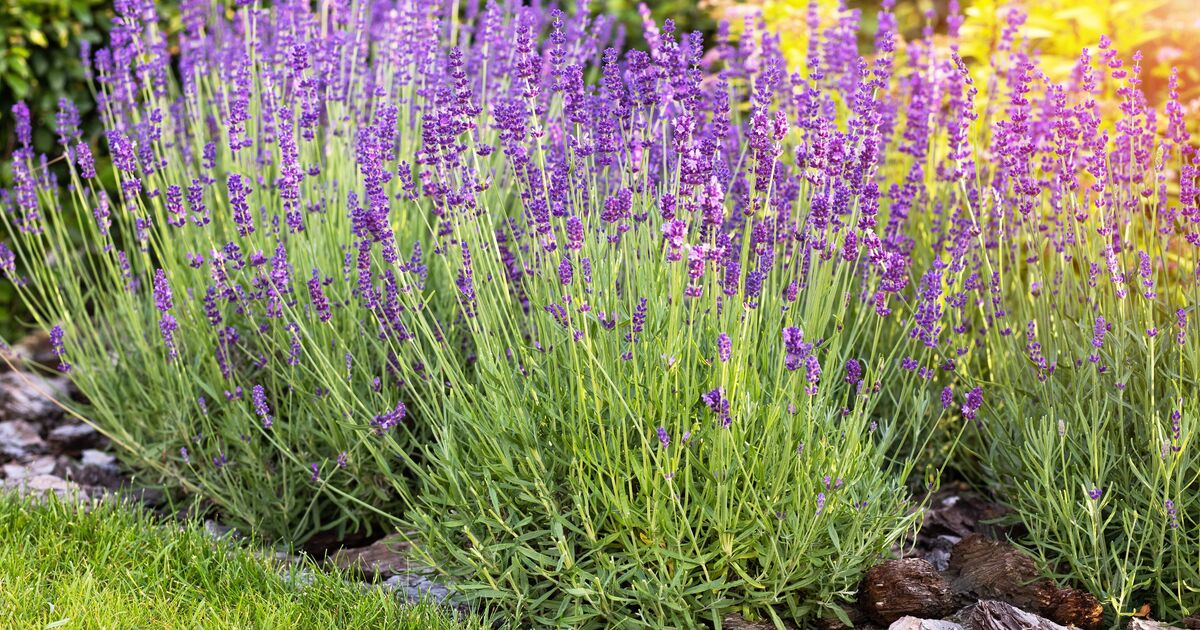
Lavender is renowned for its delightful scent and for attracting bees with its flowers. It is a versatile plant for any garden, but it’s important to prep it now for winter.
Mark Bennett, from the Gardener Report blog, shared his expert advice on protecting cherished lavenders throughout the cold months to ensure they flourish with spectacular blooms when spring arrives. According to Mark, the “two most important” autumn tasks for lavender care involve clearing away fallen leaves that have gathered around the plant and trimming lavender into a compact, sturdy mound shape, which will better withstand harsh winter conditions. Addressing the essential pre-winter lavender maintenance, Mark stated: “Lavenders should be pruned every year as this will slow down the formation of woody growth, increase the longevity, maintain an attractive shape and stimulate greater flower production.”
Shaping your lavender is most effectively achieved through substantial pruning carried out in the spring months. However, Mark emphasised that a lighter trim during late summer or early autumn is equally crucial for preparing plants to endure winter’s severity.
Offering additional expertise, the specialist said: “The goal with lavender pruning should always be to form a nice, dense mound-shaped shrub as this is considered most attractive and it will prevent winter damage.
“To prune your lavender for winter you should cut spent flower stems back and tidy up the appearance, round off the lavender nicely.
“The golden rule of lavender pruning is to never cut back to the woody material as the wood does not rejuvenate and the wood is the weakest least resilient part of the plant.”
As gardening enthusiasts prepare their secateurs, they ought to exercise restraint when trimming their lavender, as “the most you should cut back is a third of the green growth”. This approach will help protect against snow, ice, or excessive moisture penetrating the lavender and damaging its more delicate woody core.
Gardeners must also consider the plant’s hydration requirements during the colder months – these robust plants enter a dormant phase over winter, dramatically decreasing their water needs. Mark observed that the challenge with established lavender typically stems from excessive moisture over winter owing to generally increased winter precipitation in most regions.
Nevertheless, for those with lavender approaching its first anniversary, some watering every four to six weeks could prove helpful during winter if rainfall has been limited.
It may prove necessary to relocate potted, non-English lavender varieties indoors during winter to protect them from freezing temperatures. In such circumstances, the lavender will require a modest amount of water throughout winter to stop it from becoming completely parched.
Comments are closed.