
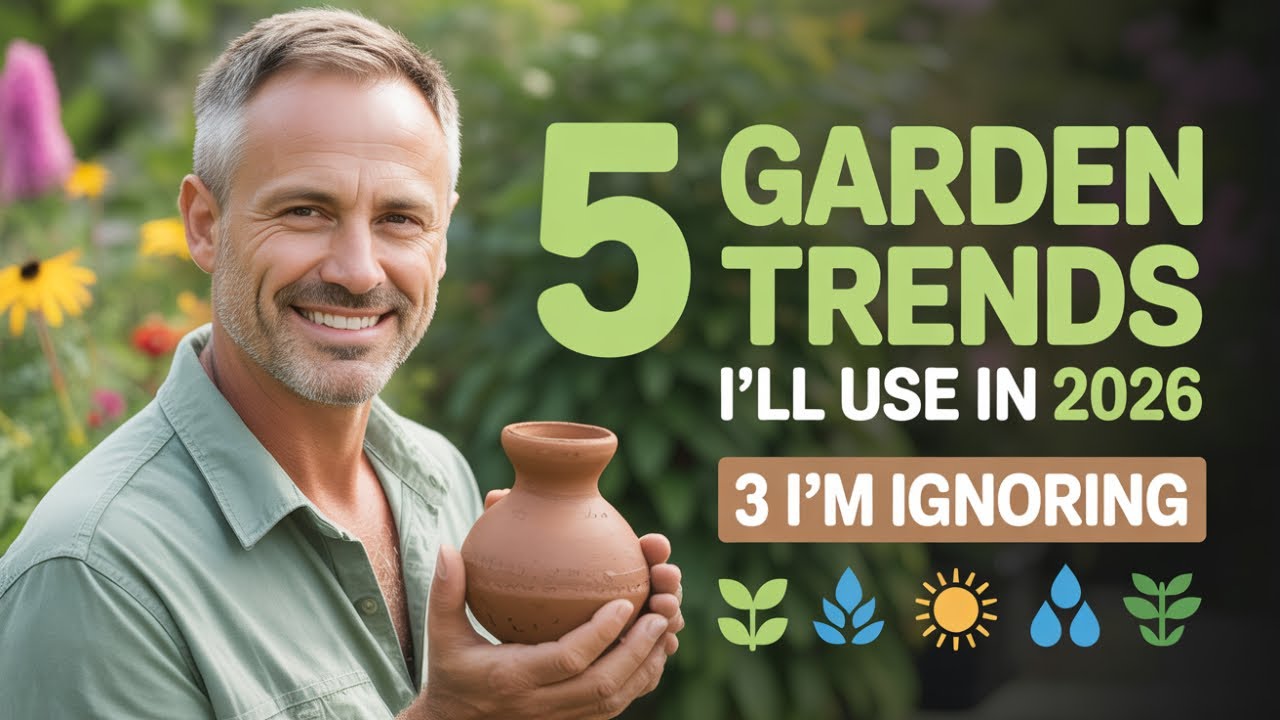
🌱 Ready to future-proof your garden for 2026? Join Grow Green & Live Clean as we explore the hottest gardening trends that’ll transform your organic oasis! From climate-resilient native plants to game-changing sustainable watering systems like clay ollas, discover which trends are worth your time and money.
In this video, I’ll share the 5 garden trends I’m actually implementing in my garden for 2026 (and 3 I’m completely ignoring). Plus, you’ll learn my organic growing techniques, money-saving DIY solutions, and how to prepare your soil for changing climate conditions.
🔔 Subscribe for weekly organic gardening tips and hit the bell for notifications!
🏡 Transform your backyard into a thriving, organic paradise with expert tips on composting, soil health, and natural pest control. Whether you’re a beginner or seasoned gardener, learn to grow healthy, pesticide-free food at home!
#OrganicGardening #GardenTrends #SustainableGardening #NativePlants #ClimateResilient #DIYGarden #SoilHealth #ClayOllas #Composting #PesticideFree
Every year, new garden trends roll across social media. Some helpful, some questionable, and some that look great only on Pinterest. Number one, the native plant comeback, but with a practical twist. Native plants aren’t new, but 2026 is the year they go from nice if you have space to a genuinely essential part of how we garden. And what I love about this is how seamlessly it pairs with organic growing techniques. Native plants thrive in the local climate, so they use less water, need fewer inputs, and bounce back from stress much faster than many ornamental imports. But the real shift is happening with how they’re being grown. Gardeners are leaning into organic soil amendments, natural mulches, and no spray policies to support the ecosystems these plants invite in. When the soil is alive with microbes, fungi, and beneficial insects, native plants practically raise themselves. Less work, more resilience. This is absolutely staying in my garden. Number two, DIY clay olives. The money-saving watering trick. Olives, the traditional buried clay watering pots, are having a moment again, but this time the focus is on DIY. Store-bought olives are great, but pricey. Make your own with two unglazed clay pots, a bead of sealant, and a simple lid works just as well for a fraction of the cost. What I love most is how efficient they are. Fill the pot, cap it, and the Ola slowly releases moisture directly into the soil with almost no evaporation. Perfect for droughtprone areas or forgetful waterers like me. This is inexpensive, sustainable, and incredibly effective. Definitely one I’m keeping. Number three, climate resilient gardening rooted in soil health. Climate resilient gardening can sound intimidating, but at its core, it’s simply about strengthening the soil so the garden can handle whatever the weather throws at it. Gardeners are moving away from synthetic fertilizers and embracing practices that build soil structure, adding compost, mulching, minimizing tilling, and encouraging deep roots. Healthy soil holds water better during droughts, drains more effectively during storms, and helps plants withstand temperature swings. It’s the foundation of a steady, resilient garden. This ties seamlessly into nearly every good habit I already use, so it’s absolutely on my list for 2026. Number four, new compost innovations. From odor reducing insulated bins to micro boosted rapid compost systems. These innovations help break down kitchen scraps faster and more cleanly. My favorite part is the rise of community compost hubs that make soil building accessible even for apartment gardeners. Compost is the backbone of a healthy garden, so I’m happy to see this gaining real traction. Number five, organic pest management 2.0. Organic pest management is leveling up in 2026. Instead of relying mostly on sprays or oils, gardeners are focusing on ecological balance, beneficial insects, nematodeses, habitat strips, companion planting, and prevention first strategies. This approach keeps pests in check without harming pollinators or disrupting the garden’s natural systems. It’s safer, smarter, and surprisingly more effective. It’s not just something I’m trying, it’s becoming a core part of how I garden. Now, let’s move to the trends I’m choosing to skip this year. Number one, hyper minimalist gravel gardens. They look clean and modern, but gravel gardens often overheat the soil, reduce habitat space, and require more weeding than people realize. Great for photos, not great for long-term practicality. Number two, LED drenched night gardens. These glowing neon gardens are all over social media, but the intense colored lights can disrupt nighttime pollinators, confuse insects, and steal the natural ambiance from the garden. Pretty in pictures, but not for me. Number three, oversized smart garden gadgets. Massive smart systems, appcont controlled gadgets, and subscription-based soil sensors are trending again, but most over complicate simple tasks. I’d rather invest in compost, mulch, and good soil than another device I have to troubleshoot. So, those are the five garden trends I’m embracing in 2026, and the three I’m comfortable leaving behind. Native plants, soil first climate resilience, DIY olives, compost innovations, and eco-friendly pest management are shaping a garden that’s healthier, easier, and far more sustainable. If you enjoyed this breakdown, don’t forget to like this video and subscribe so you don’t miss the upcoming tutorials and deep dives. And before you go, drop a comment below and tell us which one of these you’re most excited to try. Or if you’ve got a gardening tip that didn’t make this list, but absolutely should. I’d love to hear what you’re growing in 2026.
Comments are closed.