
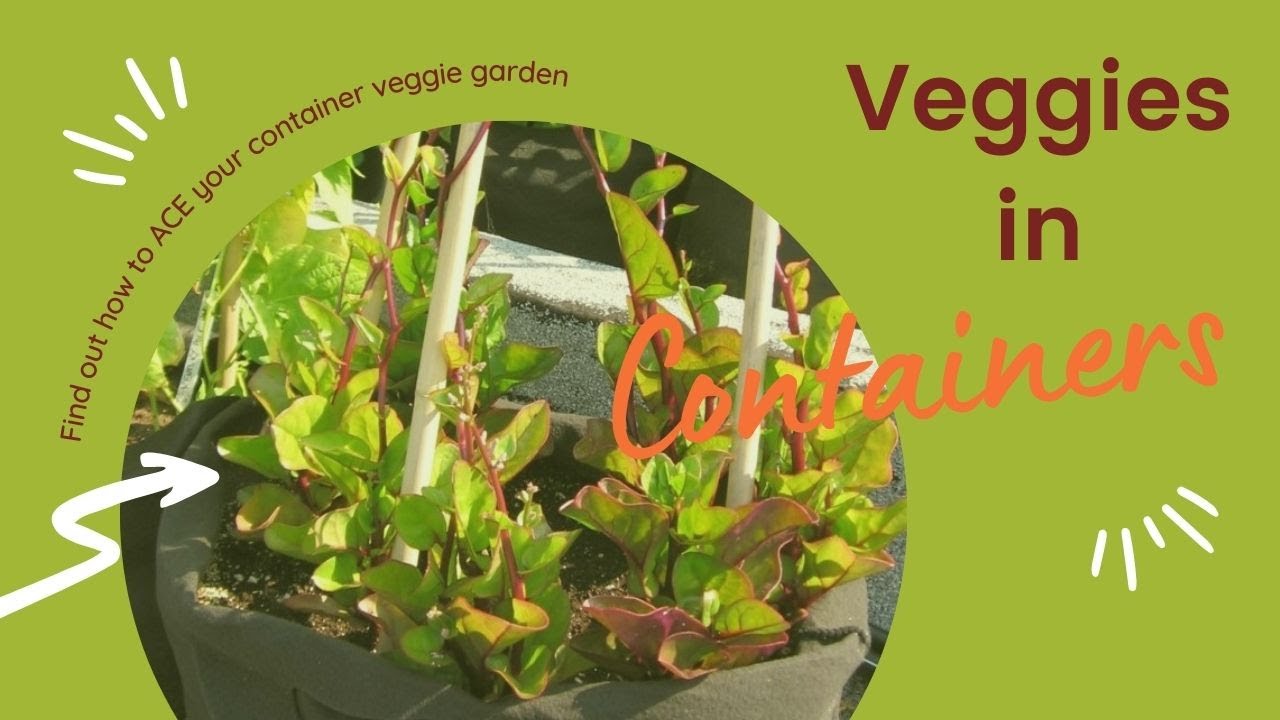
Want to harvest more veg? You can get lots more from a small space by growing in containers. (If you get it right…but that’s not difficult!)
If you get these 4 things right, you’re on the road to container gardening success:
• The right container
• Good soil
• A suitable location
• Proper care
In this episode, Donna and Steven share top tips for container gardening success, including choosing pots, selecting soil, finding a suitable spot, and caring for your container vegetables.
If you’re looking for more on container gardening, check out the post on Best Veg to Grow in Pots at www.foodgardenlife.com. And say hi—we love to hear what you think!
say you have a south facing fence but you don’t have anywhere in the ground to grow it’s just another option it’s a container that you can use to maximize your space you’re listening to the food Garden life show the show that helps you grow food whether it’s on a balcony in a backyard or bigger I’m your host Steven bigs and I’m your host Donna Bowser together together we talk with gardening experts and we talk about what we’ve done in our years in the Horticultural trade helping you bend the rules and grow food in a way that suits you and your growing zone Welcome to our container gardening episode and our hope today is to set you up for container gardening vegetable growing success for this year and Donna I think one of my favorite container gardening memories is that time that you and I went to our friend Joanne’s rooftop garden which is here in Toronto and Joanne has about 500 square feet intensively gardened and it was just amazing everything she had packed into that space But a big part of her recipe for Success was these containers which also had reservoirs in them and so those plants didn’t have any water stress she had a good soil mix in there and yeah that was really an amazing Garden you remember that you know and people often say I just have nowhere to Garden nowhere to grow well Joanne defied all of that I mean we had to go into her house up her stairs through her bedroom into her bathroom out a window and there was that little flat area that was just over her print porch and the reason she gardened there was because she had full sun almost full sun whereas because she was an inner city garden all those big Urban trees she just couldn’t get sun anywhere else so where there’s a well there’s a way Joanne really pointed that out yeah and you know that makes me think of another wonderful container garden that we saw together another rooftop garden in Quebec City and that was the garden that was a top a soup kitchen and so that it it was really neat because the people using that soup kitchen could also take part in the garden but although this Garden was also amazingly productive it was done so differently so Joanne had the sub irrigated containers and this rooftop garden in Quebec City they were using those fabric grow bags with little spaghetti tube uh spaghetti irrigation tub so a very different system but amazingly productive and I have to say even before I saw Quebec or met Joanne I was growing on my little tiny balcony just off my second story as well because again it was one spot in my inner city garden where I had son and I was using the sub irrigated pots up there again this was before I knew you and know it was a thing I had already started doing that the funny thing is when we had the house sitter come visit us we had grown squash spaghetti squash and it had grown over over the balcony and and had gone down below and when our host sitter got out of our garage late one night when he first started host sitting he bonked his head right into one of our big spaghetti squs and he thought he was being attacked and it was crazy so that’s just how well you can grow in in an inner city area or anywhere where you think you don’t have sun look around something will something will pop up and I should say too that even for people who have decent sized yards so I’m in this semi Suburban yard here I’ve got space on the ground it’s not all perfect for gardening but I have a flat roofed garage and so after seeing Joanne’s Garden after being to that Garden in Quebec City I scratched my head and I thought why my not gardening on my garage roof and when I turned it into a garden it became the most productive part of my yard because you’ve got Sun but equally as importantly there’s lots of heat up there too well I’ve seen that garden and it’s fantastic so as long as your roof doesn’t cave in Steve you’ll be okay yeah and actually that’s that’s a big thing to point out for anybody intrigued by this idea of rooftop gardening you need to understand what the loadbearing capacity of your roof is and the kind of expert that you would talk to to find that out would be a structural engineer well typically when they do commercial buildings they do call in Structural Engineers but I understand they are hard to get right now it’s hard to find an Engineers so just remember that every 10 is it 10 gallons water every gallon water weighs 10 pounds so that’s about 5 kilos so it’s heavy like it’s not so much the soil we’re often using the soiless MI but it’s the water yeah indeed okay well where should we start I was thinking today we could talk about containers soil location care um I guess containers is really the first thing we have to think about isn’t it for sure you know I’ve done everything from rain gutters to big old like you say the fabric pots really huge fabric pots actually so I used all kinds of containers and we can start anywhere what do you want to talk about draining sure well maybe I’ll start with a type of container that I’ve used a lot over the years because I’m cheap and uh having worked in the the greenhouse and Nursery trade I had access to the big Nursery pots and those are the the black pots that shrubs and trees come in and I got some that were about a half barrel size those really big ones that are used for large trees and those formed the backbone of my first rooftop garden they’re not pretty but if if Aesthetics doesn’t really matter then it can be a very inexpensive option so you can buy them if you go to somebody servicing the the commercial Nursery trade but also if there are arborists at work in your neighborhood you can ask them and just see if they have them either to give you or sell you for a good price so I think we should start with that for people looking for a lower budget opportunity that’s a good place to start especially if they have a drainage train because otherwise that water just goes right onto your rooftop and drains away so I find it’s really important to have a drainage tray and thankfully they’re selling really large trees or you can just use a boot rack or something like that you know something that would just slightly hold the water but you can’t let all that water run off that’s for sure yeah um the other thing that I’ve done on my driveway garden and maybe this is a whole other episode is I used straw bales as my container and let’s do a whole other straw bale episode but I’ll just throw the idea out there for people who are intrigued and we do have a couple previous uh episodes all about straw bales but the the bail becomes both the container and the growing medium and I’ll say no more I’ll say something I’ll say I thought you said you were cheap and I find straw Bells especially in the city are really expensive especially in the west we’ve had some really droy years and a lot of the straw which usually is used for bedding for Animals is you know hard to get and it’s up to $10 a bail and I I don’t find that cheap and you have to use that new one every year so I find that expensive you you make a good point but I do use the straw bales for winterizing my figs and for mulching in my veggie garden so I think I get three uses out of them so I don’t feel so upset about the cost but but it’s a good point we should mention terracotta pots because a lot of people love the look of terracotta pots I do too I I kind of got turned off of terracotta when I had little kids zipping around on tricycles because when they tip over they just break so easily so know that terracota is fragile both from kids but also if you leave them out for the winter filled with soil they usually crack even when they say weatherproof because I just recently bought a new terra cotta pot I wanted that look for my lemon you know how lemons need to have soil that can dry out yeah but I find the biggest trouble with terracotta pots is that they so heavy yeah so if you’ve already got the weight of the soil and the plant and now you add another what 10 kilo 20 kilo just for a big big terracotta pot they’re so heavy and so you have to think of that as part of the picture I think most of the terracotta pots that are mass produced are not Frost Proof there is a special type I think it comes from the UK somewhere that you pay an arm and a leg for that is supposed to be resistant to frost I’ve never tried them because I’m cheap but but that is something to know but yes that the weight is a is a big issue for sure yeah cheaper than I was gonna say the one I bought I’ll keep you informed how it works it was super heavy though we we both mentioned today those grow bags so that Garden we talked about in Quebec City and I’ve used them extensively on my driveway grown potatoes in them grown herbs in them but I know you’ve done an awful lot with those so maybe let’s talk about those what do you have to share on those you know what I loved about them is that they breed just like terra cotta so everything you love about terra cotta you are going to love about these these grow bags and there’s many many many Brands so check with the retailer to see if they food safe before you take them home there’s a lot of them online and also remember that not I’ve tried the ones that go against the wall that hang from your wall they look really pretty but they dry out within minutes so you take a picture of the day you plant them they look great and about three days later they’re all DED out and I’m not saying I’m the bad Gardener Steve I’m just saying you’ve got to really watch out that they do dry out so when you’re planning to use grow bags also plan to use the sub trays the big trays that go under them so that you could have them wicking up that water the whole time you’re using them but other than that I love them for instance I started all my potatoes super early one year I just put in my Greenhouse I put some um cords that were warm the ones that you might use on your rooftop to keep your roof from freezing up I put them right on the soil on top of the soil put the grow bags on top of that planted my potatoes and by the time I mov them outside when I had to put all my tomatoes in my Greenhouse those potatoes looked really great and had really established early so they’re really flexible I use them for a lot of herbs I use them as I said for tomatoes what I like about them is that they’re washable so if you ever have an outbreak of any kind of disease you can empty the soil and wash them so I love that I have one more thing to add about the grow bags too is I’ve seen one somewhere that had a little flap at the side like a little door and it was designed for potatoes because you can also buy in plastic pots you can sometimes buy these potato pots where you terrible and cheesy this is cheesy Steve this is not real gardening this is those beginner gardeners that are looking for something cheese well I made one of those potato pots out of two Nursery pots where I cut a hole in one and I slid it into another pot for my kids when we were growing potatoes on the driveway so that they could excitedly Harvest a couple potatoes well okay but you know you can just reach into the pots and fill around for the potatoes and pull them out the same as you would in your garden outside they wouldn’t be able to come in from the side so I think it’s kind of one of those um a point it’s it’s a bit gimmicky but yeah a bit gimmicky yeah yeah but I have tried them just because I was given them as a free sample and I didn’t find they really work same with the ones I cut slits into the side of some of the fabric pots to put extra strawberries on the side I didn’t find it really paid off better to just plant your strawberries in the top let them spill over benefit from that don’t have extras sticking in the side that are just going to dry out the pots are just going to dry out coming up we have more container ideas for you also talking about soil for your containers about location and about container garden care coming up in just a moment a shout out today to all of you who are joining me for fig camp this week we’re in the second seting of fig camp and people from New York Ohio Pennsyvania Vermont Alberta Ontario Manitoba all sorts of cold climate fig enthusiasts are real privileged to hang out with you and talk about figs so thanks for being with me next week Donna and I are running a container vegetable camp if you are thinking about gardening in containers this year check it out it’s two-part it’s a deep dive into how to successfully grow lots of veggies in containers more details at foodgarden life.com some new content on the website food Garden life.com we have a piece all about a dragon’s Garden if you are gardening with kids if there are kids in your life I think you’ll love this story a story about Finn who came to one of the talks that my daughter Emma and I gave and the next day I had a note from his mom that it had inspired him to create a dragon themed Garden so get ideas for some toothy pointy spiny plants to make a super fun Garden for kids foodgarden life.com [Music] [Applause] you’re listening to the food Garden life show the show that helps you grow food whether it’s on a balcony in a backyard or bigger now back to our chat about growing veg in containers I have another type of container to add in here Donna which is hypera and for those who aren’t familiar with the concept you’re using cement um maybe uh let me back up when we talk about concrete concrete is where you mix cement with aggregate like sand and gravel but if you mix cement with something like potting soil then you get something that has a stone-like appearance but it’s lighter and so you this can be a do-it-yourself project if you like that kind of thing and so I’ve done that with the kids you can either make a fairly dry mix that you pack onto the outside of an existing pot to to shape it and then you remove the pot and you’re left with your new hypertet container or if you make the the mix a little bit wetter you can put it into a form as you would with concrete so I mention hypertufa because it breathes and um but if you’re looking for something a little bit more permanent we had these hypertet troughs that we used for mint and they worked great and of course then the mint isn’t spreading All Over the Garden but they have a nice natural look so I like hypertufa is that something you’ve ever tried not for 20 years Steve that’s old school now in fact I got the reason I’m remembering it I got an email from someone I I used to teach this in a class and I got an email from someone that made a hypertet trough with me 20 years ago at a program and she sent me a picture of how great her little HS and chicks look in her hyper Tua so she hasn’t changed out the plant she hasn’t done anything for 20 years and because if you use Dro tolerant plants in something that’s going to drain really fast like hyper Tua it ends up being that you don’t accidentally overwater them it’s a lot of work but it can be a lot of fun you can make stepping stones for your garden as well with that mixture so it’s quite fun but again I think it’s a whole other whole other episode because hypera well there’s recipes different recipes and generally we we didn’t mix ours with potting so we just mixed it with pearl and that made it made it light so it’s fun but I think it’s um I don’t think it really has a place in food growing I don’t know um I have one other thing to add here which is wood for people thinking about making wooden containers I know I have on my radar for this year making some Versailles style planters for my figs and citrus but um you see people making wooden containers for decks patios and I wanted just to mention don’t use pressure treated wood because the pressure treated wood in times past I think it was an arsenic compound now it’s a copper compound that they Ed but anyway it’s stuff that you don’t want around the roots of your edible crops and I want to mention that rot wood rots so it’ll rot your deck it’ll rot itself it’ll be decomposed over time so when I’ve used wooden Planters which we featured in our book NOA vegetable gardening we actually put Styrofoam the rigid styrofoam on the inside of the pot and on the bottom so that it wouldn’t no wet soil would ever touch the wood and that helps to extend that life of that plant for quite a while the other thing I did with my versai style wooden pots is I put casters on the bottom so that I could move them away you’ll be surprised how much just Riff Raff builds up underneath your pots just blows in or comes from somewhere so casters are a really good idea if you’re going to use wooden pots but I don’t think we’ve talked about rain gutters have we talked about that no and since you’re the one who’s done that go ahead I call them eths but e stoughs ring gutters you buy them just at the big box stores people usually don’t buy them because when they’re getting their e troughs redone somebody just installs them but they’re available in 4 in and 5 and 1 half inch sizes and the bigger the better and they can be mounted on so you have a south facing fence but you don’t have anywhere in the ground to grow because you’ve got perennials growing in the ground it’s just another option it’s a container that you can use to maximize your space so using the biggest ones of available buying the end caps spilling with soil and finding some kind of a drip tape or some kind of an irrigation system that means you don’t have to go out every five minutes to water because they do tend to dry out you also have to drill a hole in them so that they don’t become swimming pools because if you get a really heavy delug and this might apply to all pots you have to have a way for the water to get out so when I first did the the rain gutters I drilled the holes on the very bottom but then as soon as you watered them the water just escaped so I was told to put that drill hole just a quarter inch up just a little bit up from the very bottom and that way a little bit of water will sit in them but then when it gets to be too much it’ll drain off and I’ve had really good success in my Greenhouse growing strawberries in rain gutters so I just set up brackets so I can use that whole sidewall of my Greenhouse stick my uh strawberri little plants into that and you know I’m just loving that and I don’t attach them anyway so I could move the whole thing outside of the greenhouse and over to say a fence later if I want and it’s really quite fun it’s a way to expand what you’ve got big downside you have to be on the watering or set up Automatic Irrigation okay well this is great so we’ve covered some ideas for things that can be used as containers I had a couple things to to add as people are thinking about choosing containers first of all make sure it’s big enough because what you need for say a pepper plant might not be as much as you’d need for a big indeterminate tomato plant so you want enough soil to be suitable for whatever you’re growing and then the other thing is if you are growing taller things like tomato plants or you know I have olives that these things can tip over in the wind and so the worst kind of pot you can get is these nice vas shaped pots with a narrow B because just a little bit of wind and they tip over so I like to suggest looking for something with a wide base if it’s got if it’s fairly tall and is likely to catch the wind yeah yeah it’s true especially those Nursery pots when you go to nurseries often they’re standing there picking up their trees off the ground because of big wind because it’s like a flag the top of the plant is like a big flag and then it just pulls over the whole plant so at least with tomatoes you mostly have them tied to something above maybe your e troughs or something um or your what is that overhang called on your house the don’t know anyway often you’ll tie up things like tomatoes but otherwise if you’ve got a big flag it’s just going to blow in the wind and that’s going to cause that pot to tip over so again careful with containers that way okay well we should talk about soil too because I think if you combine good containers with good soil with the right car and location then you know those four things work together for success and I guess the main comment I’d have on soil is don’t be cheap don’t buy those discount soil bags for you know a buck each at The Big Box store because very often you get what you pay for and with soil we want something that that drains well we want something though that also holds moisture that has airspace in there for roots to get around and my advice to anybody who’s doing container gardening on any scale is to actually buy the commercial size bales of of soilless potting mix that’s used in the industry because it tends to have more consistently good quality than the little tiny bags that you buy at Garden Centers the ones that are packaged up for homeowners what would you add to that well during the um during the pandemic I couldn’t get the soil that I normally used and instead I got a high paracity soil and I thought oh this will never work I’ll have to remember to water more often but you know in fact it worked just fine and so there’s quite a range of what can work for you but I would say the same thing you’ve said which is to buy the big Bales and if you have to customize it for your plants later that can work too you just add maybe some more World castings or some of your own homemade compost when you’re transplanting into it and that can personalize or customize your soil for your own plants good well here’s here’s one other thing that people often ask me about containers and potting soil is do I have to change all the soil every year so my response to that would be absolutely not because the the potting soil is a considerable expense but if you’re thinking about your footprint in the environment too remember that potting soils are based usually either on cooy or on Pete Moss and coyer is from it’s the fiber from palms and those are grown halfway around the world so there’s this big footprint of that and Pete Moss of course is carbon that’s sequestered long term in the ground and then we’re using that so don’t throw out your potting soil every year and start fresh you can absolutely use it more than once but what I do is I’ll add some fresh potting soil at the top of a container may you can do that but that potting soil tends to compress over time so if you’re growing annuals in them every year what I’ve done is put out a big tarp dump out the pots onto the tarp add extra drainage material like perlite or just add extra worm casting so that you’re kind of fluffing it up a bit because it can get very compressed I at least change out the third the top third and take that out and remix it and add some slow relase fertilizer if I’m in a really wet climate like on the west coast I would actually add some agricultural lime because that will help soil becomes acidic over time just with the rain or the extra watering and I think that really helps so at least the top third if you don’t have a lot of pots that you’re dealing with just get out of tarp dump them out remix them up fluff them up add them back in and replant and that’s good enough you might find you add a bit more soil but if I’m going to add anything I tend to add orb castings instead of soil because I really like how they both inoculate the soil but they also really twig something in the plants that really stimulates growth when you add worm castings good that’s a great suggestion and and if anybody wasn’t clear on the rationale for for doing that for dumping it out and and mixing in more through the entire soil volume it’s because the fibers that are in the soil whether it’s coer or Pete Moss or some other material they do break down over time and so they degrade and that’s natural they they’re they’re decomposing and so what you’re talking about is adding some other fiber material in there so that you still have nice mix of air and potting soil in there there’s something you will never add people ask me about this all the time never add sand for most of our vegetables that were growing they’re never going to benefit from sand sand is heavy sand compacts even on the beaches of Florida where they have palm trees they have soil compaction just in that sand so don’t add sand instead something like the perlite product that I already talked about is an exploded puffed up Rock so it holds space doesn’t let the soil collapse on itself it holds the space Also increases the drainage and gives the roots a little somewhere to grow good advice yeah and the only time I use sand is for things like my my olive trees where I want a heavier potting soil that drains well and I don’t want them to tip over so the added weight of the sand is good there but olives are a whole other episode that we’ll have to tackle so let’s let’s just think for a minute about location so we’ve talked about choosing containers we’ve talked about potting soil and if we’re thinking about the location for our containers I think it it’s more a question of matching the location to the crop so if you’re growing heat lovers then you want sun and heat so eggplants tomatoes peppers melons all of those things as much sun and as much heat as possible but if you’re growing leafy greens then you don’t want them in full sun all summer and and really then the location will depend on what you’re growing the best spots relief ingredients I just love to tuck in pots against the house or containers against the house where you know it’s on the east side where it’s going to get that really great morning sun but not get that really dry West Sun so or maybe you’re just dealing with a balcony you’re gardening on a balcony you know you’re going to be able to grow as you say the leafy greens the arugula the lettuce the munas you’re going to be able to grow those better in a shap sh or balcony and if you’re on a balcony you actually don’t have a choice of we at a garden it’s usually either sunny or Shady so just uh choose that’ss accordingly you’re right that’s that’s perfect I have one other thought oh I have one other thought too Donna in terms of choosing where to put Plants I think put them somewhere where you will remember to care for them sometimes it’s easy to set up a planter but it’s somewhere out of the way that you you see infrequently and then it’s easy to forget about it and often with containers in hot weather they’ll dry out quickly so put it somewhere you will remember it and remember earlier you talked about the Sip pots the sub irrigated pots that’s fantastic if you can use those and I love those but if you don’t have that you can also buy very small irrigation systems that just have a little Outlet at each pot and that can help those forgetful gardeners or people that just have it on a a bit of a drip system that really can help so if you can’t use a sip pod or subar you know we should do a whole session just on sub arated pots as well we’re just drawing this out forever aren’t we yeah so let’s just well on that note we should just quickly talk about care and I’ll throw in the Sip pot so sip is an acronym for sub irrigated planter and all it means it’s just a fancy way of saying that there is a Reservoir in the bottom of that pot that holds a bit of extra water which then Wicks upwards as that soil begins to dry and so this is great because it gives a consistent moisture all the time for the plants and the worst thing that you can do for your container vegetable crops is just let them get dry when it’s moist dry moist dry that can have a huge effect on the the quality of the growth that you’re getting so consistent moisture is what you should be thinking about those sip pots are great for that like you said Donna let’s do a whole episode on sips because you can build your own as well as buying them um and I guess I would say too so consistent moisture is key and in terms of feeding without going into a whole bunch of detail about products because there’s so many different things out there everybody has a different approach to feeding but I would just say that because the plant is growing in this very limited soil volume in this container and often the commercial potting soils don’t have any nutrients in them then you have to feed and my own preference is because I get busy with camping and kids and life is I like something that will will slowly release so that I don’t have to water on a liquid feed all the time and what about you what are you doing for feed yeah I find it easier to make sure when I’m remixing or reconditioning my soil in the spring to add a little bit as I said maybe some agricultural lime maybe some slow release fertilizer I do that and that it could be an organic slow release it doesn’t have to be one of these big chemical products but it’s a a way to know that there’s some basic fertility happening to the plant and then over the season I just look for signs and symptoms if I see some lower leaves turning yellow I know I need to add more nitrogen so then I can add a little bit of extra fertilizer as I go but I always always mix in Kel and you can buy kelp as a dry product you don’t have to go out to an ocean and collect it you can buy it as a dry product it’s just like a teaspoon per liter it’s very simple whenever you’re fertilizing later in the season you add a bit of liquid but you make it yourself with a bit of dry kelp and it’s uh a very excellent way to bring in those little micronutrients there’s another type of fertilizer it’s guinea pig food do you ever use alala or the guinea pig food actually I buy alala meal from a from a farm supplier around here it’s ground up into a powder and you could also buy it in the little pellets so that’s why I call it guinea pig food because rabbits and guinea if you can’t you know just go to a pet store I guess because there’s I think it’s 17 or 18 micronutrients just in the alala meal so yeah it’s quite Dusty when you just buy the loose meal but I find that I use the pellets I sprinkle them on the top I can visualize okay that’s about equal now and work it in maybe in the top half inch and it really really helps feed the plants and it’s a simple thing you could do good okay well so summing up containers Donna I would say um pick a suitable container for your aesthetic that’s big enough for the plant think about the weight uh don’t cheap out on soil soil is key the location will depend on what you’re growing and don’t forget you need consistent moisture and feed so those are my top points and I guess I would say that container gardening great if you have a small space because you can fit more in but even if you are gardening in a bigger space container gardening can be the key to success with some of these heat loving crops so for me here in Toronto it’s always borderline with okra and eggplant in the ground because I’m on a heavy yellow clay soil that’s slow to warm up put those in containers and you know they’ll give me twice as much as if I grow them in the ground or if you’re growing in Grand Prairie or Edmonton or White Horse if you put your plants in say black pots which are going to really heat up against a south facing exposure because they’re raised and out of the ground you don’t have to wait for the soil to warm up but also you’re able to get that extra heat to stimulate that extra growth on those crops so it’s a way of boosting your season maybe one or two zones just by directing what kind of pot you’re using where you’re placing it and of course in conjunction with what plants you’re growing you don’t want hot dry for lettuce but it’s fantastic as you said for eggplants or for tomatoes so you can position your pots even in your normal gardening maybe you’ve got a certain Garden area that you limit yourself to but you can add pots here and there to just expand what you’re doing and how you’re growing excellent that was fun Donna thank you okay thanks we’d love it if you drop by to say hi online at foodgarden life.com we have articles about growing fruit veg using your homegrown produce also about growing figs and lemons and cold climate so say hi tell us the topics that would help you grow more of your own while you’re at foodgarden life.com also grab our free newsletter subscribers get the subscriber only cold climate fig guide and small space food gardening Tip Sheet you can head over to my website and grab my really cool printable PDF for a seed packet you can personalize it for each type of seeds that you save donnab baller.com have a look you’re listening to the food Garden life show I’m Steven bigs and I’m Donna Bower here to help you grow [Music] n [Music] a
Comments are closed.