
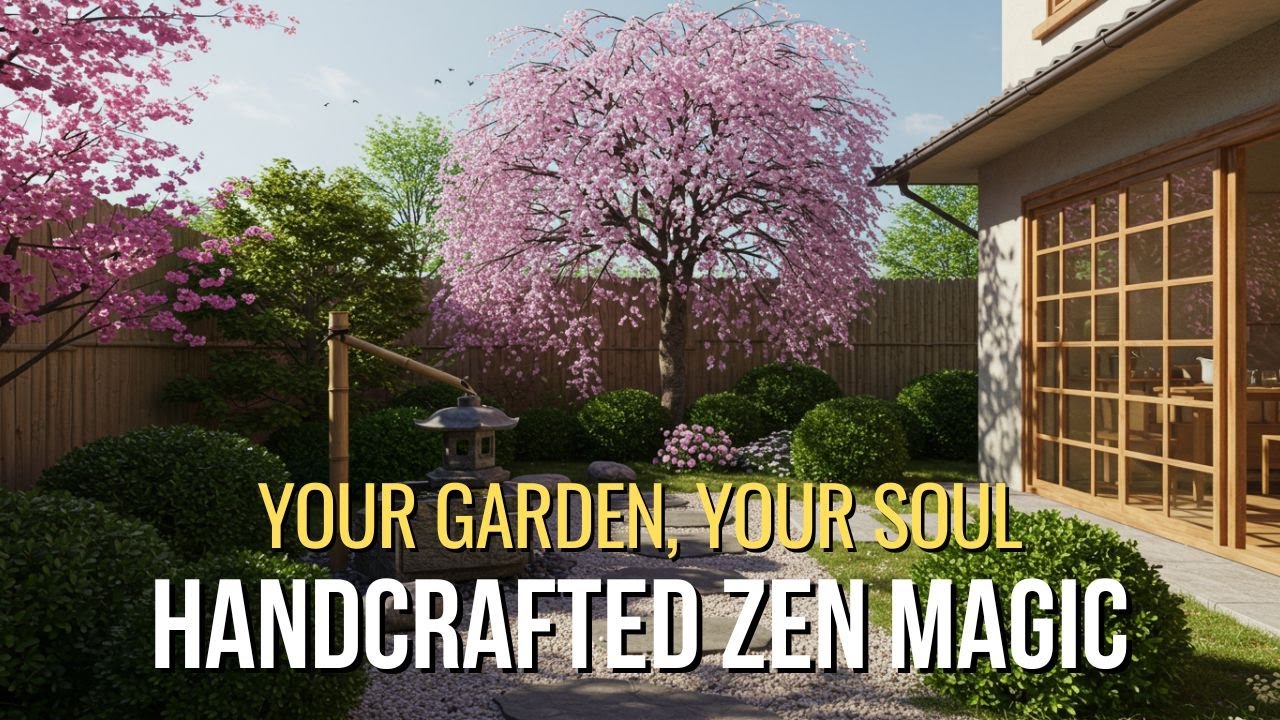
Have you ever thought about transforming your Japanese garden into a true sanctuary of peace that tells your own story? This video reveals how to add personalized touches to your Zen garden—like hand-engraved stones with poems, miniature bonsai as living sculptures, and unique handmade elements—that bring deep meaning and emotional connection to nature. It’s not just about aesthetics; it’s about spiritual harmony, authenticity, and conscious intention in every detail.
Discover how to create a space that goes beyond visuals—a place that resonates with your soul, where every stone, every plant, every shadow carries a part of your journey. Whether it’s a garden marker with handwritten Japanese calligraphy, a handcrafted gate, or a simple rock painted with heartfelt words—here, every element speaks.
Watch now and learn how to design your own personalized Zen sanctuary, filled with Japanese authenticity, serenity, and symbolic depth.
Keywords: personalized Japanese garden, zen garden, zen sanctuary, Japanese decor, how to personalize zen garden, handmade bonsai, engraved stones with Japanese calligraphy, furin, feng shui in the garden, zen crafts, inner peace, garden meditation.
Welcome to the Arkhome Design channel, where we explore the fascinating world of interior and exterior design, bringing inspiring ideas to transform your home. [Music] Even in the smallest of spaces, you can create a breathtaking landscape full of peace, beauty, and cultural richness by combining traditional Japanese design principles with modern DIY ideas. Your backyard will reflect balance, simplicity, and harmony. [Music] Now, let’s explore the ultimate Japanese garden ideas that will transform your outdoor space. [Music] Embracing minimalism in garden design. [Music] Limit the elements for greater impact. Instead of filling the garden with many features, choose a few essential elements like rocks, gravel, and one sculptural plant. This creates focus and allows each feature to stand out with meaning and purpose. [Music] Open space equals tranquility. Leave empty spaces between your elements to reflect calmness and restraint. These negative spaces are just as important, inviting reflection and giving the eye a place to [Music] rest. Neutral colors to maintain peace. Stick to greens, browns, and grays to create a harmonious palette. Bold flowers and bright decor can disrupt the peaceful vibe that defines a traditional Japanese garden. [Music] Incorporating symbolic rock elements. [Music] [Music] Create a rock arrangement with intention. Place rocks in oddnumbered groupings and avoid symmetry to mimic the randomness of nature. Think of rocks as the bones of the landscape that anchor the scene. [Music] Use gravel or sand as a Zen canvas. Rake patterns into gravel around rocks to represent flowing water or waves. This practice isn’t just decorative. It’s a calming ritual that encourages mindfulness. [Music] Flat stones for stepping paths. Lay flat stones irregularly to form a wandering path through your garden. This guides visitors slowly and mindfully enhancing the feeling of [Music] discovery. Designing a water feature for serenity. [Music] Add a bamboo fountain sheroshi. This traditional fountain makes a soft knocking sound as water flows into a pivoting bamboo tube. It creates a meditative rhythm while also scaring away unwanted garden critters. [Music] Install a reflecting pond or basin. Even a small water basin can become the centerpiece of your garden. The still water reflects the sky and trees, doubling the beauty of your surroundings. [Music] Use stones around water to create balance. Surround your pond or fountain with smooth, natural stones. This reinforces the feeling of flow and helps blend the water element with the dry parts of the [Music] garden. Introducing traditional Japanese plants. [Music] Plant evergreens for yearround beauty. Pines, cedars, and boxwoods provide structure and remain vibrant throughout the seasons. Their disciplined shapes symbolize endurance and resilience in Japanese [Music] philosophy. Include maples for seasonal color. Japanese maples add vibrant red or gold tones in autumn, bringing dynamic beauty without overwhelming the space. Their delicate leaves add texture and grace. [Music] Use moss for a timeless look. Moss creates a soft, velvety carpet that thrives in shaded, moist areas. It brings an ancient sacred feel to your garden, even in small corners or cracks. [Music] Creating a meditative pathway. [Music] Use irregular stones to slow the walk. Carefully placed stepping stones force a slower, more mindful pace. This encourages guests to observe and connect with each detail of the garden. [Music] Curve the path to hide the destination. Avoid straight lines and instead design gentle curves that reveal the garden slowly. This creates mystery and draws people deeper into the space. [Music] Frame the path with low plants or lanterns. Flank your pathway with soft moss, dwarf plants, or stone lanterns to give it definition. These details guide the eye and maintain the intimate [Music] atmosphere adding authentic Japanese decor. [Music] Place a stone lantern for nighttime ambiencece. Use a Japanese lantern to near paths or water features to evoke old temples. These ornaments are timeless and offer soft warm light in the [Music] evenings. Hang wind chimes for a sound element. Japanese wind chimes furine produce gentle melodic tones in the breeze. This adds an auditory layer to your garden experience enhancing relaxation. [Music] Install a bamboo fence or screen. Use bamboo to create a natural boundary or hide utility areas. Its texture and color blend with the garden, providing privacy without harsh lines. [Music] building a zen sitting area. [Music] Use a simple wooden bench or rock seat. Place seating in a shaded corner or near a water feature. Choose materials that feel natural so the bench becomes part of the garden rather than standing out. [Music] Add a gravel base or decking platform. Define your seating space with clean lines using gravel or wood planks. This separates it visually and keeps it grounded in the overall layout. [Music] [Music] Face the seat toward a focal point. Arrange the seating to overlook your favorite tree, pond, or rock arrangement. This turns every moment spent sitting into a peaceful viewing [Music] ritual. Balancing in and yang with texture. [Music] pair smooth and rough surfaces. Combine polished pebbles with rough boulders or sleek water with textured wood. This contrast creates visual interest and keeps the space from feeling too [Music] flat. Blend tall and low plant forms. Use tall bamboo or maple trees alongside ground covers and mosses. The high low balance reflects the natural flow of landscapes seen in traditional Japanese paintings. [Music] [Music] Mix wet and dry garden elements. Incorporate both lush greenery and dry gravel areas for a full sensory experience. This enyong principle fosters completeness and a deeper connection with [Music] nature. [Music] Personalizing your Zen sanctuary. [Music] Add a handwritten stone or garden marker. Etch your favorite quote, kanji, or poem into a flat stone and place it near the entry. This instantly adds emotion and intention to your space. [Music] Display a small bonsai for artistic flare. Place a bonsai on a pedestal or low table as a living sculpture. Its carefully shaped form invites admiration and represents discipline and patience. [Music] Incorporate a handmade element. Whether it’s a DIY lantern, a custom painted rock, or a handcrafted gate, personal touches connect you to the garden. They turn the space from beautiful to [Music] meaningful. And just like that, your backyard can become the most peaceful, breathtaking space in the entire neighborhood. Every stone, every plant, every tiny detail matters. And now you know exactly how to use them to craft serenity and elegance right in your own home. But if you think this was impressive, wait until you see what people are doing with trash to build luxury garden fences. Seriously, recycled materials turned into designer style fences that cost next to nothing. This next video will blow your mind and completely change how you see your garden’s borders. Click now before everyone else copies these genius fence ideas. [Music]
Comments are closed.