
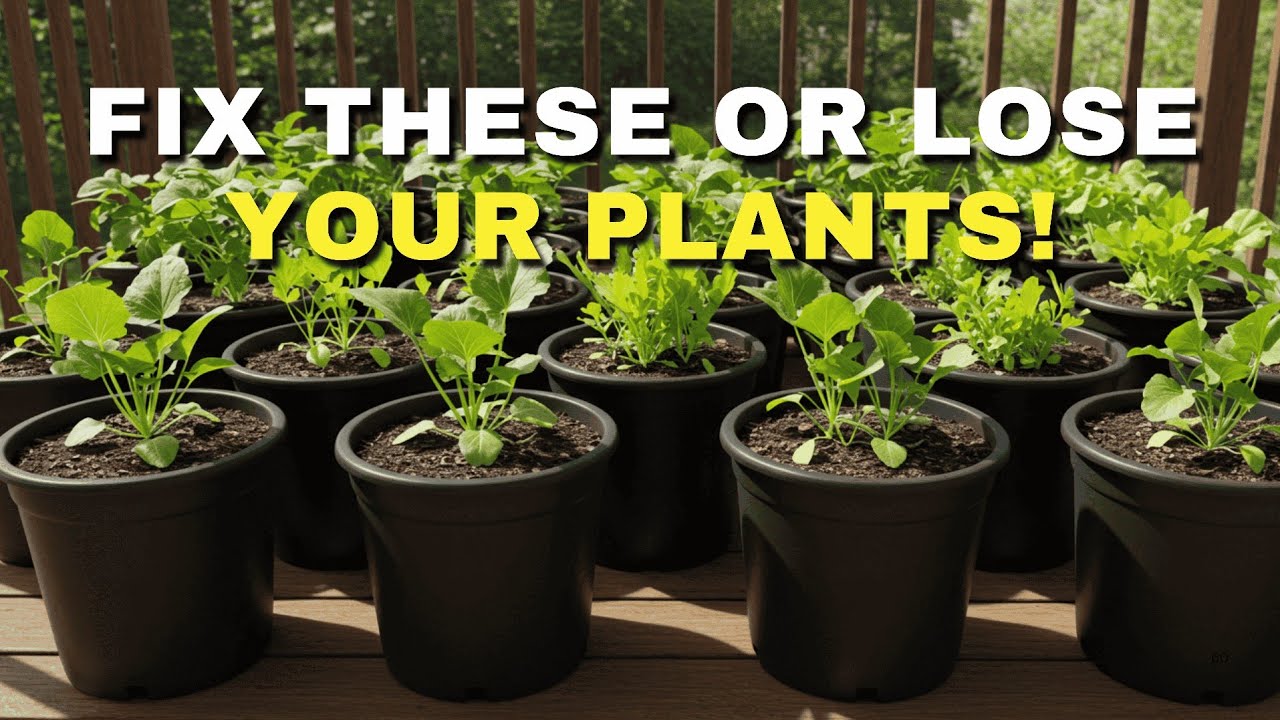
7 Container Garden Mistakes That Kill Plants (and How to Fix Them!) | Golden Seniors Living
We’ll Cover:
• Why the wrong container size leads to root-bound or drowning plants
• The sneaky drainage problem that almost guarantees root rot
• How using regular garden soil suffocates roots in containers
• The watering mistakes (too much or too little) that silently kill your plants
• Why sunlight placement makes or breaks your container garden
• The nutrient gap every potted plant faces—and how to fix it with fertilizer
• The overcrowding trap that stunts growth and spreads disease
Discover the 7 most common container gardening mistakes that slowly kill plants—plus the simple, proven fixes that bring them back to life. Whether you’re growing herbs, vegetables, or flowers in pots, these clear, evidence-based strategies will help your plants thrive and make gardening easier and more enjoyable.
Container gardening tips for seniors, easy gardening for beginners, patio gardening mistakes, potted plants dying solutions, container plant care, root rot prevention, fertilizing container plants, balcony garden hacks, gardening for retirement lifestyle, healthy plants seniors.
#ContainerGardening #SeniorGardeners #GardeningOver60 #GoldenSeniorsLiving #HealthyPlants #GardeningTips #PottedPlants #PatioGarden #BalconyGarden #SeniorLiving
Perfect for:
• Seniors who love gardening but struggle with dying potted plants
• Retirees looking for stress-free, rewarding garden tips
• Anyone new to container gardening who wants healthier, stronger plants
• Gardeners who want simple, step-by-step solutions to common plant problems
👉 Subscribe to Golden Seniors Living for daily gardening advice designed for seniors who want to grow beautiful plants, stay active, and enjoy the peace and joy of gardening. Together, we’ll make every season bloom!
Are your container plants constantly dying no matter what you try? Maybe the leaves keep turning yellow, the soil always looks soggy, or the plants just never seem to grow. Don’t worry, it’s not your fault, and it’s definitely not bad luck. The truth is, most gardeners are making the same simple mistakes that slowly kill their plants. And today, I’m going to walk you through seven of the most common ones. And here’s the best part. After each mistake, I’ll show you exactly how to fix it so your plants can bounce back stronger and healthier. Oh, and make sure you stick around to the very end because the last mistake is one almost every gardener makes without even realizing it. And fixing it could completely transform your container garden. Whether you’re growing flowers, herbs, or vegetables and pots, container gardening has its own unique challenges. But once you know how to avoid these common mistakes, you’ll be amazed at how much healthier your plants will look and how much easier gardening becomes. So, in this video, I’ll be breaking down the seven deadliest container gardening mistakes. And more importantly, I’ll give you clear, simple fixes that you can start using today. And hey, if you love gardening tips that actually save your plants and make your garden more rewarding, hit that subscribe button right now. That way, you’ll never miss a video. and together we can grow the garden you’ve always dreamed of. One of the biggest reasons container plants struggle or even die is something most gardeners don’t think twice about. The size of the pot. If your container is too small, the plant’s roots quickly run out of space. They become what’s called rootbound, where they circle around and around, choking themselves out. A rootbound plant can’t properly take up water or nutrients no matter how much care you give it. On the other hand, if your container is far too large, the soil holds on to way more water than the plant can use. This creates soggy, heavy soil, which suffocates the roots and often leads to, you guessed it, root rot. So, what’s the sweet spot? You want a container that’s about 2 to 4 in wider than your plant’s current root ball. That gives the roots enough room to grow without drowning them in extra soil. And always, always, always make sure the container has good drainage holes at the bottom. Without those, size doesn’t matter. Your plant is in trouble. Here’s a quick way to think about it. If you’re repotting a small herb like basil or mint, don’t jump from a tiny starter pot to a massive 5gallon container. Instead, step it up gradually, maybe to an 8in pot, then to a larger one as it fills out. Visually, you’ll notice a difference right away. A plant in the right size container grows fuller, greener, and produces more flowers or fruit, while a plant in the wrong container, it looks stressed, stunted, and tired. Now, I’m curious. What’s your go-to container size? Do you prefer smaller pots that you can move around easily, or big statement containers for that wow factor on your patio? Drop your answer in the comments below. I’d love to know. Now, let’s talk about one of the sneakiest killers of container plants, poor drainage. Picture this. You’ve picked the perfect plant, chosen a beautiful pot, watered it carefully, and then a few weeks later, the leaves are yellow, the stems are weak, and the roots are brown and mushy. What happened? Root rot. And nine times out of 10, the real culprit is poor drainage. Here’s the thing. If excess water has no way to escape, it sits at the bottom of the pot, suffocating the roots. Plants need water, but they also need oxygen. When the soil is water logged, roots literally drown. Once root rot sets in, it’s almost impossible to reverse. So, how do we fix this? First, always check your pots for drainage holes. You’d be surprised how many decorative containers look great on the outside, but have no way for water to escape. If you fall in love with a pot that doesn’t have holes, grab a drill and make your own. Trust me, your plants will thank you. Second, avoid the old gardening myth that putting a layer of rocks or gravel at the bottom improves drainage. It doesn’t. In fact, it can actually trap water higher up in the soil, making the problem worse. What your plants really need is a potting mix designed to drain well and those simple holes at the bottom. And if you keep your containers on a porch or patio, consider elevating them slightly with pot feet or bricks. That way, water can flow freely out of the bottom without pooling underneath. Here’s the golden rule. Water should go in easily and drain out just as easily. If you water your plant and the soil stays soggy for days, something’s wrong. So, let me ask you, have you ever lost a plant to root rot? Be honest. Drop a little pot emoji in the comments if you have. Don’t worry, we’ve all been there. And the good news is now you know exactly how to prevent it. Mistake number three is a big one. Using regular garden soil in your containers instead of a proper potting mix. Now, garden soil works fine in the ground where there’s plenty of space, earthworms, and natural drainage. But when you scoop it up and pack it into a container, everything changes. Garden soil is heavy. It compacts easily, which means it squeezes out the little air pockets that roots need to breathe. Without oxygen, roots suffocate and the plant slowly declines. On top of that, garden soil doesn’t drain properly in pots. Instead of letting water flow through, it holds onto moisture unevenly. That creates soggy pockets in some areas and bone dry spots in others. Your poor plant has no idea what to do. Its roots are either drowning or desperately thirsty. That’s where potting mix comes in. A good quality potting mix is light, fluffy, and specifically designed for container growing. It usually contains ingredients like Pete moss or cocoa koyer to hold just enough moisture, perlite or vermiculite to improve drainage and irerration, and sometimes even a starter dose of nutrients to help your plants settle in. Here’s a quick example. Let’s say you’re growing tomatoes in containers. If you fill that pot with plain garden soil, the tomato roots will struggle to spread. the soil will bake hard in the sun and your plant will stay small and weak. But if you use a well- draining potting mix, those roots can stretch out easily, breathe, and pull in exactly what they need. That’s the difference between a spindly plant with a few yellow leaves and a big bushy tomato plant loaded with fruit. If you really want to go the extra mile, you can even mix your own container blend. something like two parts potting soil, one part compost, and one part perlite. That way, you control both nutrition and drainage. So, here’s my question for you. Do you usually buy your potting mix pre-made, or do you like experimenting with your own homemade blends? Let me know down in the comments. I’d love to hear what’s working for you. Mistake number four is one every single gardener has struggled with at some point. Watering. Too much or too little? Both are silent killers in container gardening. Here’s the challenge. Unlike plants in the ground, container plants rely entirely on you to manage their water supply. Containers dry out much faster, especially in hot weather. But they can also hold on to excess water if the soil isn’t draining properly. Overwatering drowns the roots, starves them of oxygen, and leads to root rot. The signs, yellowing leaves, mushy stems, and that sour smell when you poke around in the soil. On the flip side, underwatering leaves plants wilted, crispy, and weak. Sometimes they bounce back after a deep drink, but repeat this cycle too often, and you stress the plant beyond repair. So, how do you get it right? Simple. Use the finger test. Stick your finger 2 in into the soil. If it feels dry at that depth, it’s time to water. If it still feels damp, wait a day or two. And when you do water, don’t just sprinkle the surface. Water deeply until you see moisture draining out of the bottom of the pot. That ensures the entire root system gets a good drink instead of just the top layer. Here’s a little story. When I first started container gardening, I loved growing herbs, but I kept killing basil plants one after another. Why? I was giving them little sips every day instead of deep, thorough waterings. The roots stayed shallow, the plant stayed weak, and eventually they collapsed. Once I switched to watering deeply and less often, my basil plants exploded with growth. Another tip, group your containers by water needs. Keep thirsty plants like tomatoes or cucumbers together and put drought tolerant ones like rosemary or succulents in a separate area. That way you’re not guessing or overwatering one plant while underwatering another. Now, let’s make this fun. Tell me in the comments, are you more guilty of overwatering or underwatering? Type O if you tend to drown your plants or U if you forget to water until it’s too late. Don’t worry, I’ll admit I used to be team O all the way. Mistake number five is all about sunlight or more often the lack of it or sometimes too much of it. Here’s the thing. Every plant has specific light requirements and when we ignore them, our containers suffer. Put a sun-loving plant in the shade and it becomes weak, spindly, and pale. On the other hand, put a shade loving plant in direct sun and it gets scorched leaves, crispy edges, and stress that it may never recover from. Now, container gardening makes this both easier and trickier. Easier because you can move your pots around. Trickier because it’s up to you to actually track how much sun your space gets. Most people underestimate or overestimate. They say, “Oh, this spot gets plenty of sun, but when you actually measure it, it’s maybe 3 hours at best.” So, here’s a golden rule. Full sun means 6 to 8 hours of direct sunlight a day. Perfect for vegetables, herbs like basil, and flowers like patunias. Part shade usually means 3 to 5 hours. Good for lettuce, spinach, and plants like impatience. Full shade means less than three hours of direct sunlight. Plants like ferns or hostas will thank you for it. One of my favorite tricks is to spend a day observing your garden. Set a timer and check every couple of hours to see where the sun hits and for how long. You’ll often be surprised how much the sun shifts over the day, especially if you have trees, fences, or buildings casting shadows. And don’t forget, containers are mobile. That’s their superpower. If your plant looks unhappy, don’t hesitate to move it to a better spot. Sometimes just shifting a pot a few feet makes all the difference. I’ll give you a quick example. I once had a container of peppers that just wouldn’t grow. They stayed tiny for weeks. Then I realized they were only getting about four hours of sun a day on my patio. I moved them to a sunnier spot where they got seven hours and within two weeks they exploded with growth and started flowering. So here’s my question for you. Do you consider yourself a sunny spot gardener or are you more of a shade gardener? Let me know in the comments. I’m curious which team you’re on. Mistake number six is one that catches a lot of gardeners offguard. forgetting to fertilize container plants. Here’s why this matters so much. In the ground, plants can stretch their roots out, searching far and wide for nutrients in the soil. But in a container, your plant only has access to what you put in that pot. Every time you water, some of those nutrients wash away. And over time, your soil becomes like an empty pantry. Nothing left for the plant to eat. The result, plants that start off strong, but then stall. Leaves turn pale or yellow. growth slows to a crawl and flowering or fruing becomes disappointing at best. So, what’s the fix? Consistent feeding. The easiest way is to mix a slowrelease fertilizer into your potting mix when you first plant. These little pellets break down gradually over time, giving your plants a steady supply of nutrients. But don’t stop there. For container gardening, I always recommend adding a liquid fertilizer every 2 to 4 weeks during the growing season. Think of it like a quick energy drink for your plants. It gives them that extra boost right when they need it. You can use an all-purpose liquid feed or choose one tailored for what you’re growing. High nitrogen for leafy greens or high phosphorus for flowers and fruing plants. If you prefer the organic route, compost tea or fish emotion can work wonders. They not only feed your plants, but also improve the soil biology in your containers. I’ll give you a personal example. Last summer, I had two identical pots of patunias. One I fertilized regularly and the other I decided to leave alone just as an experiment. Within a month, the difference was shocking. The fertilized pot was overflowing with blooms, vibrant and colorful, while the unfed pot looked tired and sparse. Same soil, same water, same sunlight. The only difference was nutrition. So, don’t make the mistake of assuming your plants can live off water alone. They’re living things. They need food. Now, I’d love to know what’s your go-to fertilizer. Do you stick with store-bought, go fully organic, or maybe even make your own at home? Share your favorite in the comments. I bet we’ll get some amazing tips from fellow gardeners. Mistake number seven is one that comes from a place of excitement. We love plants so much that we try to squeeze too many of them into one container. I get it. You buy a few seedlings, you don’t want to waste any, and before you know it, you’ve got six plants crammed into a pot meant for two. The problem is that overcrowding creates a battle zone under the soil. Each plant is competing for the same limited water and nutrients. Above the soil, their leaves overlap, blocking sunlight and air flow. That’s the perfect recipe for stress, stunted growth, and even diseases like powdery mildew or fungal infections. Think of it like this. Imagine cramming 10 people into a tiny studio apartment. At first, everyone might manage, but pretty soon it gets uncomfortable, supplies run out fast, and sickness spreads easily. Plants in an overcrowded pot experience the same struggle. So, what’s the fix? Respect the spacing guidelines. If the plant tag says 12 in apart, that applies even in containers. Yes, it may look a little sparse at first, but trust me, those plants will grow, fill in the space, and look far healthier than if you pack them too tight. Another trick is to plant with growth habits in mind. For example, you can combine a tall plant, a medium plant, and a trailing one in the same container. This is often called the thriller, filler, spiller method. Each plant has its own space and function, and together they create a full balanced arrangement without crowding each other out. So, here’s my question for you. Be honest. Have you ever been guilty of overcrowding your containers? I know I have. Tell me your story in the comments. I promise you’re not alone. All right, let’s do a quick review of the mistakes we’ve covered so far because remembering these is the key to saving your container plants. Mistake number one, choosing the wrong container size. Too small and roots get strangled. Too big and soil stays soggy. Mistake number two, poor drainage. Without holes, roots drown. Plain and simple. Mistake number three, using garden soil instead of potting mix. Heavy compacted soil suffocates roots in containers. Mistake number four, overwatering or underwatering. Both stress plants and lead to disaster if not balanced. Mistake number five, wrong sunlight placement. Plants need the right light to thrive. Too little or too much and they struggle. Mistake number six, neglecting fertilizer. Nutrients leech out in containers faster than you think. So, consistent feeding is essential. Mistake number seven, overcrowding. Plants need space to breathe, grow, and resist disease. If you avoid just these seven mistakes, your container gardening success rate will skyrocket. But before we move into our final recap, I want to give you one bonus tip that most gardeners overlook. Rotation. Here’s what I mean. When you place your pots in one spot, the same side of the plant gets the majority of the sunlight every single day. Over time, this causes uneven growth. Plants lean toward the light. one side becomes fuller while the other stays weak and thin. The fix is simple. Every week or two, give your containers a little turn. Rotate them 90° or even just half a turn so each side of the plant gets its fair share of sunlight. You’ll notice your plants grow more balanced, fuller, and much stronger overall. I do this with my flowering containers especially, and the difference is incredible. Instead of having one side that looks amazing and another that looks bare, the whole plant fills out evenly. So, here’s a little challenge for you. Over the next two weeks, rotate your pots and take before and after pictures. I promise you’ll be surprised at the change. And when you do, come back and tell me in the comments how it worked out for you. And that’s it. Now you know exactly how to keep your container plants thriving. Remember, gardening doesn’t have to be complicated or frustrating. With just a few smart adjustments, your plants can go from struggling to stunning in no time. If this video helped you, do me a favor, hit that like button. It not only supports the channel, but also helps other gardeners just like you find these tips. And if you want more gardening advice that actually works, make sure to subscribe right now and turn on notifications so you never miss a new video. We’ve got plenty more coming your way to help you grow the healthiest, happiest plants possible. Thanks for watching and as always, happy gardening. I’ll see you in the next video.
5 Comments
Good info🎉
Pot
Over and under watering is a huge problem ive seen with neighbours plants i tell them to put lawn clippings around their pots to stop them drying out and keeps microbes healthy and alive because they are the creatures feeding your plants as long as their not root bound feed with molasses in your water can couple of spoons full in your water can can do wonders for your plants im a big one for putting compost around my plants to feed and keep moisture levels more stable because as we know microbes need moisture to stay alive and worms need moisture to live and breathe dry soil kills worms as they breathe through their skin and if it drys out they suffocate and i buy potting mix then add perlite and plenty of other ingredients so it's nothing like i brought and add compost regularly till they need reporting and all my plants thrive keep microbes healthy and they keep plants healthy
both
Pot