
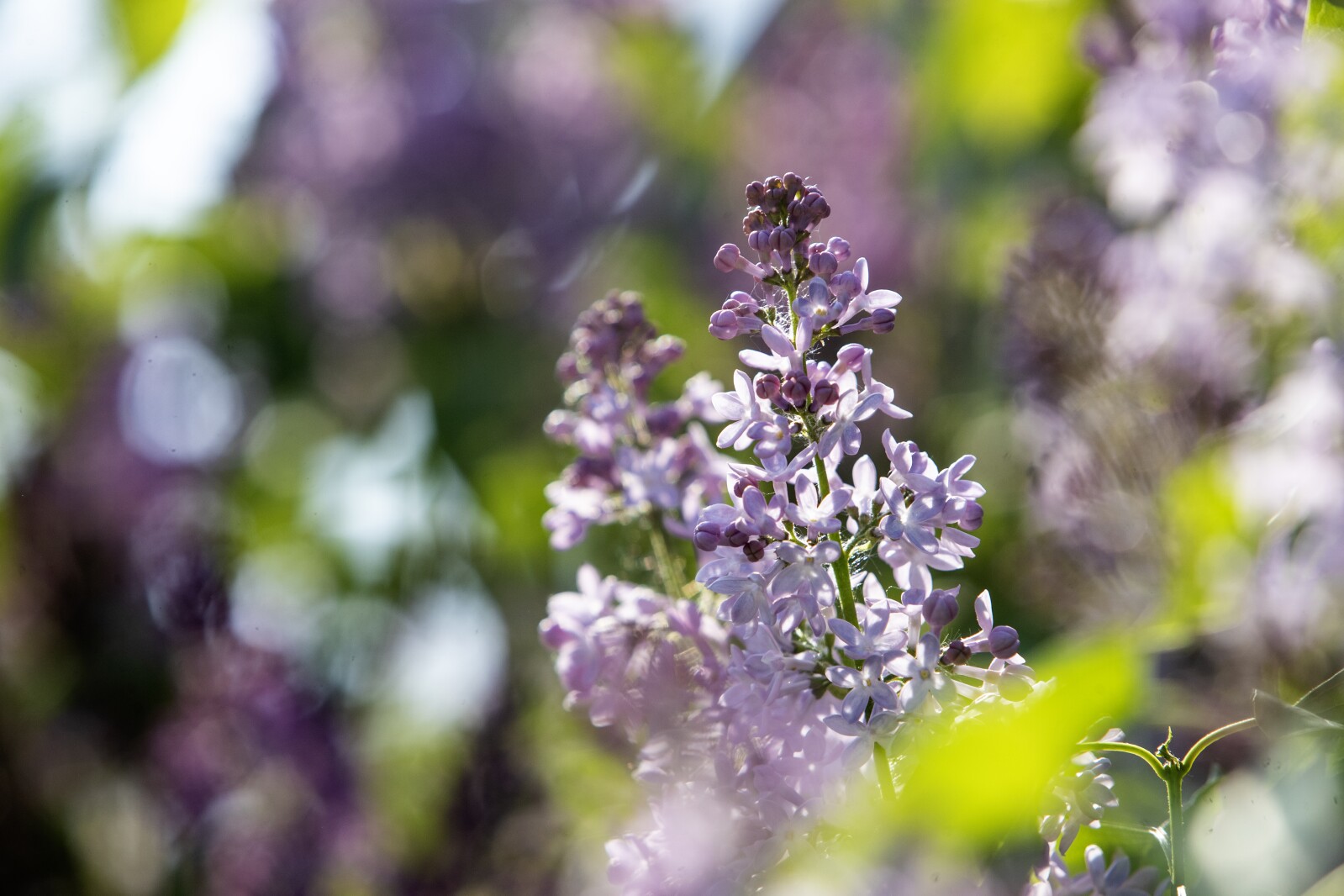
If your lilacs are looking rough right now, it is probably lilac leaf spot, a relatively new fungal disease in Minnesota. Symptoms typically appear from July to September.
Leaves turn yellow, then develop brown, blocky spots that grow and merge. Affected leaves often twist, curl and drop early. This fungus thrives in warm humid weather, especially when temperatures hover between 70 and 80 degrees.
It is said this mainly affects common lilacs, but my Miss Kim has it and this is my only lilac.

The University of Minnesota tells us that no fungicides are currently labeled for lilac leaf spot and spray timing is unclear. They suggest to focus on cultural practices: prune to improve airflow and remove leaf litter in fall to help prevent reinfection.
Lilac leaf spot can resemble other diseases like bacterial blight or verticillium wilt. Accurate diagnosis matters since treatments differ.
Bacterial blight causes drooping shoots and ooze, while verticillium wilt leads to sudden branch die-off from internal damage. If you have bacterial blight or verticillium wilt, then a spray routine in early spring is needed.
For these diseases, fungicide sprays can be applied before the disease is noticed or when the first spots are seen. If the plant is already showing severe symptoms from a fungal leaf spot, spraying fungicides on it will have little benefit as the fungicides are protective rather than curative. If you have it this year, be sure and spray early next spring.
Researchers are still studying lilac leaf spot and its long-term impact. Meanwhile, keep an eye on your plants, practice good sanitation, and reach out to your county’s Extension office if you suspect an infection.
Stop watering your amaryllis, bring it inside, and place it in a dark, cool place for a few months if you want it to bloom during the holidays. This “resting” period signals to the bulb to send up a flowering stalk when it is watered and put in a sunny location in a few months.
What is creating large webs in trees and shrubs? Do you need to do anything about it when you see them? The caterpillars of
fall webworm
create webs as they grow and feed on many hardwood tree and shrub species in late summer into fall.
Usually, the damage caused by the feeding caterpillars will not kill the impacted plants, although you may see complete defoliation on smaller trees and shrubs. The best practice is to leave the webbing alone. I have seen this on my yew shrub but haven’t noticed any damage.
Now is a good time to add to your compost pile when cleaning up your vegetable and flower gardens for fall. However, do not add diseased plant material to your home compost pile at the end of the growing season.
Your home compost pile likely does not heat up high or long enough to kill most pathogens. Diseased plant material should be placed in a yard waste bin that is taken to a facility with temperature control.
Continue to mow your lawn as long as it keeps growing. This will help prevent snow mold from forming in case we get snow this winter!

Master Gardener Sue Morris has been writing a column since 1991 for Kandiyohi County newspapers. Morris has been certified through the University of Minnesota as a gardening and horticulture expert since 1983. She lives in Kandiyohi County.
Comments are closed.