
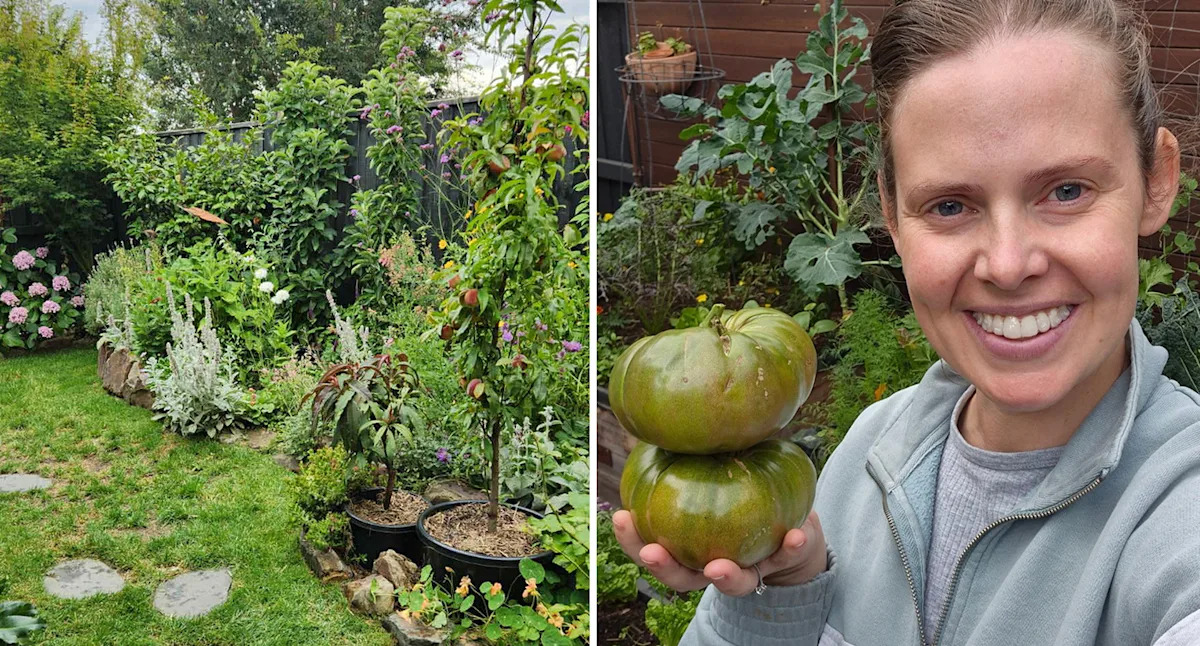
It all started with a 30x40cm veggie patch.
Hoping to provide some entertainment for her then six-year-old son, Breanna Parker placed a capsicum plant and a couple of carrots in the “very, very tiny” structure in the backyard of her suburban Melbourne home during Covid.
“I thought he might get excited to see some veggies grow,” the primary school teacher, who was pregnant and on maternity leave at the time, told Yahoo News Australia on Thursday.
However, in a surprising twist of events, it was the 33-year-old who ended up enjoying playing in the soil the most, igniting a “green thumb” that had been passed down in her family for generations. Now, Breanna’s small 400-square-metre block is teeming with vegetables, fruit and native flowers — appearing like an oasis in the midst of a sea of synthetic turf and concrete.
“I grew up around nature and greenery,” she said, explaining that her grandmother created veggie patches at her country homestead in Victoria, where she also had chickens. Breanna’s mum also “loves” her ornamental garden.
“The concept of going to nurseries and being around plants has always been in my background,” the teacher told Yahoo, noting that she wasn’t really old enough at the time to appreciate her grandmother’s efforts.
“Now, I look back and can see and understand the things that she used to do, and I guess try to replicate that in my own very, very tiny way.”
Small suburban yards can grow a lot of food, Aussie mum says
Seeking “quality food” to feed her growing family, Breanna decided to embrace her newly ignited passion and transform her suburban backyard into an edible garden, and filled the front with an array of native plants, reflecting a growing trend across Australia.
“I remember people telling me ‘there’s no space’. I would keep being told you can’t fit that. So I was like well, watch this,” she said, adding she’s always been a “bit of a rule breaker”.
Determined, the 33-year-old “set out to prove that even tiny gardens can grow a lot of food”. With research, and a lot of trial and error, Breanna’s dream soon became a reality and her backyard is now brimming with seasonal fruits, vegetables and herbs — all of which are thriving in raised plant beds, pots or grow bags, which help her make the most of the small space.
“I played around a lot with positioning, where different things can and can’t grow, because I found that a lot of labels [on seed packets] don’t reflect what you can really do in a small space,” Breanna said. “A lot of things that might say full sun, which typically people associate with eight to 10 hours of full sun, can actually tolerate less.”
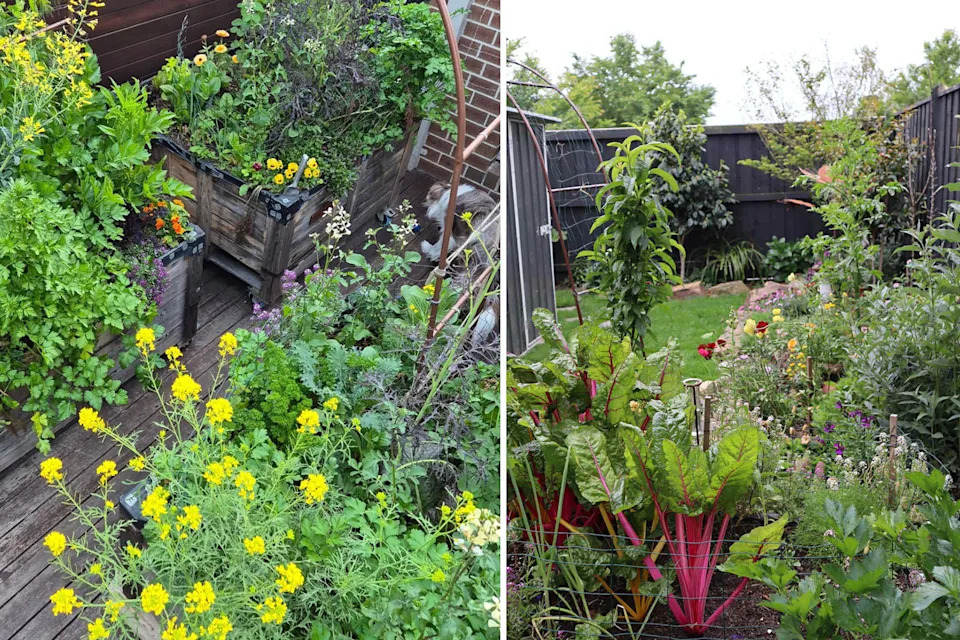
The transformation has not only brought her joy, but has helped cut down on her family’s grocery bill. Source: Supplied
Gardener reveals ‘secret weapon’ to tiny garden growing
The mum said one of her “little secret weapons” is interplanting — a technique where two or more kinds of plants are grown together to maximise space and soil.
“That is the method of growing I found most successful for a little garden. By intensive interplanting, everything is mixed up, jumbled up and crammed in together, and you’re creating a little mini ecosystem within your garden bed,” she explained.
“When a plant finishes or is harvested, it needs to come out, I then just plug that hole with something else. So I always have things in my garden, it’s never completely blank, start again.”
Her front yard is now a habitat garden for native bugs, critters and birds, which help her control pesky pests across the entire property.
“The front garden feeds nature and the back garden feeds us,” Breanna, who is now teaching others how to do the same on their residential properties through her new business Tiny Garden Growing, said. Recently, she even consulted with a woman about how to make the most of her balcony.
“Our blocks of land are getting smaller and smaller, and our lives are getting busier and busier, so I think we need to find another way to have people still prioritising their health and the food that they eat,” she added.
“It would be amazing to get to a point where we could veggie swap, and then we wouldn’t have to rely on supermarkets as much.”
The transformation has not only brought her joy, but has helped cut down on her family’s grocery bill, with the mum now checking her yard instead of her pantry before heading to the shops.
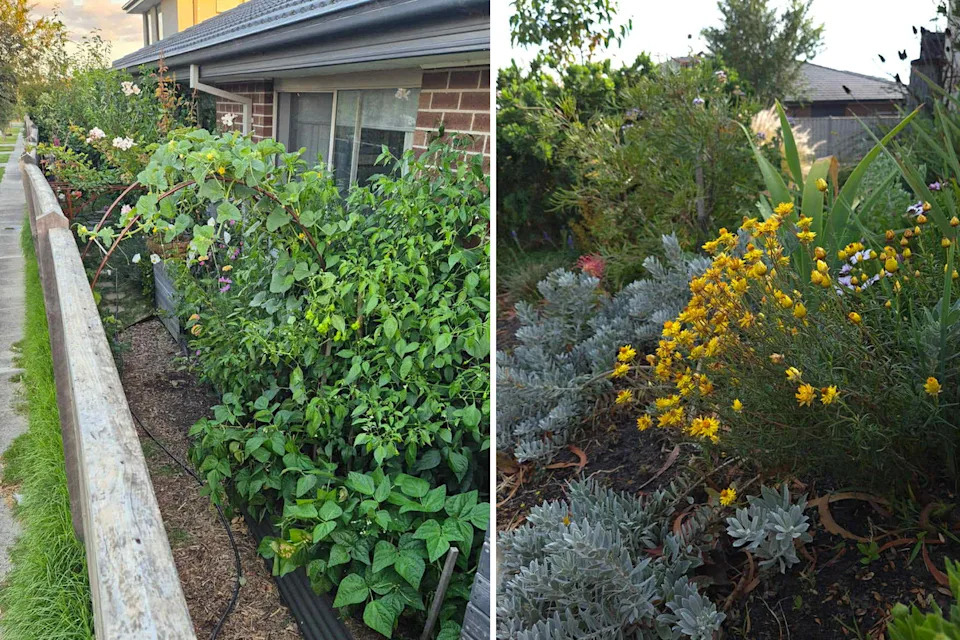
Breanna says her native front garden (right) helps keep bugs at bay in her backyard. She has also utilised the strip of land along the side of her house (left). Source: Supplied
Breanna’s top tips for growing food in your garden
The biggest challenge of a suburban garden is sun, not space — think about where the sun is and how it moves through the garden. Using pots and grow bags not only help you manage small spaces, but also allows you to easily move the plants so they can chase the sun.
Prioritise soil health — I make sure that my soil is really rich and nutrient dense to begin with. Healthy soil means healthy plants. And then when you intensively interplant everything, it really does look after itself.
Ignore the plant labels — if you look at the label on a plant that you buy from the shops, it’ll say this broccoli needs 80 centimetres of space. Well, that’s not really practical to somebody who only has one square meter of growing space. The spacing recommendations are there for commercial farming. You don’t need to have things spaced apart so they’re not touching.
Love Australia’s weird and wonderful environment? 🐊🦘😳 Get our new newsletter showcasing the week’s best stories.

Comments are closed.