
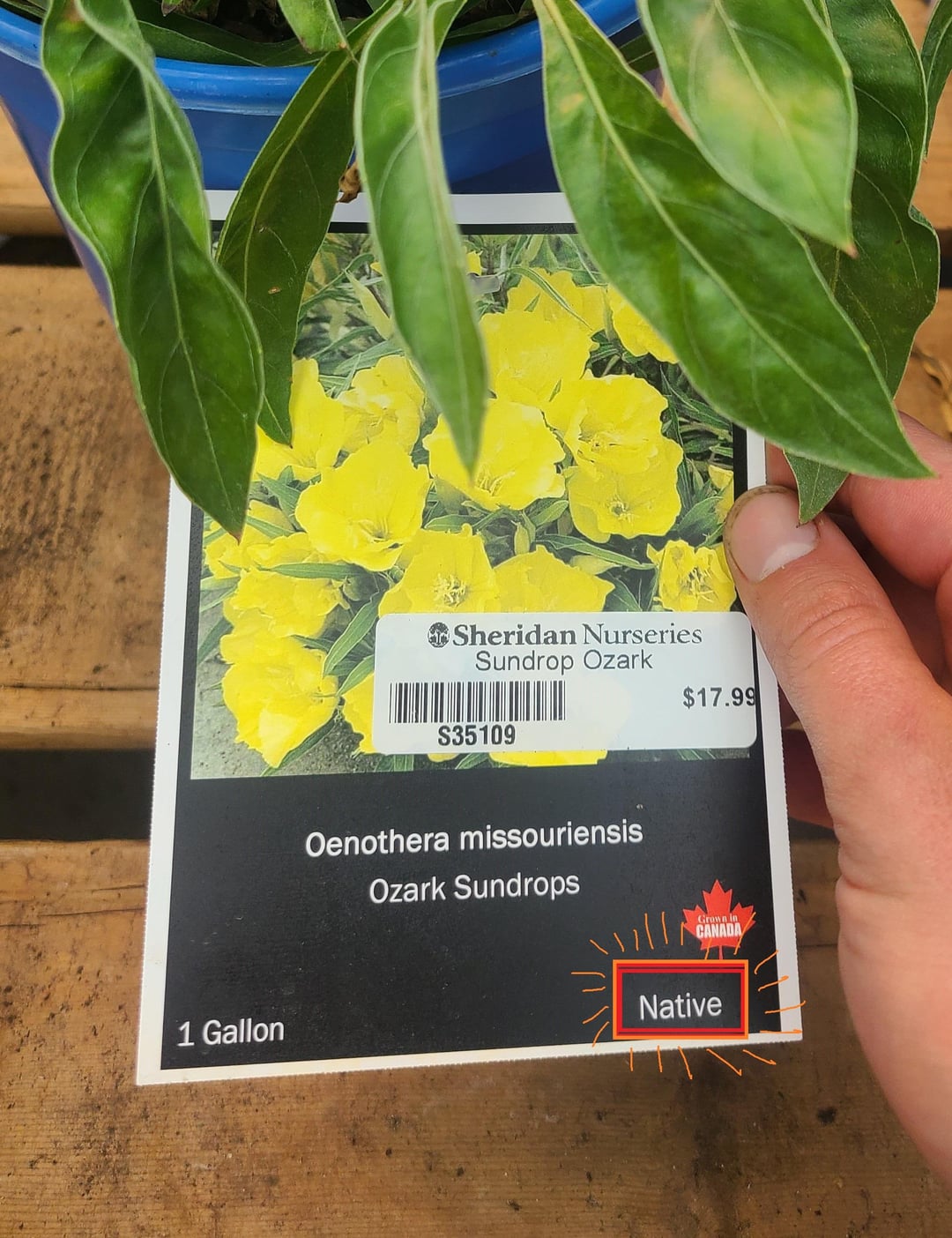
IDK if you do but I always check at the nursery if what they're advertising as native is actually native because you can not trust these companies. I've seen multiple species listed as such, and finally decided to post about it.
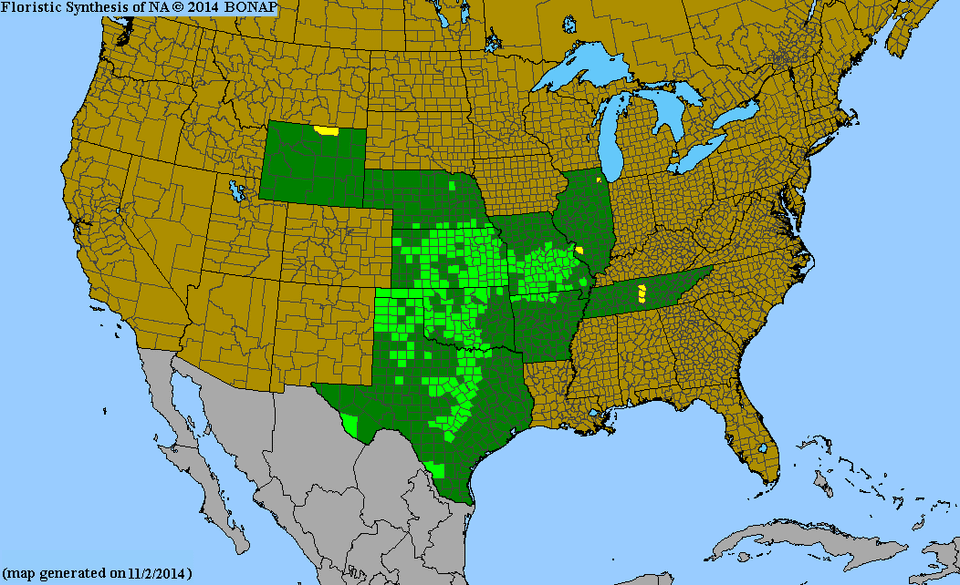
Oenothera macrocarpa (aka missouriensis) is not native to anywhere in Canada, or even near it.
Another thing is, we have a tonne of native Oenothera in Ontario you could grow. It's a huge genus. They all look the same. This particular one is very pretty! But advertising it as native is not just wrong but a look into when these big companies try to get into the native gardening movement. I guess someone decided that macrocarpa would make them more money than the 20-some native Evening Primrose species.
Here is a list of all the Oenothera found in Canada alongside any introduced species:
by dewitteillustration
14 Comments
I’ve had this happen, which is how I now have a healthy population of Rudbeckia missouriensis in south central Pennsylvania. I double check every time now.
Yeah, it’s going to stay a “buyer beware” market indefinitely
Native at nurseries that don’t specialize in native plants just means native to North America. We’re making progress but have a long way to go.
This happens all the time, even in my local garden center’s “native plants” area which is loaded with butterfly bush of all things. They just don’t care.
Lowe’s is notorious also for labeling things as perennials that are not hardy in our region.
At least it’s still native to North America.
Frankly I think anything east of the Rockies is fair game when it comes to planting elsewhere.
The native Americans planted American lotus in Minnesota and Aralia spinosa in Massachusetts. Who cares if I plant a Bigleaf magnolia or a sabal minor. They don’t cause any actual harm.
Hehe I didn’t know the Ozarks were in Canada! /s
This is why I had nurseries and seed companies that slap the “native” label on things. I’ll see some big name nurseries selling “native ” seed mixes and when I look at the list, yeah, some are native to New England, some California, or South Carolina. There are differences in the ecosystem even two hours drive from me, let alone three states or an international border.
I feel like some sellers are trying to take advantage of people just starting to plant natives without really doing research beforehand of what’s native to their area. I feel like in my area especially it’s getting more popular to plant natives with how many reliable and trustworthy sellers there are. But today went to a plant sale today and one stall had a couple tables labeled “Natives and Native Cultivars” but it contained so many varieties of speed wells, evergreen clematis and sweet autumn clematis. It felt gross
Native where it was grown
Most nurseries don’t GAF and neither do most of the shoppers. The upside is that if you look on the discount tables they frequently have natives cheap. I bought three one gallon Arctostaphylos for 2 bucks each today.
I see “native” used often incorrectly to mean “local”. They may mean “native” as in “grown here”.
Which is confusing and wrong.
Ugh, so annoying!! A local indie nursery near me in Chicago (The Growing Place) is really great in a lot of ways, they host native gardening 101 talks in their free community classes sometimes, but then they’ll go out of their way to put “Native!” on stuff that is native to neighboring states but not Illinois. It makes me so mad.
Edit: Possibility Place is THE place to get non-wholesale amounts of natives in the Chicago area if anyone’s looking for alternatives.
Everything is native to somewhere, even if it’s a laboratory plot.
Unless other way, stated the native label pretty much of any nursery means it’s native to the United States
That’s it
And it includes cultivars