
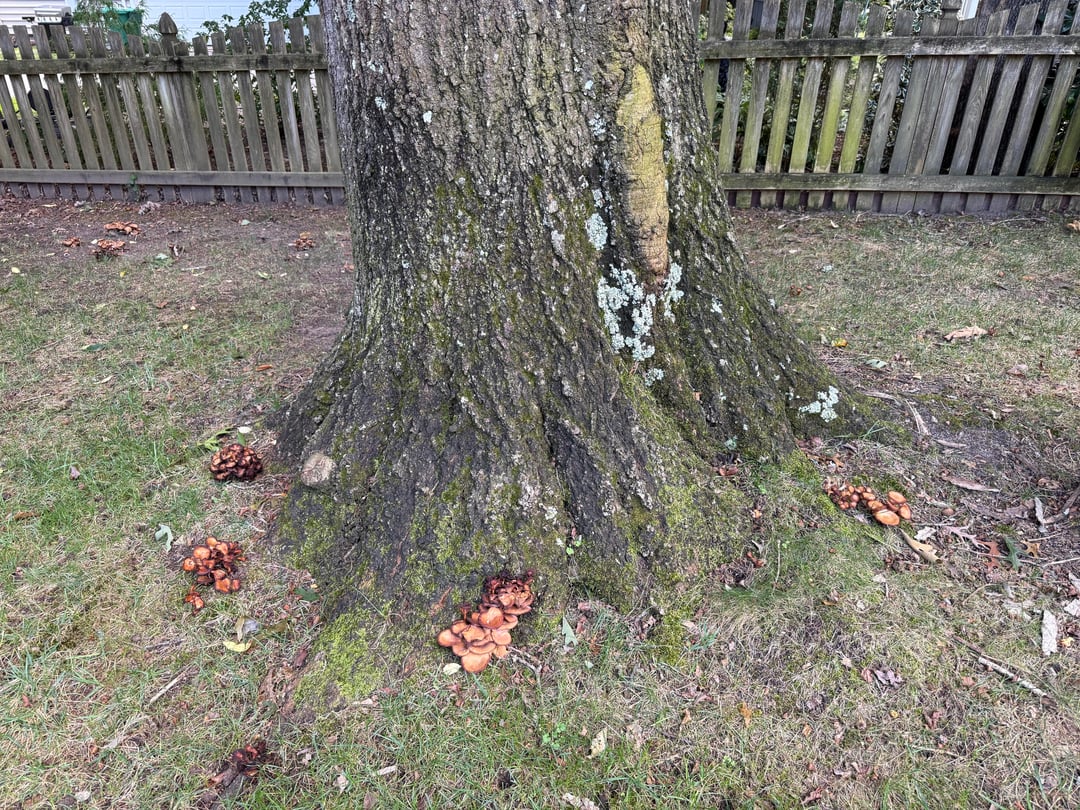
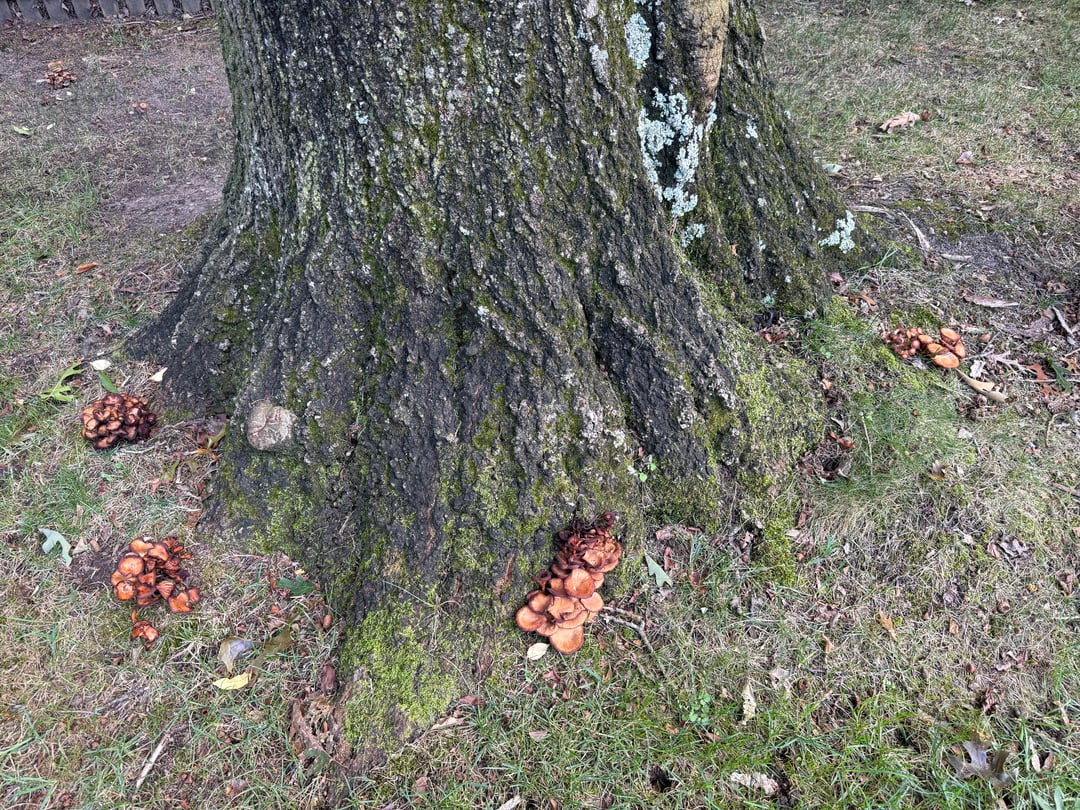
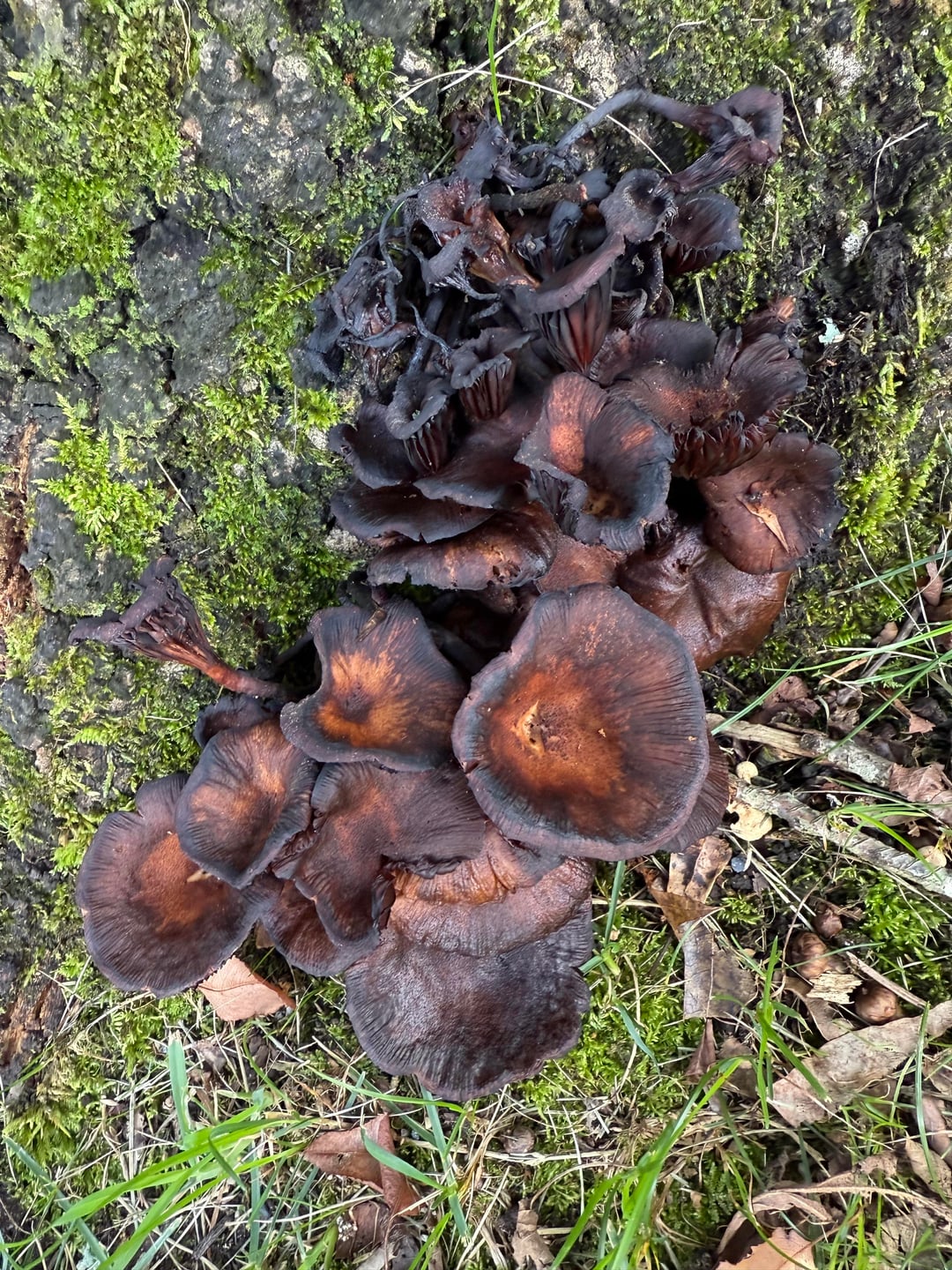
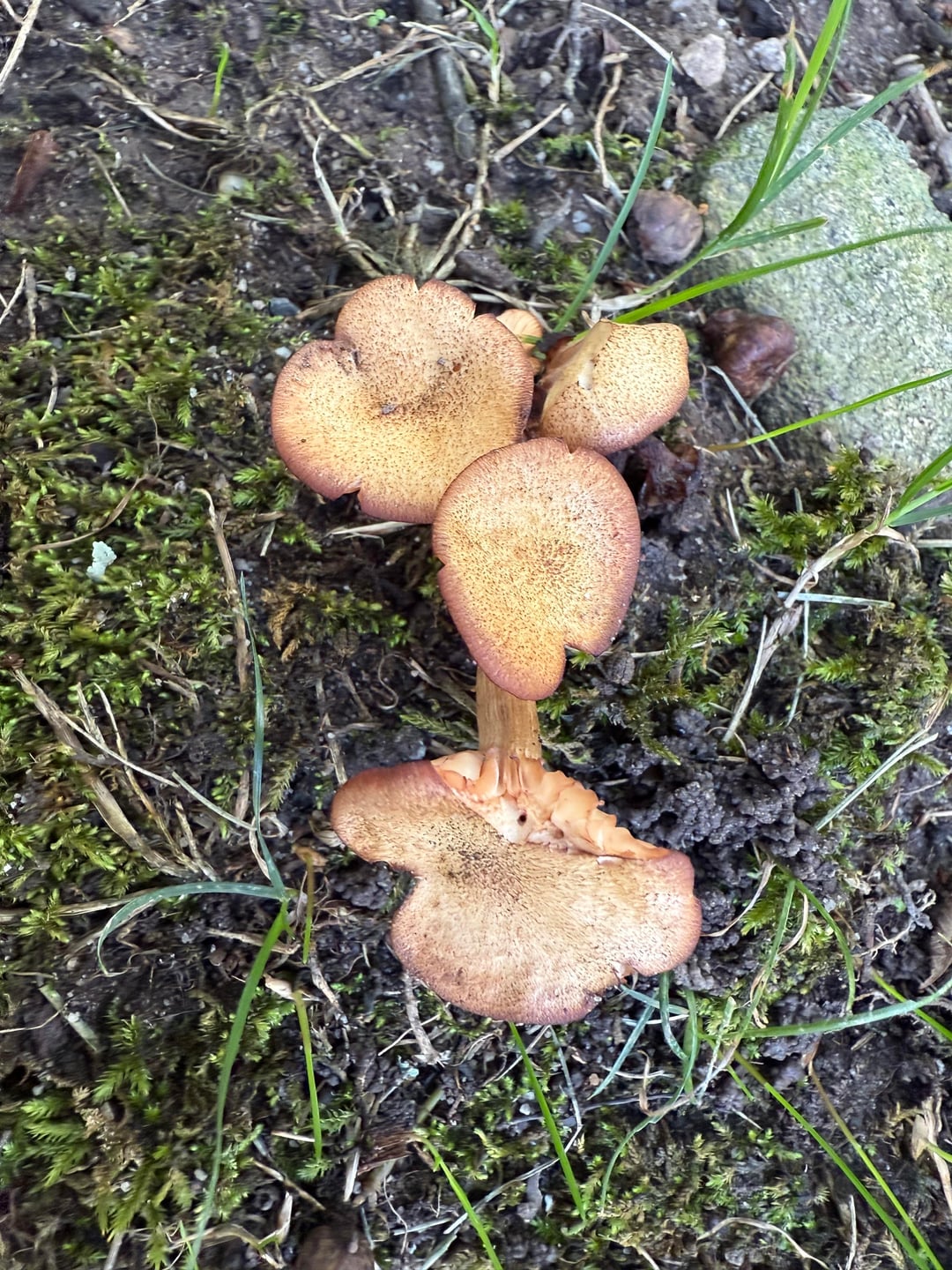
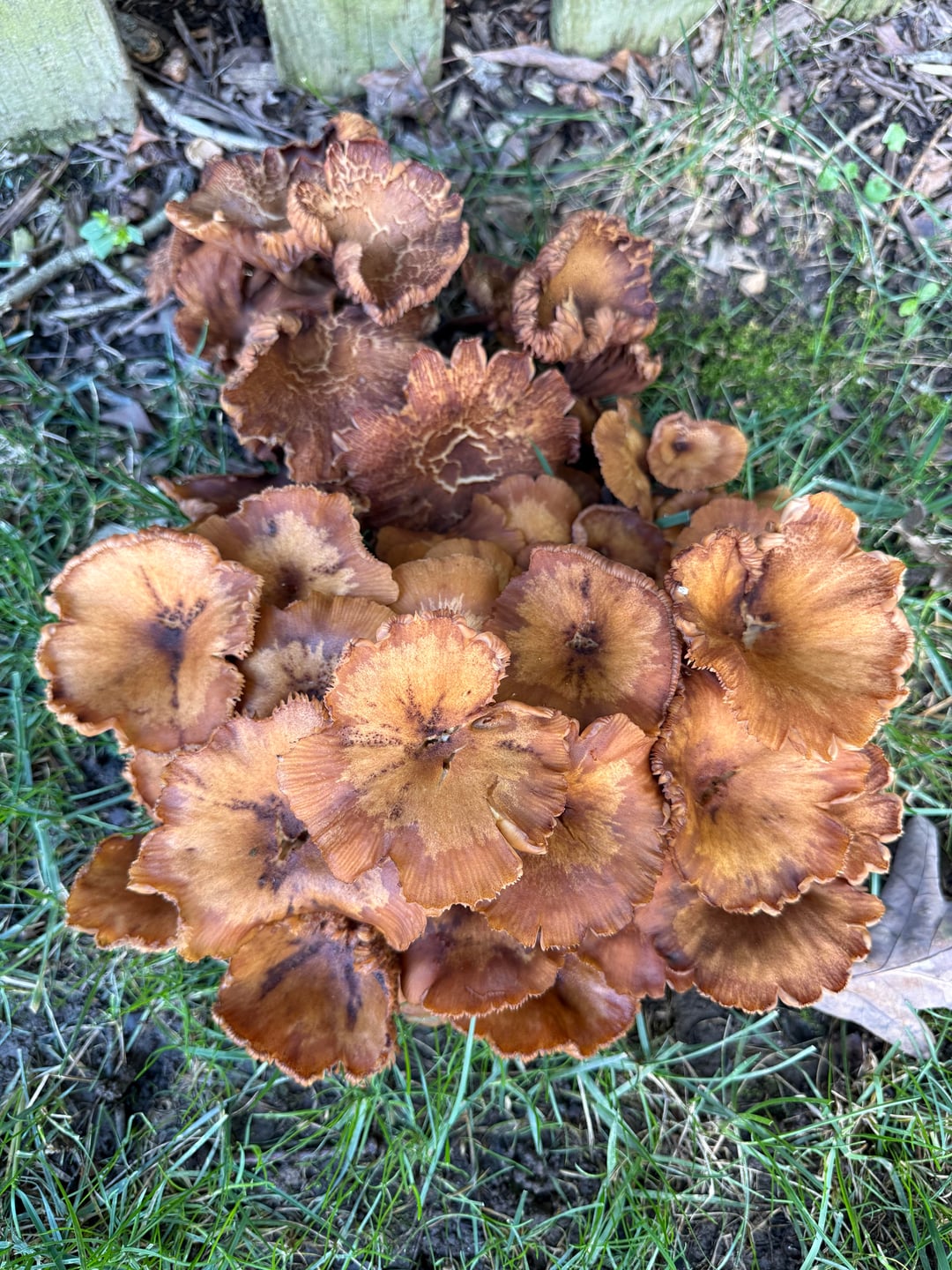
I’ve been seeing a lot of posts this week of people with mushrooms on or around their trees and the prognosis being that the tree is done for – it’s just a matter of time.
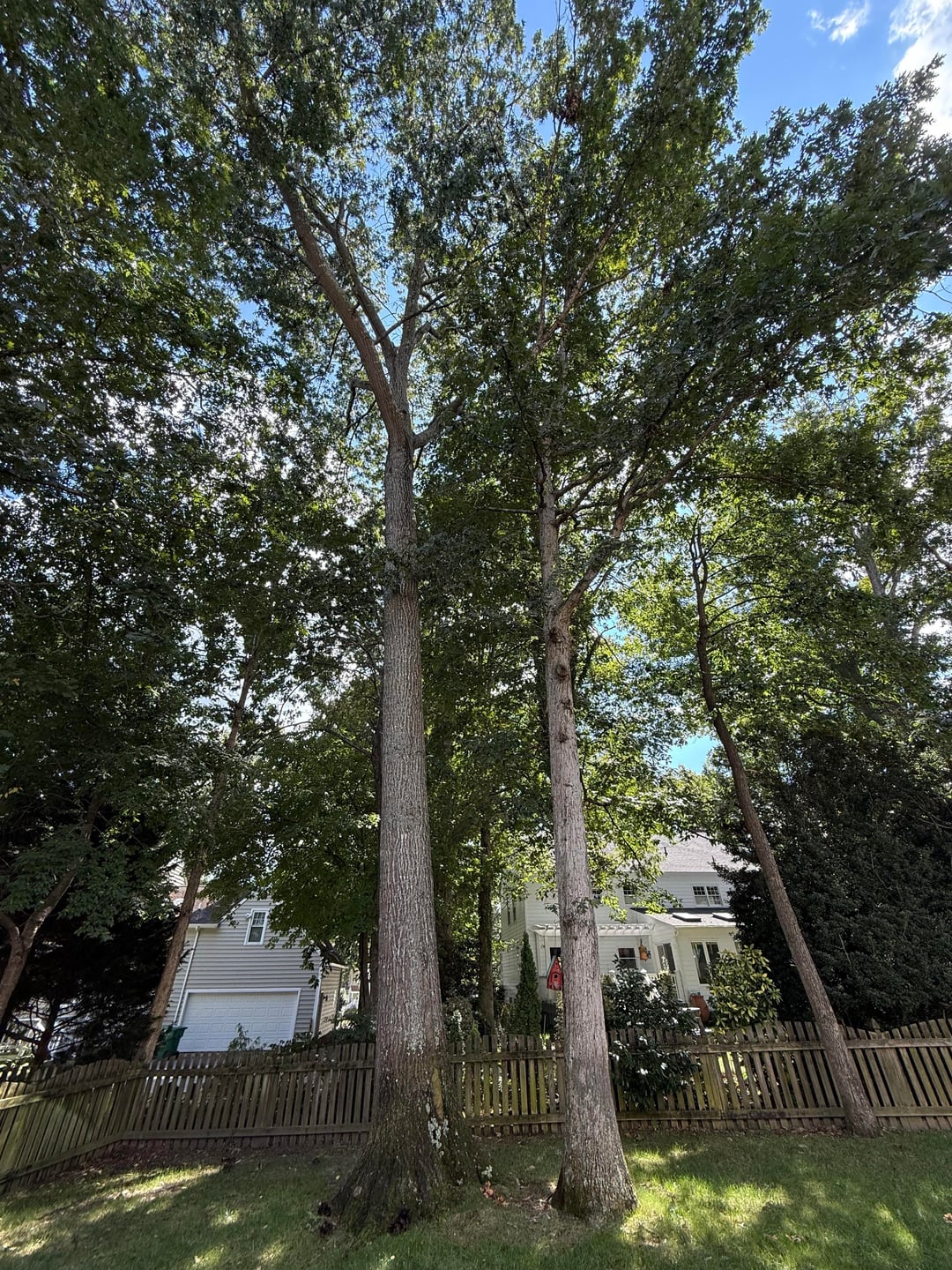
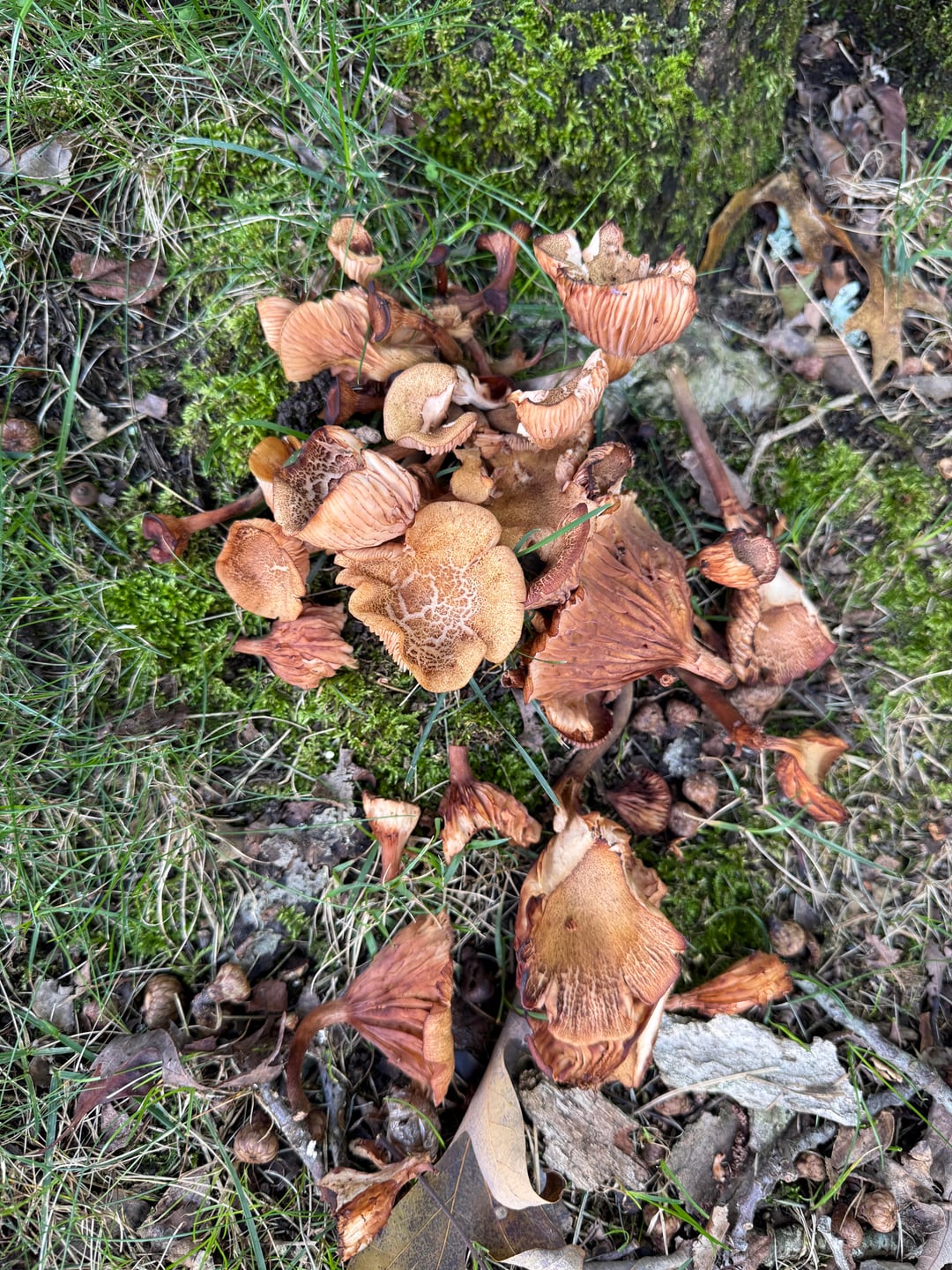
Is this always true and true of all mushrooms? We’ve just had these pop up all around a tree out back after our grass was aerated and reseeded. This is a hugely tall tree that bringing down would be a challenge. Should I be concerned?
by KfirGuy
11 Comments
When it’s on the tree itself yes
Mushrooms are a sign of decay. Not always an indication of trees health. However decay is usually a sign of dying.
Yes. It’s a sign the tree is coming to its end. In nature a tree like that can stay standing for many decades after it’s dead, but because it’s quite large and there’s many houses around you’ll likely want to get an arborist out and start budgeting for its removal.
Mushrooms are the fruiting bodies of fungus. When they “pop up,” it’s typically not a new fungus that just got there… it’s a sign that growing conditions are optimal to the point that the fungus that lives there can invest energy in reproduction. In other words, when mushrooms pop up, they may be letting you know that conditions just improved for them.
As an arborist, I’m not a mycologist. But I need to know enough about fungus to understand its relationship to trees (at least the basics). One thing I know is that healthy trees can live with fungal infections for years that are kept in check for years. The fungus lives as mycelium (a network of thread-like hyphae, forever exploring and absorbing/exchanging nutrients/chemicals) inside the tree. As the tree faces new stressors, or the fungus gains ground over the years, eventually the tree’s defenses aren’t enough to keep it in check and it blooms with fruiting bodies. This is why it can often be the death knell for trees, because it’s a sign the scales have tipped and the fungus is overwhelming the tree. Eventually the decay will erode the structural integrity of the tree… and you want to remove it before it gets to that point, which we cannot accurately predict.
My advice: get a tree risk assessment from a consulting arborist with credentials to match (ISA Certified or RCA). It may need to be removed, but you’ll have a much stronger recommendation in person with an explanation either way.
Good luck OP
You might want to do a little research and see if those are growing from your tree or the wood chips that seem to be spread around. The tree could be ok. Long shot, but what’s the story with the ones over by the fence?
There has been so much rain since early in the year, at least in the Midwest, that these same-looking mushrooms are EVERYWHERE. We have them in various spots on the lawn where there aren’t even trees nearby. They sprout so quickly.
Always? Nope. Sometimes? Yep.
Get a proper ID on the mushrooms from a good arborist(isa, bcma, traq, certifications like that)and get their recommendation – it’ll be based on a bunch of factors(fall targets, general health of the tree)Get two or three opinions and test their knowledge on the mushroom id. Check out- Armillaria. Kind of looks like it. If it is, that’ll affect the stability negatively. You may not have to rush to remove but don’t try to time the removal at the perfect time to get the max lifespan out of the tree also. After removal, plant another tree, shrub, or herbaceous plants(preferably native to your area) somewhere else on the property.
Hell no
It really depends on the species of the fungus and what is going on with the tree. Where the mushrooms are as well. Mushrooms in the soil only might be beneficial fungi as the mycelium actually helps bring water and nutrients to the roots. Mushrooms on the trunk could be either dead wood decomposers only feeding on dead wood of an otherwise still healthy tree of they can be plant parasites/pathogens feeding on living tissue and eventually killing the tree if not treated. Copper will kill fungi without harming plants.
It’s the time of year when these things produce spores, hence the fruiting bodies (aka mushrooms).
Yes, I’d say that your tree is in trouble. I’m not a professional, but this particular fungus is root rot. I can see some over by the fence in your photos, so that tree is under attack from it. I don’t know the treatment for this particular fungus, but since plants in general protect themselves internally by walling off infections and injuries, then treatment with phosphite seems to be an appropriate thing to do right now, and repeated in the spring. I would buy the concentration and dilute it, drenching the soil around the tree with the appropriate concentration of that stuff and let the roots soak it up. You can get phosphite from online retailers, but it is not cheap.