
Quebec, zone 3b
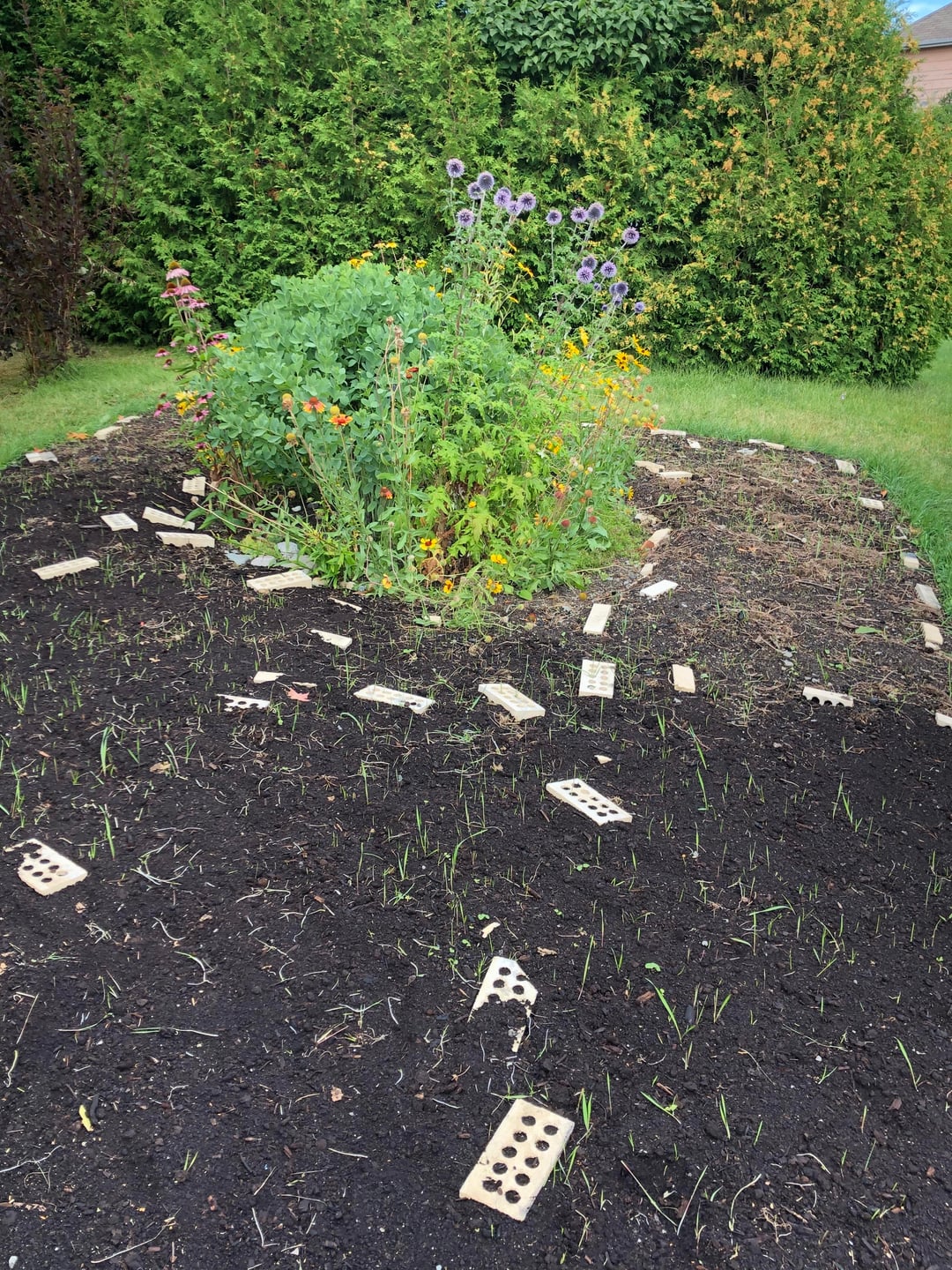
Placed overlapping cardboard and about 2-3 inches of compost and soil mix on this patch of mowed grass towards the end of July. The plan was to kill the grass and spread out the plants I have in a middle patch towards the end of the season.
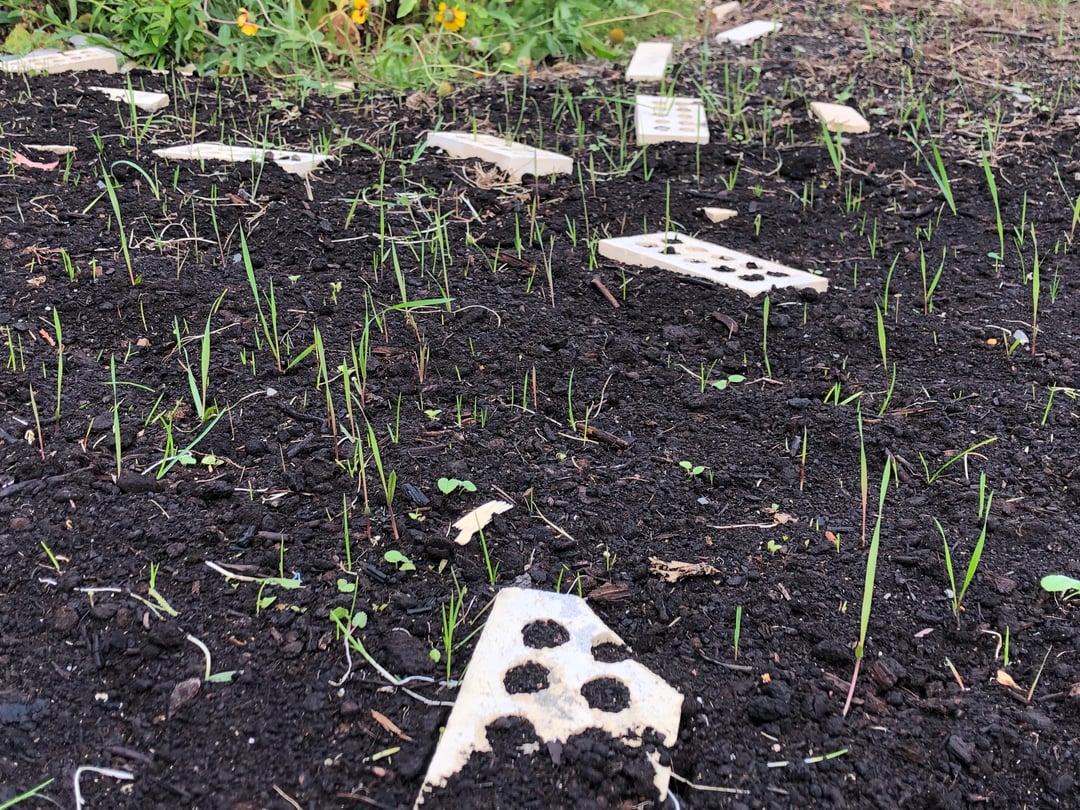
Grass has been poking out now for a while. I’ve ripped what has been poking out twice, but it obviously keeps coming back. The cardboard is quite disintegrated as of today.
What would be the best course of action now?
I understand after further research that :
– I could have doubled my cardboard/compost-soil;
– I could have spread a seed mix, but that wasn’t the intended goal;
– I could have waited until the end of season for the winter snow to help smother it all.
Should I just take a shovel to it all?
Thanks!
by Becbot_
10 Comments
Reload and go again!
You can never fully remove lawn. Your compost and mulch will have had seeds in it, some stuff will have grown through, it’s a never ending battle. Unless you let it be an ending battle.
Acknowledge that you’ll need to do a decent weeding many times next year and that’s all you can do. I have a rock garden out front with 2 layers of thick construction tarp under 10″ of river rock, and I have to weed it twice a month.
Things you don’t want will grow there until you put in things you do want. Nature abhors a vacuum.
Im on year 2 of getting all the grass out of my little 10×5 area. I replaced most of it with clover and while im still picking out shoots of grass, the spots I covered with clover have much less than the spots I left bare or just mulched over.
The one spot I put cardboard over has had the least grass pop up.
It is unfortunately a constant battle but there ways to make it easier and slow it. Cardboard and cover crops.
I’d consider this unprepared. The grass isn’t even a little dead, it’s just napping. You can see the white rhizomes. it’s absolutely gonna surge, everywhere, because it’s everywhere.
adding compost on top gives the lawn grass plenty of nutrients.
What are your next steps? are you seeding or putting in plugs?
if this was mine, I’d put off adding anything until I could give the grass a decisive kill– that means next year.
I’d recommend researching what you want and starting things in pots/winter sowing, then aiming to plant in July so you can prepare it
If you want to kill the grass, you’d need to add about 6 inches of mulch on top of the cardboard. You basically fed the grass with the compost.
If you want to try again, spread the plants, add more cardboard and a thick layer of mulch. I have done this, it does work, but the layer needs to be about 6 in thick.
J’imagine que le but était de prendre les fleurs du milieu et utiliser leurs graines pour ensemencer le reste? Ça pourrait fonctionner mais ce sont quand même des plantes à croissance lente, il faudra qu’elles se battent fort pour compétitionner avec le reste. Le sedum peut se multiplier par multiplication. Juste à mettre une branche dans le sol et ça devrait être bon. Ce qui pourrait être intéressant vous ne semez pas cet automne c’est de mettre une bâches foncée dessus la terre. Ça va faire une insolation au printemps et tuer par la chaleur. Ensuite, il sera plus facile de semer ce qui vous tente. Aussi, pour la première année, peut-être semer des annuelles à croissance rapide qui prendra la place et empêchera des indésirables de s’installer.
Add another 3″ of mulch, and then pull anything that pokes up.
You should plant stuff or cover it again. You can’t leave bare dirt for years waiting for things to spread. The birds and your lawn will seed it with life unless you occupy that space
I’ve been at this for a while – what I did this year was sprinkled marigold seeds anywhere I didn’t want weeds and grass popping up since it’s a long ways before this garden I’m working on is full. Marigolds aren’t native, but they kept everything else at bay (including dandelions, although I had to pull a few still in early summer). Best is that they are annual so as I continue to fill the garden with more native perennials, I’m not having to fight against something else that’s invasive. They just die in the winter and their seeds can’t handle freezing so they don’t come back next year.