
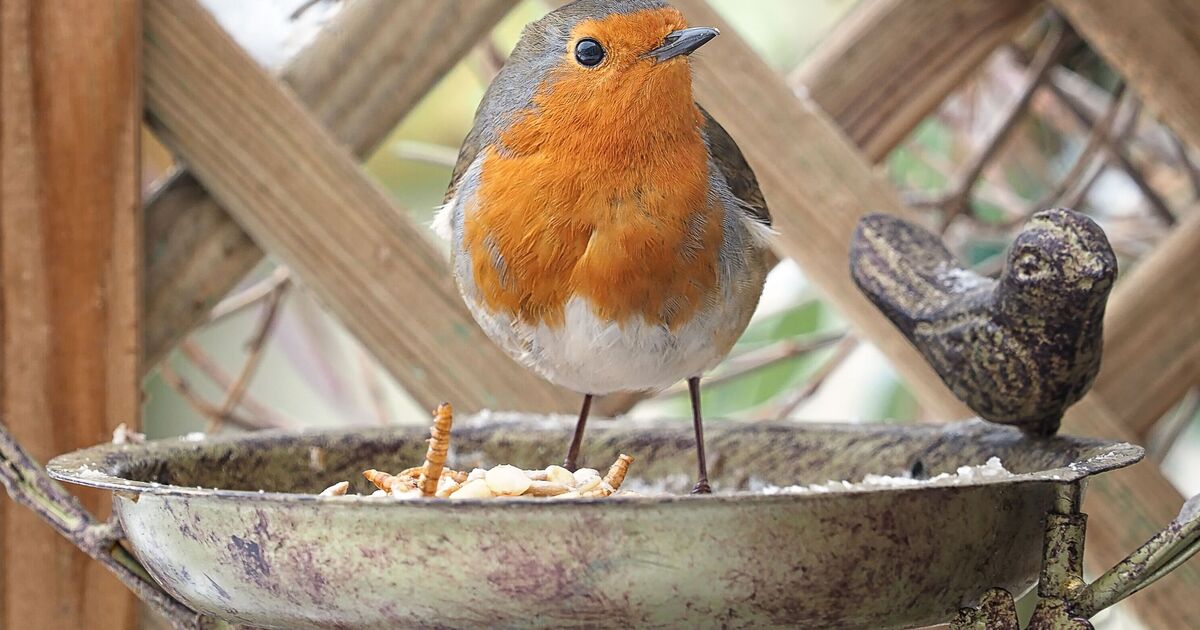
It’s the beginning of the end of the peak season for garden birds in September as sparrows, starlings, blackbirds, robins and many other British favourites see their young fly the nest and find food for themselves ahead of the winter soon to come. And to help these fledgling birds during the late summer months, gardeners are urged to leave two fruits out on lawns, as well as on bird tables.
According to the RSPB, gardeners should leave out a variety of foods for different birds at various times of year, including everything from sunflower seeds to uncooked oats, suet and mealworms. And other garden experts back up how important summer bird feeding is. According to CJ Wildlife, birds need more energy in summer to help feed their young, and it is no longer the case that people should only leave food out in winter or spring.
The experts said: “Not long ago, many believed that garden birds should only be fed during the winter months. However, long-term studies have shown that offering food to garden birds year-round is beneficial, supporting declining species and allowing you to learn more about your garden visitors.
“Feeding wild birds during the summer helps busy parents top up feeders and provide all the natural food their young need. Well-stocked bird feeders can be a lifeline for young birds as they learn how and where to find food locally.
“Bird populations are at their highest in the summer, so a regular supply of quality food helps birds get the energy they need amid increased competition for natural foods.”
But if you want a quick and cheap way to help birds, you can leave out two fruits – apples and pears, sliced up and left on the lawn or on a bird table or feeder.
The RSPB says: “You can put out leftovers such as dried fruit, or fruit such as apples and pears. Don’t use anything mouldy or salty, though, and if you have a dog, don’t put out dried fruit – vine fruits, such as raisins, can be toxic to them.
“Fruit, especially bruised apples and pears, will be popular with thrushes and blackbirds.”
Different birds feed in different locations – some prefer to “ground feed” instead of coming to a bird table.
The RSPB says: “Blackbirds are too large to access most hanging bird feeders. To attract them to your garden, it’s best to put out food on a bird table or scatter it on the ground.”
The same is true for sparrows, dunnocks and doves, which also prefer ground feeding, although they usually eat seeds.
According to Peckish Bird Food, as well as fruits, you can also leave peanuts out in September, which are good for some birds that aren’t migrating.
It says: “Many of our summer migrants will have gone or be on their way out, but by the end of September, our winter migrants will start to arrive back. The first redwings, fieldfares and bramblings will be seen, particularly along the east coast. Numbers will become more noticeable by October but if we see strong north-easterly winds, more may be pushed through earlier.
“While some birds are preparing to migrate, more sedentary species are getting ready in different ways. Coal tits and jays create stores of food, mainly nuts and seeds, for the cold months ahead. This is when jays are easiest to observe as they can make constant journeys between sources of acorns and a preferred site for hiding them. In lean years with few acorns on the trees, they will often turn their attention to garden peanuts instead.”
If leaving food on the ground, though, make sure it is in a wide-open location, away from hedges and anywhere a cat could hide. Birds will not feed where they cannot keep themselves safe from predators like cats, or could be exposed to risk if forced to feed near cat hiding places.
If you do use a bird table, be sure to clean it regularly with hot, soapy water if it is flat. This is because the RSPB recently pulled flat, open bird tables from sale while it investigates whether these types of feeders could be contributing to the spread of disease.
The RSPB added: “Bird feeder hygiene is very important. Brush off debris every time you put out fresh food and scrub feeders with mild disinfectant solution weekly.”
Comments are closed.