
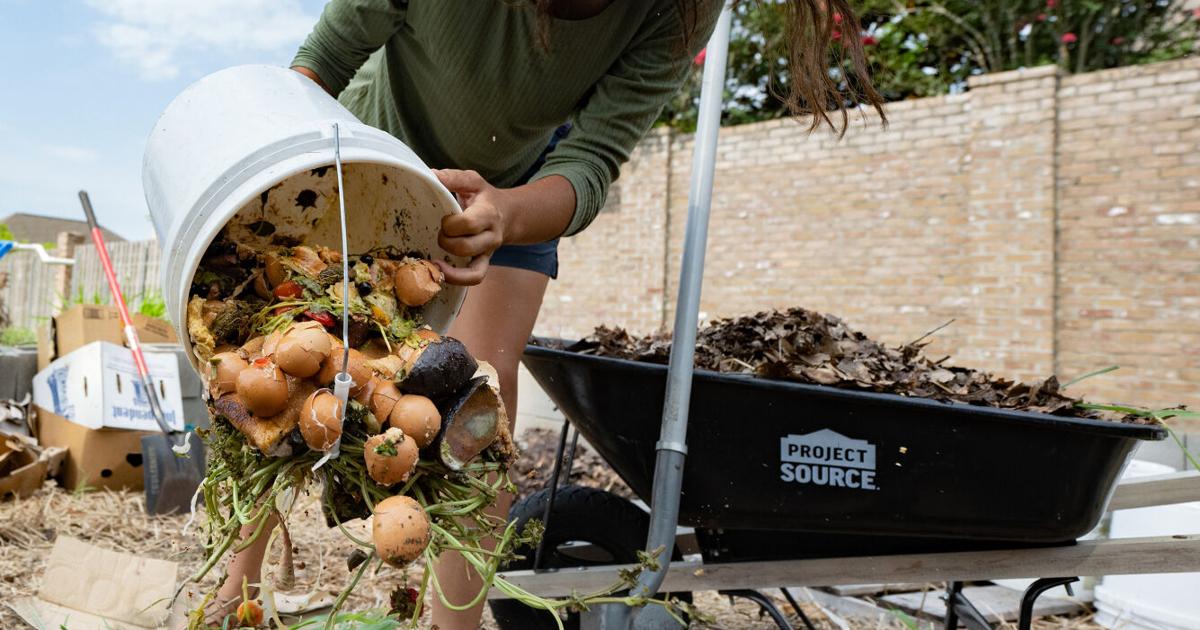
I am doing my best to compost, but the materials I have available are oak and maple leaves during the fall and spring and plenty of grass clippings and weeds during the summer. My compost pile doesn’t do much of anything during the cool season and gets sour during the summer. How can I balance it out? Is it a good idea to put weeds in the compost pile? — Will
We don’t always get the proper balance of materials available for composting during the year, but you should be able to do better than you are. Fallen leaves may fail to compost rapidly because they are too low in nitrogen for the microorganisms that carry out the decay process to digest them properly.
Sprinkle a little nitrogen-containing fertilizer (any commercial granular fertilizer, cotton seed meal or blood meal) over the leaves every time you add about a 12-inch layer of leaves. This will help speed composting. It is also critical to keep the leaves evenly moist but not soggy.
With grass clippings, the problem is just the opposite. The clippings are high in nitrogen and full of moisture, so decomposition begins rapidly and the clippings pack tightly, excluding oxygen. This allows microorganisms that produce unpleasant odors to thrive.
To correct this problem, turn the pile more frequently to oxygenate it and add shredded newspaper. You could also stockpile some of the leaves you collect during the fall in plastic bags and add them to the grass clippings during the summer as needed.
It is OK to add weeds if they contain no seed heads or living bulbs or rhizomes. When in doubt, it is better to exclude them.
I have found many little piles of small, round mud pellets. After researching I believe it is piles of worm castings. Can I scoop this up and put it in my potted plants? — Eileen
Worm castings are the excretions of earthworms. The worms often crawl up to the soil surface and deposit their droppings on the surface. They look like small piles of BB-sized mud pellets.
Earthworms basically consume the soil as they tunnel through it. They digest the organic matter, bacteria and fungi in the soil and excrete the rest. Because the soil has passed through the earthworm’s digestive system, mineral nutrients in the castings are more available to plants. That’s where the idea of applying earthworm castings as a fertilizer to provide mineral nutrients to plants got started. You can even buy earthworm castings and use them as an organic fertilizer.
The issue with putting the worm castings in pots is the possibility of introducing disease organisms found in the soil into the potting mix your container plants are growing in. Commercial worm castings have been pasteurized before being sold, so this is not an issue if you purchase worm castings. While not necessarily recommended for container plants, you could still scoop up the worm castings and put them in flower beds or vegetable garden beds.

Citrus leaf miners are tiny moths that leave behind white trails and curled leaves.
PROVIDED PHOTO
The new growth my citrus tree made recently is curled, deformed and unhealthy. Please let me know what to spray. — Tommy
The problem is a common insect pest called the citrus leaf miner. The adult is a tiny moth, and the damage to the late-summer flush of new growth is done by tiny larvae that feed inside the leaf. The damage is done at this point, and spraying will not benefit the tree.
But the situation is not as bad as it looks. Citrus trees tolerate this damage well and will recover nicely without treatment. Although the leaves are deformed, the shoots are not damaged and will produce healthy new leaves next year. There is no need to do anything now.
Next year, to minimize damage, you could spray weekly with spinosad as soon as you see new growth beginning. Continue to spray regularly until the leaves mature.
Swiss chard is among the vegetables that can be planted now.
STAFF PHOTO BY SOPHIA GERMER
Garden tips
VEGGIES NOW: September is a good time to plant transplants or seeds of broccoli, cabbage, cauliflower, Chinese cabbage, collards, English and snow peas, Irish potatoes (plant small, whole potatoes saved from the spring crop), kale, kohlrabi, leek, lettuce, mustard, onion, shallots (plant small bulbs) and Swiss chard. Plant seeds of snap beans (early September), beets, carrots, radish, rutabagas and turnips. It’s getting late, but plant tomato and bell pepper transplants this weekend if you haven’t already.
HERBS NOW: Herbs to plant in September include transplants of basil, sage, rosemary, thyme, oregano, chives, lavender, Mexican tarragon and mints. Plant seeds or transplants of dill, parsley, fennel, cilantro, arugula, borage, camomile and chervil.
EARLY POINSETTIA CARE: Make sure poinsettias in pots or in the ground in your landscape do not receive artificial light at night from nearby flood lights, porch lights or streetlights from now on. Light at night can prevent them from blooming.
ROSE TLC: Repeat-flowering roses, such as hybrid teas, grandifloras, Chinas, Bourbons, teas, floribundas and landscape roses (such as Knock Out and Drift roses), should be cut back by about one-third now. This prepares them for the fall blooming season. Pruning controls size, removes dead wood and stimulates vigorous new growth that will produce lots of flowers. Fertilize after pruning.
KID-SIZED: If you want your kids to work in the garden, it’s a good idea to purchase gardening tools specially made for them and properly sized for them to use. This gives kids a chance to identify with gardening more closely because they have their own tools. It’s safer, too.
Comments are closed.