
Be sure and visit the Master Gardener booth at the Kandiyohi County Fair Aug. 6-9. We are located between the two log cabins on the northeast part of the fairgrounds in Willmar. You still need to climb the hill to get to us but at least part of the way is blacktop.
Sign up for the free rain barrel giveaway the last day of the fair. This barrel has been provided to us by the Kandiyohi Soil and Water Conservation District.
Also, if interested there will be a daily giveaway of started blue wild indigo and serviceberry plants — as mentioned in previous columns. The theme for the booth this year is clean water.

While in the area, be sure and look at the raised flower beds just north of the secretary’s office. This has been planted and maintained jointly by some of the master gardeners and 4-H kids as a learning experience.
If you are interested in doing some fall vegetable planting, it’s about time to do that. Right after the County Fair is a great time. In NORMAL years, we always get a good rain about a week after the fair. But it seems we get rain every couple of days this year.
Fall radish are the best. The days start getting cooler and they don’t bolt like they do in the spring when it gets hot. Lettuce and other greens as well as peas are some other vegetables to plant at this time. If you want to try garlic, that shouldn’t be planted until October.
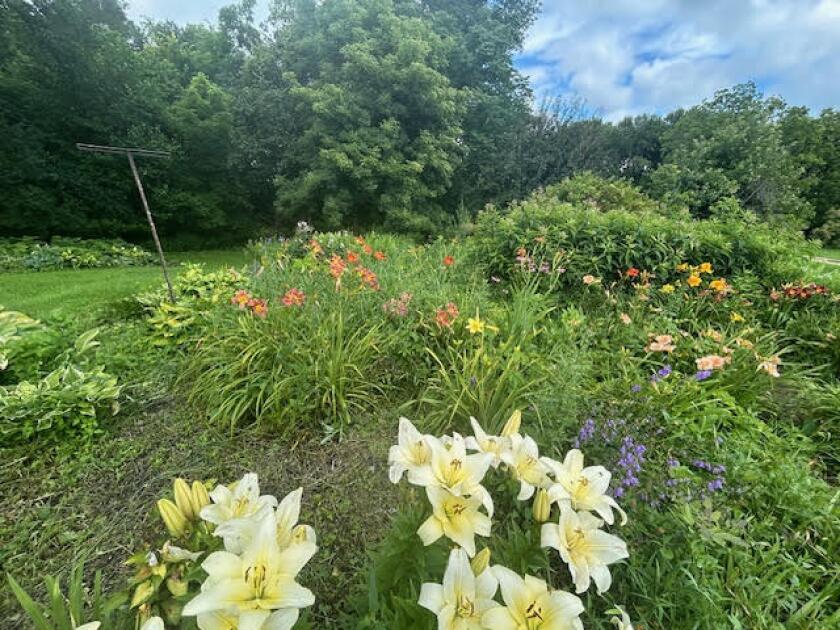
Various lilies are in bloom in this July 2025 photo from the Kandiyohi County garden of Sue Morris.
Contributed / Master Gardener Sue Morris
Right now, my flower beds are a joy for me to check out each day. (Takes my mind off the fields that are still water covered with the 18 inches of rain in June and more since!) Between the Asiatic lilies and the daylilies, I counted 65 different varieties in bloom today. It seems the almost daily rains haven’t hurt the blossoms too much.
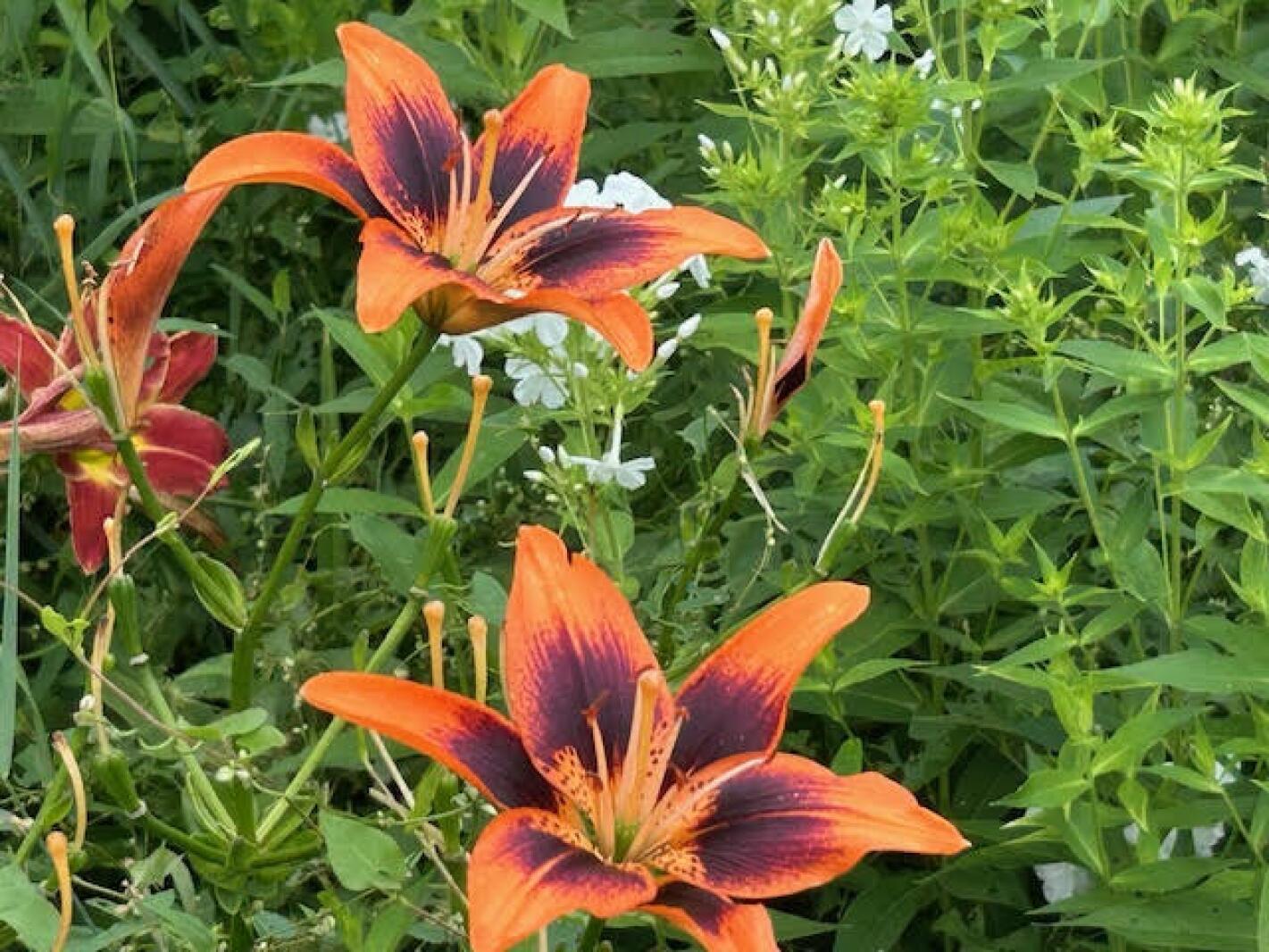
There is a almost black Asiatic lily that was given to me as a gift a few years ago and I can’t believe how many stems are on it this year. The only negative about a black lily is that it doesn’t show up in the flower bed until you get close. My favorite colors are the bright orange and true reds. Actually, they are ALL favorites.
With all this rain there is a good possibility of powdery mildew showing up in your flower bed. You will be able to recognize it as infected plants may appear to be sprinkled with baby powder or covered in cobwebs. White to gray, powdery spots, blotches or felt-like mats on leaves, stems and buds appear.
Powdery mildew is a common fungal disease that affects many different plants in the flower garden. It may cause plants to look less attractive but doesn’t cause significant damage. When severe, the disease may reduce plant growth and flowering.
Powdery mildew affects more than 10,000 plants. Many commonly grown annual and perennial flowering plants, as well as ornamental grasses, can be infected by powdery mildew. Zinnia, phlox, bee balm and peony are a few of the plants regularly infected by powdery mildew in the flower garden.
Allowing spacing in the flower bed to provide air movement helps keep powdery mildew away. Fungicides should be used only to protect high-value plants with a history of disease.
Remember fungicides will not cure or remove existing powdery mildew infections. In the future look for resistant varieties in seed catalogs, on seed packages and on plant labels.
See you at the fair.

Master Gardener Sue Morris has been writing a column since 1991 for Kandiyohi County newspapers. Morris has been certified through the University of Minnesota as a gardening and horticulture expert since 1983. She lives in Kandiyohi County.