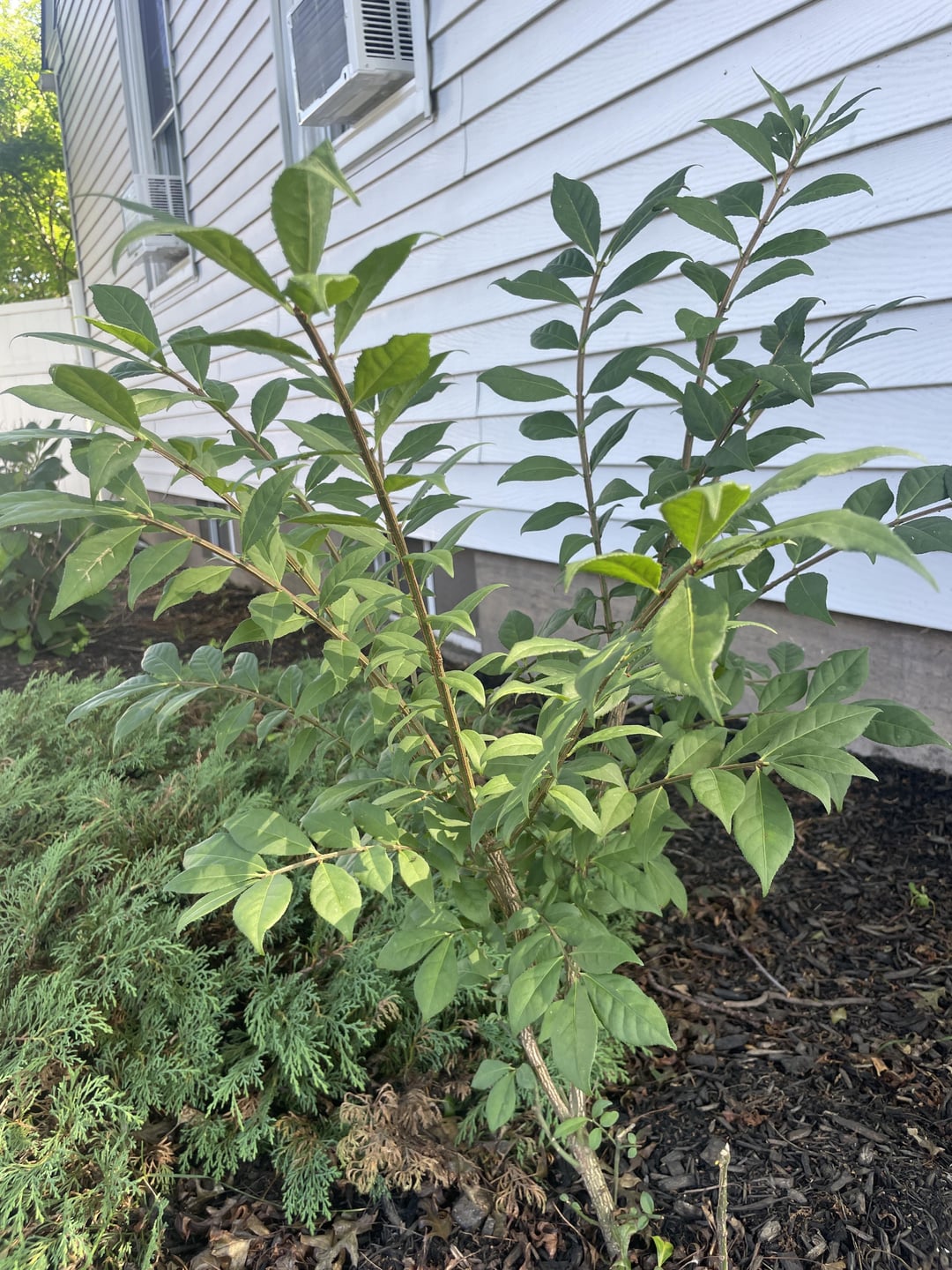
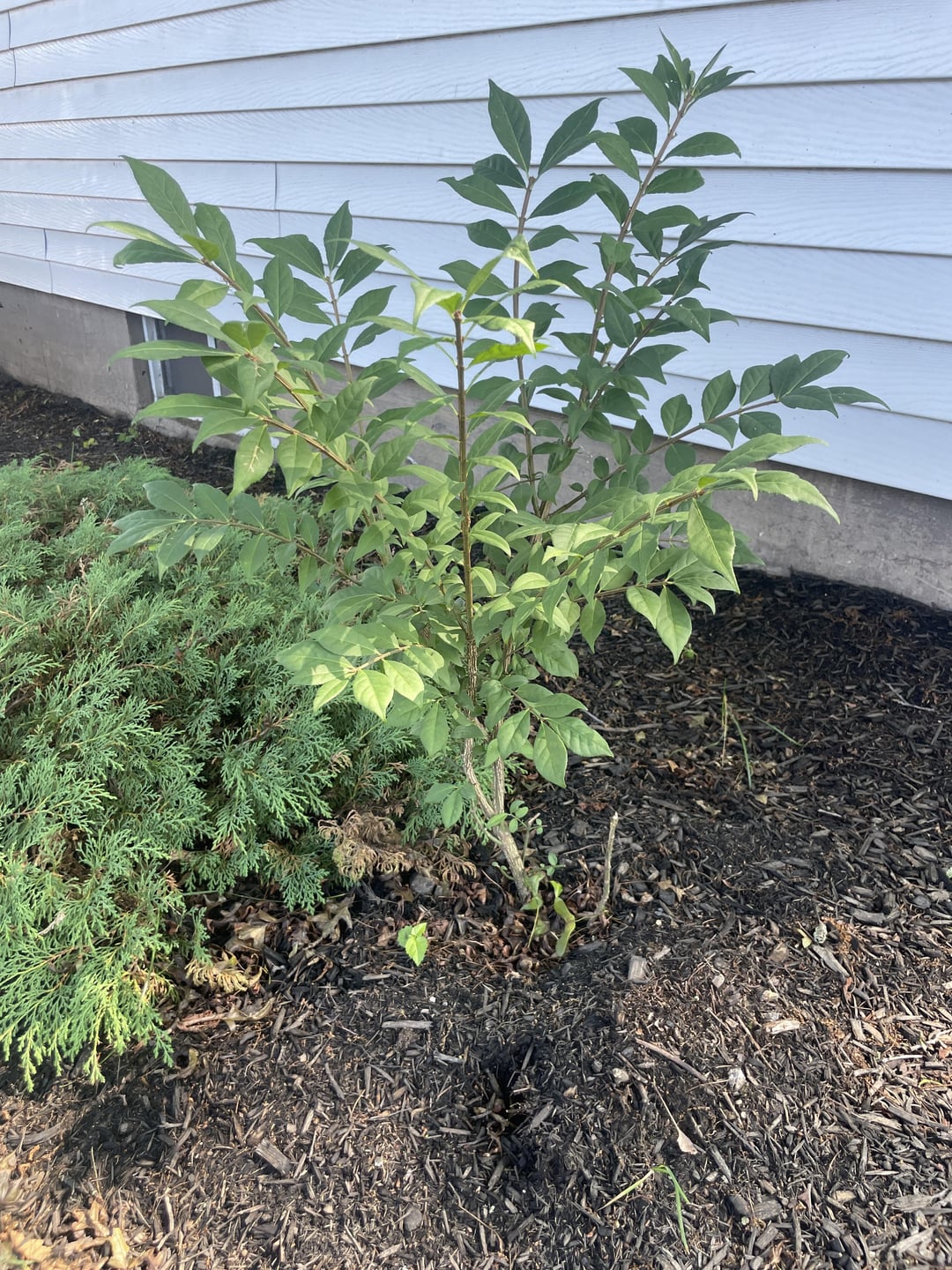
Sorry for another one of these posts, but… I’m just not sure! We’ve owned the house for 3 years and this sprouted this spring.
Thanks so much for your help!
by Environmental-Pie274

Sorry for another one of these posts, but… I’m just not sure! We’ve owned the house for 3 years and this sprouted this spring.
Thanks so much for your help!
by Environmental-Pie274
4 Comments
Doesn’t look like it. TOH’s leaves are smooth-edged
Where are you located? It looks like Oregon grape a little bit
It’s burning bush (Euonymus alatus).
At first glance I thought it looked like forsythia: https://landscapeplants.oregonstate.edu/plants/forsythia-intermedia
There’s also some chance it could be burning bush (which is invasive). https://extension.psu.edu/burning-bush I say this because the stems appear to have “wings” running lengthwise, though it is hard to tell without a closer look.
Here is a resource for identifying Tree of Heaven: https://extension.purdue.edu/news/county/whitley/2023/08/identifying-tree-of-heaven.html They’re very common in many urban areas, so I recommend looking around for saplings growing next to fences and foundations; I’ve even seen one coming up in the middle of a highway! Full grown trees, you might find in old urban neighborhoods, near parking lots, or near roads. Once you find one and get a closer look at it in person, you’ll start seeing them everywhere. Just mind the differences between ToH and walnut and sumac. The “glandular teeth” are the giveaway to identifying ToH.