
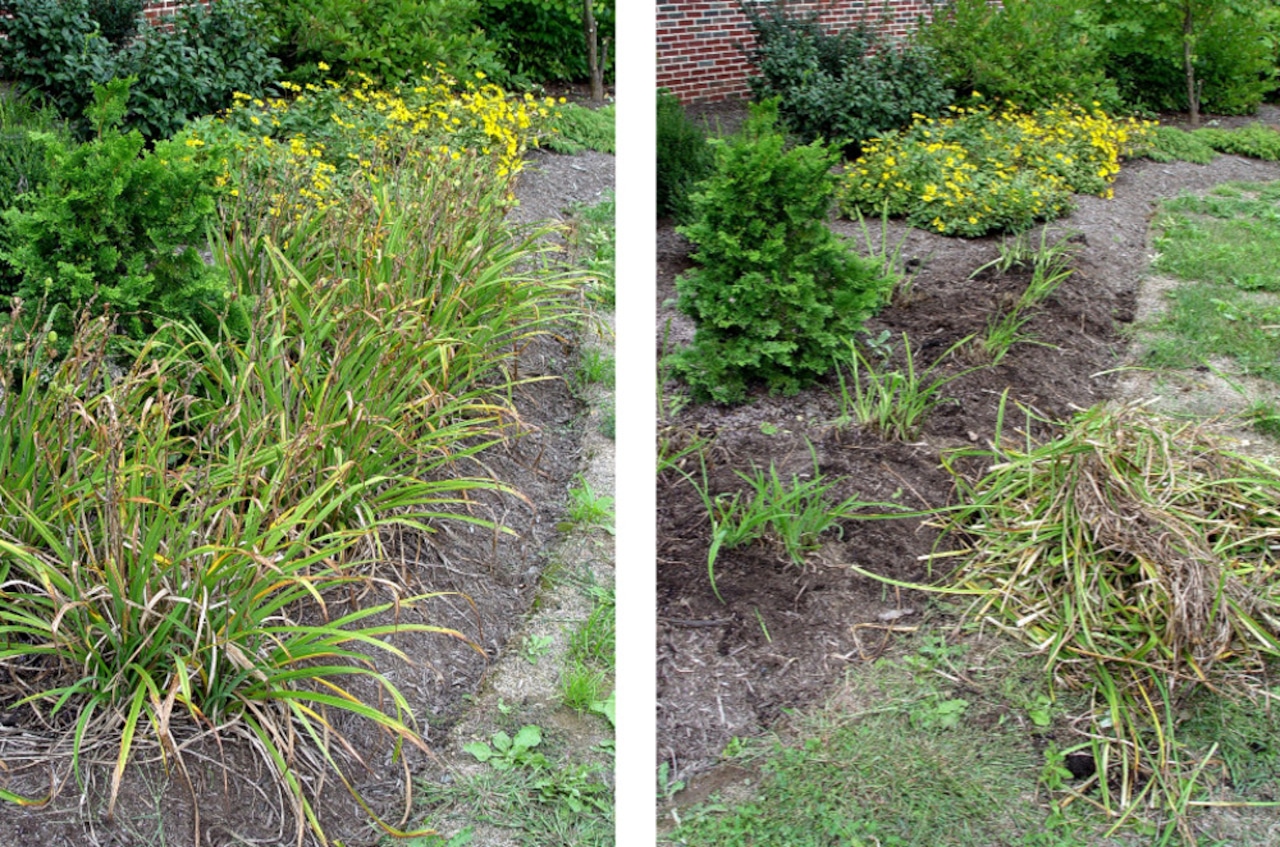
Perennial flowers look neater and may even keep blooming if you “deadhead” them (i.e. cut off spent flowers and spent flower stalks) in summer after bloom.
But sometimes perennials benefit from even steeper mid-summer encounters with the pruners, including whole plants being cut nearly to the ground.
This seemingly ruthless act can actually aid perennials that are being ravaged by bugs or devastated by disease.
Examples: peonies get mildew and botrytis blight, hollyhocks and hibiscus are favorite targets of Japanese beetles, daylilies suffer from leaf streak, phlox and beebalm usually shrivel from powdery mildew, and black-eyed susans often turn black by mid-summer from septoria leaf spot.
Cutting and removing damaged foliage can help on three fronts:
You could be removing bugs and maybe even bug eggs that otherwise would lead to future (or continuing) damage. In the case of disease, you’re removing the spores (the fungal equivalent of seeds) on leaves that could lead to a new infection.Removing diseased or damaged foliage opens space that encourages new growth, often rejuvenating the plants and resulting in new leaves that absorb sunlight to fuel re-energizing of the roots. This new set of growth usually goes on to grow nicely the rest of the season after the bug or disease window has passed.Radical cutback of old or damaged foliage not only usually yields new foliage but can encourage a second round of bloom in some perennials — most notably catmint, salvia, yarrow, and hardy geraniums. Those all get a second wind after near total mid-summer decapitation.
Use hand pruners to do the deed on small clumps or shears if you have masses of perennials to whack.
Cut back to healthy growth, including down so far as one- to two-inch stubs if the whole plant is badly damaged. Don’t cut flush or you’ll risk damaging the crown of the plants – the junction between roots and top growth where new growth emerges.
Healthy foliage can be composted; diseased or bug-infested leaves are best tossed to get the spores and bug eggs out of the yard.
Boost recovery after a summer whack-back by giving plants a good soaking and a light topping of compost.
If disease happens year after year, consider digging and dividing the plant in early spring or early fall. Improve the soil with compost before replanting, and you’ll further discourage disease b:y 1.) adding fresh nutrition; and 2.) improving air flow by spacing the divisions 18 to 24 inches apart.
Beginners usually have a harder time with severe in-season cutbacks than veterans since whacking plants in the middle of the growing season instinctively sounds like a bad idea.
One mitigating factor is the reality that dead or badly damaged foliage isn’t doing a plant much good anyway.
If you’re nervous, try a few cuts on just a few plants and see how it goes.
Read George’s column on how to keep perennials alive and thrivingMore when-to-do-what tips: George’s “Pennsylvania Month-by-Month Gardening” book
If you purchase a product or register for an account through a link on our site, we may receive compensation. By using this site, you consent to our User Agreement and agree that your clicks, interactions, and personal information may be collected, recorded, and/or stored by us and social media and other third-party partners in accordance with our Privacy Policy.