
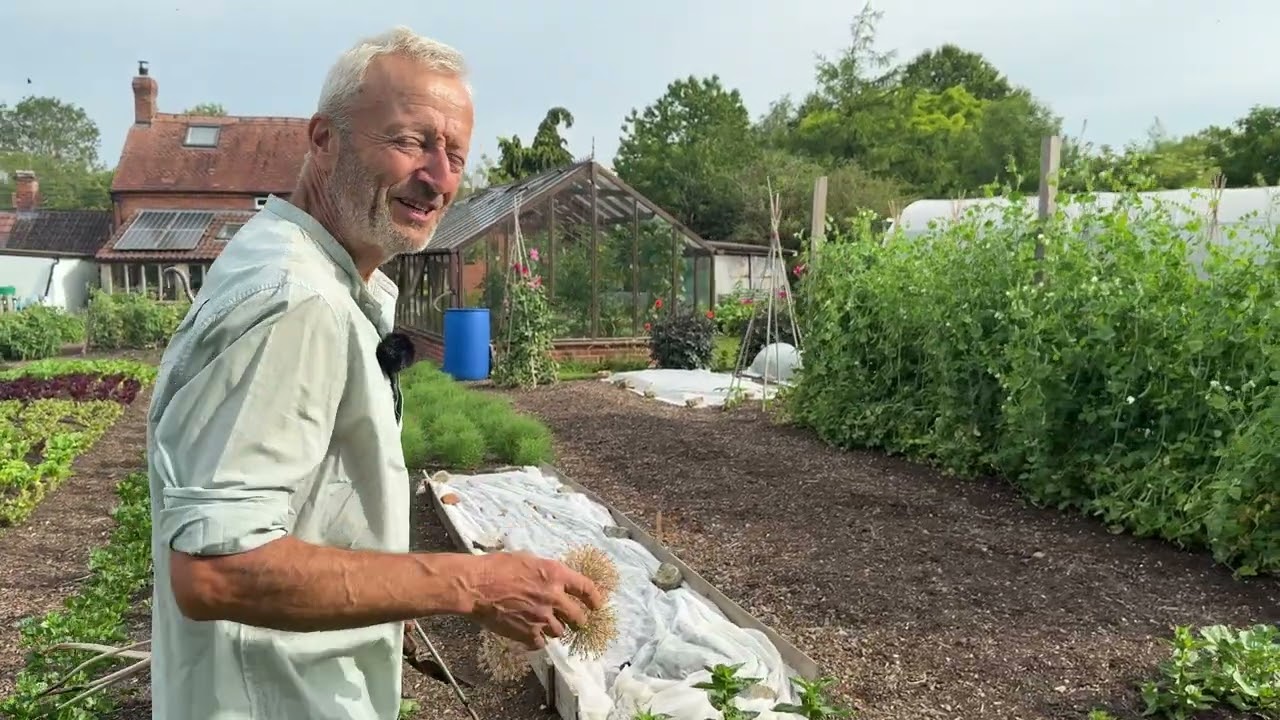
It’s midsummer here at Homeacres, and I want to show you four simple ways I make compost — for potting, for mulching, and for feeding a thriving no dig garden.
These methods include:
A wormery for high-quality potting compost.
Dalek-style bins, ideal for smaller spaces.
A basic pallet heap, which anyone can build with minimal cost.
Large compost bays for managing higher volumes.
The key principle across all these methods is a proportionate mix of green and brown material:
🌱 Roughly two-thirds to three-quarters green, like vegetable waste or grass mowings,
🌾 To one-quarter to one-third brown, such as woody stems, cardboard, straw, or semi-rotted woodchip.
Most compost is ready within six months, though it can be used earlier or later depending on your needs. It does not need to get hot to work—heat can help with weed seeds, but good compost can be made slowly and at ambient temperature.
At Homeacres, I garden half an acre (2000m²) and can make around 60% of the compost I need for two annual crop cycles, simply by following these methods and using what’s available.
✅ Compost is rich in nutrients that do not leach, even when applied before winter. I mulch mostly by December, and the nutrients feed crops deeply—just look at the abundant growth well into the next season.
🌿 No dig gardening depends on the quality of compost, and that quality is entirely within your reach. Everything goes in — rhubarb leaves, lemon peel, bindweed roots, even blighted tomato leaves. It all breaks down in time and becomes beautiful compost.
📚 Learn more in my book “Compost”, published by Dorling Kindersley in September 2024, where I explain how composting is simple when you understand the principles behind it—not rules, but reasons – https://shop.charlesdowding.co.uk/products/compost-transform-waste-into-new-life
🎥 Filmed by Carly Dutton-Edwards on 20th June 2025 at Homeacres, Somerset, UK.
00:00 Introduction
00:22 On-ground wormery
01:48 Finished worm compost for potting mix
03:18 Compost in Dalek bins, how to add ingredients
04:41 Using a compost aerator tool
05:46 Adding ingredients, green and brown
07:27 Second Dalek bin with mature compost
08:51 Heat for compost heaps, not essential
09:25 Veg beds – lettuce, celeriac, sweet potatoes with fleece over, peas (Tall Sugar)
10:35 Chopping allium seed heads into a heap
11:10 Adding wood chip to the heap, a brown, and more green
11:55 How to make a pallet heap, lining with cardboard
12:57 When is a heap full
13:40 Finished compost in end bay, keeping covered
14:55 Moisture in a heap, usually no need to water
15:40 Turning a heap
16:00 Finished compost in middle bay
17:40 My compost book
18:06 Larger compost bays, compost made previous winter
19:37 Worms in a heap, no need to add
20:20 Current heap of 7-bay system
21:12 What I add to my heaps, including diseased leaves
22:04 Temperature of heaps, adding brown to moderate heat
23:51 Examples of greens and browns
24:21 Turning, 7-bay system
25:37 Length of time for compost to be ready to use
25:55 Nutrients in compost – lettuce and leek seedlings in module trays
#compost #nodig #charlesdowding #gardeningtips #soilhealth #wormcompost #mulch
There are so many ways to make compost and I want to share with you
some of the methods I’m using and to make compost
with different qualities. It’s mid-summer, so there’s a lot going on. There’s a lot of fresh material,
new material to use. This is a temperate climate
with quite a lot of moist material. Very suitable for all applications.
This is a wormery. I’m adding… half-composted material to this
in small amounts. The idea being that it never gets hot. And that is just great food for worms. So there’s plenty in here. They’ve gone down a bit in this weather. It’s been quite hot recently
and they don’t like that so much. That’s one advantage
of having a wormery on the ground, because in hot weather they can go down,
also in cold weather. Their best temperatures
are roughly 10-25°C. The other thing is they like it really
moist and my compost has got a bit leaky. Sorry, the plastic is letting a bit
of air in at the end, I need to water that. So these need a bit of food and a bit of
water, ideally today, which I’ll do later. Having a wormery, keeping worms,
it is a bit like having pets, so you need to look after them. I keep the plastic on
to help keep them moist and in the winter
it keeps in a bit of warmth. Then I keep the wood on, because here
this reduces sunlight on the plastic, stops it getting quite so hot in there. It’s actually quite well covered like that. Sometimes I see slow worms in there,
even an occasional grass snake. It’s quite a habitat. Why am I going to all this trouble
of making worm compost? Well, it’s for this reason,
that I’ve seen incredible value from it… in making potting compost. And this is what we made last year. Mixed with a little bit of Urban Wyrm
potting compost, which is lighter. The thing I find with this compost is,
particularly when it gets wet, and you can see it here,
where rain has leaked in the cover, it can go quite dense. This is a lot of roots,
so this one’s not quite so dense. That’s from the elder nearby. It’s not exactly solid,
but in a module container it helps to have a bit more air
than you can have with this worm. But the nutrient status, I found,
of this worm compost is really good. And I’m just gonna ask Carly,
the film cameraman. Did we bring up the module trays?
Are they still in the wheelbarrow? We will have a look in a minute
when we get there, because I want to show you that,
with the compost of this quality, you can… It means you don’t need
to feed your plants. It makes propagation a lot easier
and you don’t need so much of it. I find it incredible
how well it works for plant raising. That for me is total reason
why I’m doing a wormery for potting mix. And then for more normal garden use
like mulching beds. I’m no dig, so I put it on top. But if even if you’re not no dig,
the value of compost is the same. It’s worth making it. If you’ve never done it before, I know from what people say
it can seem daunting, but it’s actually not difficult. You just need to get set up with a kit,
like these I find really excellent. They’re simple, they’re cheap. You can see here there’s a lot of grass
mowings that were added fairly recently. It’s a woody material. So I’m doing roughly
three parts green to one part brown, maybe two green to one brown,
it depends on the time of year. So green is fresh green material
such as this. Like I harvested a cauliflower this morning
and all of this outer leaf, good to go in. I put leaves like this in whole,
even though they’re big, because it’s basically green
and that’s quite tender. But if that was a woody,
a piece of wood of that length, I would cut it or break it into pieces,
no longer than that. That’s about the ideal maximum length, because otherwise
if you have too much hard wood packed, it doesn’t pack down or bed down
and then breakdown doesn’t happen. So we want it firm,
but we also want it loose and open, which might sound contradictory, but the thing is the wood
helps to keep it open. Using this device,
which is a very simple compost aerator, screw down and then you can lift up
and see what’s going on down there But also turning and aerating
is a result of doing this. There we can see obviously much older stuff
at the bottom, looking quite finished. That’s that’s your call, by the way. When people say, when is compost finished,
it’s when you need to use it really. You could use compost like this, totally. It’s still slightly warm,
it’s still breaking down a bit. If you leave it for longer,
it will become even finer. This is nice stuff already. You can see the brown bits in here.
There’s a slightly longer one. Again, that’s more
what I should have put in. But the idea of brown material like this,
smaller pieces and not too fat, it all holds a bit of air in the heap. So we want to have it,
but we also want it to pack down. When I’m adding, I’m just,
like this one, piling it in here. It’s due a layer of green on top there,
I haven’t put any in for a while. And then you’ve got really fibrous things
like this, which is going quite woody. That’s the cauliflower stem. I actually find, if I can do it there, using a knife
to cut downwards like that opens it up and it’s much easier than cutting across. One of the aims of this
is to expose surface area to bacteria. So it’s bacteria that are doing
a lot of the initial decomposition and it’s them that make the heat,
if you get enough bacteria, you get heat. If you don’t get heat, you can still
make compost, don’t feel you can’t. You won’t get heat though,
unless you add sufficient green material. This is quite a large garden here,
it’s a half-acre market garden. I’ve usually got enough green to… I was taking lower leaves
off tomatoes this morning. There’s so much stuff
coming in at this time of year. I would just break them up a bit
to maybe just spread them out, they got a bit packed
into that bucket there. There we’ve got a nice layer of green,
which actually could be a little bit more. It always looks more than it is
with green material. I would put probably another bucket on
before I sprinkle a bit of brown, which I will show you in a minute. I generally keep the lid on
to keep rain out. If you have too much rain,
that displaces air and it goes soggy. Thinking along those lines. Having said that, in weather like this
it doesn’t make much difference. The top keeps the warmth in as well. A heap like this is not warm anymore,
because it’s mature. This is compost
we made in October-November. It’s beautiful. Look at that.
Still some worms in there. So what we’re seeing there
is pretty much worm compost. A lot of this lovely brown soft stuff
is what worms have excreted. That’s what worm compost is,
it’s their excretions. It has their enzymes and some lovely
sticky glue from in their stomachs, which kind of holds it into
agglomerate particles rather than too fine. That’s one reason
it’s so good for plant roots, there’s a bit of air in there. So this compost is ready to use whenever. It’s June now,
we probably won’t need it till October, so it’s just gonna sit there until then. Or until I maybe find somewhere to put it,
in sacks even. And then we could turn this one into there,
because I do find turning valuable. What we can do with these fellas
is lift them up. You can slide them upwards
and that reveals what’s in there. You could fork it into here, for example.
That’s one way of doing it. Some people ask,
what about the siting? Does it matter
if these are in the sun or shade? Certainly in the sun at the moment.
I can feel how warm that is. But it doesn’t matter. The heat mainly comes from
what you put in. Heat is coming from having sufficient
green material to add to any heap. There seems to be a view that hot
composting has to happen for it to work, but it actually doesn’t, heat is an option. You can see here
the result of using these materials, this compost, on the beds. This is no dig, middle of June. Like lettuce that we’ve been harvesting
for about seven weeks now. And celeriac.
Got a few sweet potatoes there. We’re a temperate climate,
so I’m trying to grow these with the fleece to get a bit of
extra warmth. Amazing peas, this is a perfect crop for a temperate climate,
because they actually like it not too hot. We have been watering these,
because otherwise they don’t grow so well. But you can see the value
of good soil structure through no dig and a bit of compost. I’m not using any feed or fertiliser, it’s just compost mulch once a year,
one inch, 2.5 centimetres, applied usually in the winter. And look how green the leaves are,
right from the bottom up to the top. The variety is tall sugar,
which sadly you can’t buy seed of any more. If any of you come to an open day here,
I could let you have some. I’m not allowed to sell seed. But there’s other
good equivalents coming through, I hope. I’m dragging these around because,
I forgot to say before, I’m just gonna chop them up
and show you how I do that as well. I find it always useful
to have a knife in my pocket. That’s allium seed heads. At the bottom of these it’s quite woody. Actually, that’s a perfect ingredient
for a compost heap. It’s got a hole in the middle,
it’s gonna hold a bit of air in there. Just like straw is a perfect material,
it’s a brown. This is more brown than green,
it’s probably 80% brown. Straw’s pretty much 100% brown.
If you can get it, cereal straw. Here’s another brown that I use,
if you can manage to do something similar. This is woodchip,
it’s from the tree surgeon. It didn’t come like that, it comes fresh. I then keep it for 6-12 months,
so it’s half-decomposed already. Then I put it through a throw-through
12 mm, half-inch, standalone sieve. I use it as a brown. It’s got a sort of brown fibrous quality
and a bit of woody structure. When I put sufficient green material on,
I’ll sprinkle a bit of that over the top. So I just keep that ready. I’ve got some more green material here.
The same story with these heaps. So these heaps
are simply made of old pallets. Reused recycled material. Monetary cost zero, pretty much,
if you can get the old pallets, We knock the bottoms off, I find that makes them light to handle
and gives you closer access. You haven’t got
the other bit of wood in the way. Two wires on each corner.
So it’s four pallets, two bits of wire. Nothing is anchored in the ground. They don’t blow away
unless you have a hurricane. We keep the sides lined with cardboard. Every so often we’ll slot new bits of
cardboard down to have card on the inside. Because despite what you may have heard, compost heaps do not need air
coming in the side. That only has the effect
of drying them out and cooling them down. I want them warm and moist,
that’s what makes brilliant compost. Lining with cardboard just works so well. We get brilliant compost from these,
as you’ll see in a minute. That’s the current heap here.
We just keep adding until it’s full. What is full?
Well, it won’t ever get literally full, because it’s always sinking,
literally always. Often when it gets up
to, say, the second to top piece of wood, I’ll stop adding. You could fill these all in one go. If you had a lot of material,
you could just pile it in here. A mix of green and brown
and you’ve got a full heap, but that will sink very quickly. So when you’re adding over time, they go
up and down, up and down, up and down, but the overall levels are rising slightly. And when it’s sort of about here,
I’ll say, all right, stop adding, we’ll cover it maybe with plastic. Or what we do here
is slide the corrugated iron over. This is to keep rain off heaps
that are finished and maturing, as we’ll see here,
which is the other end pallet. So we’ve got three bays here and we never put
fresh material in the middle one. That’s only to receive the turned contents
of the two end heaps together ultimately. This heap was finished about a month ago.
Last addition was a month ago. First addition probably four months ago. And look at this. There’s more worms in here
than in the wormery, I think. It must be really moist there. That’s where the polythene on top can help,
especially in summer. I’m gonna disturb them a bit here,
which I don’t particularly want to do, but I want to show you
what’s deeper down here. So this heap at the bottom
is about four months old. I don’t know if I get quite down there,
and even if I did, whether I’d be able to pull this up. This device is pretty clever. Here we come. So you see now
the sort of differences over time. It’s a bit drier at the bottom.
That’s interesting. That’s okay moisture-wise,
but it’s certainly not soggy. Moisture is another factor
in making compost. Because we’re in a temperate climate,
most of the green leaves we’re putting in are quite moist already. As they decompose,
they release their moisture. That’s the main reason
I never actually water my heaps. It’s one job less. However, in the summer we’re having
at the moment it’s very dry. We might need
to add some water occasionally. But I would say be careful. In most temperate climates like the UK you shouldn’t need to water
the materials you’re adding. It’s actually better not to, it’s better
to have it slightly dry than fully moist, because what you can do when turning… So what we’ll do to turn it
is we’ll take out two wires, you can open this, it becomes like a door,
then you’ve got access, fork it into there. That will happen in about a month maybe,
when that one’s full, because then we need to
use this other end one. And in here we have older compost about the same age as what we saw
in that dalek just now just now, the one conical bin. This compost is a potting mix. I might even sieve some of this out
for use in potting, because you’ll see it’s beautiful. But it still has
quite a few bits of wood in. Just really nice. You could certainly use that for mulching,
but I’m always looking at it, because I do quite a bit of propagation
thinking in terms of potting value as well. Or filling large containers. But again, I would add a little bit
of something more aerated than fibrous. Like a proprietary mix of some kind. Not too much perlite, a bit of coir maybe. But neither of those have nutrient values,
so go steady on them within reason. So that’s the three-pallet bay. I should have mentioned this. Another piece of corrugated iron,
which I just took off. So what that’s doing is keeping rain
off the finished or maturing compost. I keep open the current heap, because that’s just
much more practical and quicker. We’re adding all the time. And finally I want to show you
the larger bays. Also at the end of this little bit,
I’ll show you the module trays I mentioned, showing the value of homemade compost,
the amazing plants you can grow with it. I’ll just mention my compost book as well,
because last autumn, 24, that came out. Dorling Kindersley published it. I’ve written quite a slim volume
about how to make compost. It’s getting nice feedback. People saying they could read it
all in one go kind of thing. Which I’d recommend,
because it gives you the overall picture. When you understand what you’re doing,
it’s more fun, because you’re not following rules,
kind of, why am I doing this? You can also develop your system
according to your needs. These are big bays. This is compost made only last winter. So we started this heap in December,
finished it in March, and it’s now June. So bits of it are not decomposed. This is an example of the woody material
we’re putting in, which, for whatever reason,
perhaps it’s on the edge or it doesn’t stay moist for long,
that still needs to decompose some more. But when I’m spreading compost,
I’m not averse to using compost like this. If I just take out those bits.
Maybe not quite as woody as that. I wanted to give you the idea that your
compost does not have to look perfect for it to be usable. All of that
would make fantastic surface mulch. There’s some really good compost in there
and there’s some bits of fibrous material which will sit on top of your beds,
with no dig particularly that works well, and give you a lovely ongoing mulch,
which microbes can eat and feeds the soil. Again, I’ll just quickly use this
and let’s see what’s going on here. So this is, on average… Most of it at the bottom is December
and the last bit was March. It’s no more
than five months old on average. Again we’re getting a nice result
in a not a very long period. Again, that is usable. And again the worms have got in there.
These worms by the way I never add them. You don’t ever need to buy worms
or specifically add them, but you can if you want. When I started my wormery I did,
because I wanted a quick start, but for normal compost heaps
like I’m showing you, all of these worms have come from eggs,
which hang around in soil. They will appear when conditions are right, and that’s not in the first
hot composting phase, which is bacterial. Not even so much in the fungal stage,
which follows it a bit. But as it cools down and you’ve got
half-decomposed material there, that’s when the worms like to arrive. The current heap of these large bays, which are six by six feet,
that’s roughly 1.8 metres squared, they take a lot of material,
that’s why I wanted them quite big. But what I’ve found
is that the middle can get anaerobic. Anaerobic means little or no air
and that means smell. So if your compost heaps are very smelly,
that’s a sign. It’s not the end of the world,
you can compost anaerobically. And that’s what is bokashi for example. Which I don’t do because I don’t need to,
I don’t need extra compost like that. And it’s another job.
You need to buy the organisms. I don’t really see the sense of it,
unless you’re living in a flat in a city and you’ve got a lot of food to compost,
then it makes sense to have buckets. But I’m putting on these heaps everything. That includes food waste of all kinds,
like rhubarb leaves and lemon peels, some people say you can’t do that,
but you can, it includes weeds,
perennial weeds, bindweed roots. Convolvulus go in here for example. Diseased leaves like powdery mildew
on courgettes and cucumbers. No worries. They can compost. These are not random diseases
that are gonna spread all over your garden, they’re very plant-specific
and time-of-year-specific. They’ll happen anyway. But composting means that you add them
and also late blight, by the way. So I put tomato leaves that got that in
often in September, or potato leaves,
all goes on here, everything. Potatoes. Rotting potatoes, rotting onions. I can’t think of anything
I wouldn’t put on, just so you know. The advantage of that
is you get more material. Heat is not huge at the moment,
but I’m happy with that. It’s around 50-55 at the moment on average,
which is a very nice kind of gentle heat. If you go higher,
if you go up to sort of 70, above the red, which can happen
if you add a lot of green materials, that can kill
some of the beneficial microbes. So generally that’s an advantage
of adding brown like I’m doing here. This is where the big salad pick is,
these are the reject leaves. Then below that
there’s a bit of reject chard, outer leaves of kohlrabi and celery. That’s all from yesterday morning. Then we get down a bit further. This is where I’m starting to feel it
pretty hot already. That was just two or three days before. You see a bit of cardboard as well. I haven’t mentioned that,
that’s a good brown. I’m not going out of my way
to find cardboard to do this, but if you’ve got a lot of waste cardboard,
it’s a great brown. And paper. Again, more woody bits.
So that’s an idea. There’s enough wood in here,
woody material, roughly a quarter or even to a third,
that moderates the heat. Without that, if it’s just old lettuce
leaves, grass mowings, the classic one, they’re great, they’re a fantastic addition
to making compost, but yeah, that’s where you need the brown. So in the winter, and this coming winter,
if you haven’t got it already, see what you can accumulate
in the way of brown material. And that would include old tree leaves. Just make a pile
near to your composting setup and you can use them through
the following summer, 2026 in this case. Add to your greens, grass, whatever, and you’ll make great material,
great compost. A few other browns are soil, wood ash. I wouldn’t add in huge quantities,
but they’re all possible to add. And one or two other greens. If you’ve got a few hens,
chicken manure, fantastic green. Likewise fresh horse manure is a green.
And so are coffee grounds. They look brown, but they are in composting
terms 3% nitrogen, that’s a green. So there we have it. Just gonna mention turning one more time,
because how this can work. What we do here is unscrew the sides. We actually have dates up here,
so that’s a kind of clue. 20th of May this heap started,
so that’s exactly a month ago. That’s what we’ve accumulated in a month
together with the other heaps I’ve got. So this one finished on the 19th of May,
that’s this one here. And it was started on 19th of March,
so that took two months to fill. It was 50% higher than it is now,
it’s sinking. To really get a nice compost,
you could just leave it like that and use it, say, in November-December. But if you turn it once,
you will get a nicer compost. That’s what we’re going to do, we’ll unscrew this board here
and fork it from this side. You can see a video
I made about that last September. It’s got the details of turning and showing
how you can do it in a less hard work way. So it’ll end up in there. Turning will mix it and you can water it
if it’s dry or shake it out if it’s soggy, let some air in there,
that’s what it needs. It’s finding that balance
that’s one of the arts of composting. I would estimate this will be ready to use,
or for what I want anyway, within three or four months from there. So on average here,
eight months, I would say. But these dates are not written in stone. Sometimes I’ve used it four months,
sometimes twelve, according to what’s available when. Before we end, I just want to show you
the plants, which are over here, because they are such a nice example of the nutrients that compost can hold. So we put it on in the autumn,
or late autumn-early winter, it gets a lot of rain
passing through it before spring. You’ve got all this amazing growth. If nutrients leached out of compost,
as is sometimes claimed, this would not be happening. Nor would this. These are lettuce that I sowed 18 days ago. Second of June. And look at that. Fantastic root structure. These are module trays
I designed specifically for this purpose. I didn’t want large amounts of compost. Seedlings actually grow better
in small amounts, believe it or not. As long as you’ve got a nice tray with
a smooth side so it can pop out like that. We planted quite a few of these yesterday. At that very young age, 17 days. While here we have leeks
that were sown third of May. So these are much older,
they’re much slower to grow. As with the lettuce,
they’ve not been fed or anything, so you look at that there,
you’ll see a more developed root structure because of the age. That’s four or five leeks growing there. They’ll be planted as a multisown clump,
that’s an option you can do. No feeding, not a huge amount of compost, two litres of compost is all it takes
to fill a 60-cell tray like this. We’re gonna pot these on, because
the ground’s not ready to receive them yet. It’s still growing potatoes. But it just gives you so many options
of how you can raise plants. I hope you’ve enjoyed this little how-to and also the finishing off
and what you can do.
38 Comments
Why can't he sell seeds?
How do you collect enough material to create the vast amount of compost you produce?
I had ants in my Dalek compost bin ,I added some water and they seem to have gone, did I do the right thing? I suppose time will tell, I do like listening to you speaking about compost it reminds me what’s best to do , in fact I’m going to buy an airator as it looks easier than trying to fork it.❤️
I have given up with trying to compost the whole beds, I now have a huge woodlice problem caused by the ground up waste sold to us as potting mix or all purpose compost
Thanks Charles, quality as always. How'd you go about using compost and Bokashi alltogether? Our Bokashi bin produces so much juice, we're well-stocked for months. Would you water a compost pile with it or spread it onto beds generously (thinned of course) all year round?
Very interesting video. If you mow your lawn and dry your grass so that it goes brown, can you then class it as a ‘brown’ compost item? Thanks
Morning lovely to watch and learn . i have question .. i do all that but i still have weed seeds in the compost as when it is ready .. once i put it on the bed for my veg , all the weeds grow with the veg .. how to stop the weeds or how to clear the compost form the weeds once done .. thanks
I want to thank you for your wonderful gardening tips and videos. They have been invaluable to me. Do you every get to Arkansas, USA? I would love to meet you and have tea and talk gardening. Just an old man's rambling, oh well. Thanks.
My compost method: Add everything to heap and leave until it magically turns into compost. 😂
Why dont u have and snails in your compost?
Cardboard contains forever chemicals. Please reconsider using it and recommending other people to use it. You have a lot of influence. You're just contaminating your compost, the resulting vegetables, and your customers.
I emailed the email you sent me for the free seeds and they said they didn't know what I was talking about then never replied again but I have sent my address in the email anyway under a Jack b email address
Any ideas of how to get rid of wire worm,they even love my home made compost?
So much great information!
I have a mature bin with manure in but it is full of nettles. Can I chop up and re compost with other mixed compost or something else?
Hi Charles,
Really informative video.
I've seen people recommend slabs at the bottom of the pallet compost bin. What is this for? Is it needed? I've heard different things like rodent deterrent but won't they just dig in from the side of even climb from on top anyway? Do I need slabs?
Thank you again for the relaxing way you talk about composting! It was interesting to hear that you are so positive about daleks.
Didn't you get a hotbin to trial? I think you mentioned it in a video a good view month ago.
❤
Even when talking compost he's got one of those voices hadn't he?
You can't help but listen.
Great job on the compost,could you up your mic level a bit ?
Thank you Charles.🙏
je vous écoute réligieusement depuis le Cameroun , vous nous inspirez beaucoup , merci Charles
Пожалуйста можно субтитры по русски .очень люблю вас смотреть и получать опыт!!!
so simple and effective, top tips!
Hi Charles! How often do I need to water when it'd dry and red hot? Like 30c 🙏
@17:30 – so that's what sweetcorn should look like at the end of June?!? Oh dear… mine still just look like 2 foot tall grasses! 😢
I have a lot of ants in my compost, fire ants. Is there anything that can be done to eliminate them, or is it beneficial to have them?
I turn over my large compost quite easily when my 28 year old son is here! And just a note about using horse manure… many if not most horses receive all kinds of medications. So just keep that in mind.
What are your thoughts on compost in soil blocks and soil blocks in general?
For many years I didn't compost kitchen waste as I found the big furry compost digesters in my "Dalek " bins.
Last year I protected one with fine mesh metal, and it has absorbed all the waste along with weeds and some grass cuttings. The level never seems to rise !!! Do you get rats? If if not how do you deter them.
Such a informative video.
I got 2 large black round bins that you see in most places from work about a month ago and have almost finished filling 1 bin, I haven't drilled any holes in it as I basically only have concrete courtyard so don't think there would be much point.
Anyway I'm debating if I should spade the contents of the 1 bin into the other when it's full to "Turn it" or should I just let that be and start filling the 2nd bin?
Thanks for your videos, found them very informative over the past 2 weeks watching your back log 🙂
I am doing the no dig method. Love it! Is it okto cover to bed with black plastic in the winter to prevent weeds?
I have a constant supply of horse manure and grass clippings on my allotment. Is this sufficient to make compost piles or would I need to add more browns to the mix? I assume if a manure pile doesn’t need browns added to it for it to break down, adding grass clippings wouldn’t stifle the decomposition?
Wonderful progress. I've built beds from scratch and renovated established to no dig. The first is much easier than the second. You are an amazing team. Gold 🌟 🌟 🌟 all around. Greetings from Snug in southern Tasmania.
Good morning, Charles, from Windermere, Florida zone 9b USA 🇺🇸
I love my worms 🪱, for sure!
I have had a Can-O-Worms since 2009 and it's inside. And I have 2 Oblong Planters that I turned into Worm bins that I have out on the porch.
I've added 2 Geobins to my outside garden. You would love these for compost in your garden. I'm not sure if they sell outside the US.
Thanks for sharing Composting for any Newbies out there.
Take care
❤Peggy❤
We've been in the 90's since May.☀️🌄☀️
Thanks for sharing all your tips!
I assume card board contains PFAS – not adding it to my garden