

What does it take to run a landscape architecture business in uncertain times?
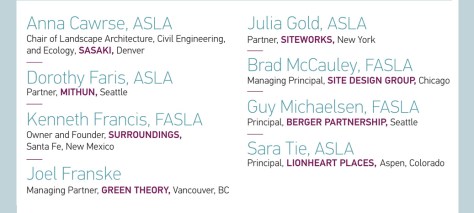
By Anna Cawrse, ASLA; Dorothy Faris, ASLA; Kenneth Francis, FASLA; Joel Franske; Julia Gold, ASLA; Brad McCauley, FASLA; Guy Michaelsen, FASLA; Sara Tie, ASLA
Every working designer understands that change can be a creative force, but it can also be disruptive and deeply unsettling. It is this duality that emerged in early spring, when six firm leaders gathered online (two participants could not join and contributed separately) to discuss adapting to the current administration’s barrage of executive orders, tariff and trade reversals, and program cuts that strike directly at the heart of the work landscape architects do.
The political context, regardless of your leanings, is bad for business strategy, which relies on norms and standards for data, analysis, and predictive accuracy. Hiring, as well as new business development, is dependent on being able to see around corners and feel reasonably confident about what’s in the pipeline. In the current climate, design firms of all sizes and stripes can find themselves hamstrung by a lack of coherence and consistency from those who govern.
But the reality, as is often the case, is more nuanced. In the following conversation, designers discuss how they are approaching their work in a political climate that feels hostile to the profession’s values, how they are motivating (or just calming) their teams, and how doubling down on the value of public space might be the best way forward.
LAM: There’s been a flurry of executive orders that have been issued, and we are still sorting out what is actually going to happen versus what has just been said for effect. However, it seems clear that the following areas will feel—let’s call them negative impacts for now: materials, from the tariffs that have been announced and then pulled back several times; labor, from immigration and various other mechanisms; environmental regulation; and federal spending on parks, infrastructure, and climate. These are four areas that happen to be right at the center of the work of landscape architects.
How is your firm responding to these announcements? Have you met as a group to discuss them formally or informally—internally or with your regional colleagues? Have you issued any statements? Are there working groups that people are thinking about forming?
JULIA GOLD, ASLA, SiteWorks: We have not talked formally about it or issued any statements. We do a lot of work around resiliency at the water’s edge in New York City. We’re on a lot of projects currently that are already in progress, and obviously there’s a lot of that to come in New York, and a lot of coastline to think about and protect. But I guess what we truly believe is that the climate—despite funding, despite materials—the climate uncertainty and impacts to coastlines are not going to go away, and that’s going to be something that we have to help deal with into the future anyway, uncertainty or not.
SARA TIE, ASLA, Lionheart/Connect One: We work in a very geographically isolated space up here in Aspen, so everything is more expensive—labor’s more expensive, materials are hard to come by. Getting materials up here is extremely difficult, and then with the supply chain upheavals of the last few years, we were already having to work to expand the material palette that we could specify because of lead time changes, shipping cost changes, and general availability changes.
Speaking just to the global availability of materials, this ties into work that we were already having to do to diversify the offerings that we could bring to a project to make sure that it can get done on time, on budget. Our projects range from those where budget isn’t necessarily a concern in Aspen to projects where budget is everything, and even saving a few dollars here and there on the per-square-foot cost of a material is make or break. It’s really just continuing to force that diversity and knowing a huge amount about materials. You can’t just have your little narrow go-tos anymore.
KENNETH FRANCIS, FASLA, Surroundings: The stonemasonry discipline in our region, much like in Aspen, is really strong. And I don’t know why stone price per square face foot doubled, because it’s still coming out of the same ground. It’s local, it’s not been affected by tariffs or anything from a distance standpoint. I think it’s just been riding the wave of inflation and so has caused us to pause and shift a lot of our design methodologies that we’ve relied on as part of the regionalist approach that we take to our work. There’s really no escape from the material increases that have happened since COVID-19 wherever you go.
BRAD McCAULEY, FASLA, Site-Design: What we call “the gouge” is back. Well, it never really left since COVID. Once somebody can do it and once they hear the word tariffs, they raise the price. So, all of our Opinions of Probable Cost—I won’t say cost estimates—once our OPCs are right, we’re adding 5 to 10 percent for items like steel because we’re seeing it already.
“I’m worried about projects that may never go forward.”
—Guy Michaelsen, FASLA
GOLD: We do a lot of cost estimating as part of our practice, and learning how to manage where you escalate, where you build in a contingency at the bottom, how you use both to make sure expectations are aligned with the design, both for the designer and the owner. That’s something that we deal with.
DOROTHY FARIS, ASLA, Mithun: At Mithun, we work a lot with SiteWorks for site cost estimating. We also do a lot of design/build and a lot of construction manager risk, and we’re seeing contingencies on the contractor side. It’s just going up a significant amount. What we think is an on-target approach to design, we’re seeing as those estimates come in, they’re ratcheting it up just with all the uncertainties.
TIE: I agree that when we’re doing that kind of project delivery, suddenly our schematic designs become just gold-plated. It’s frustrating, because it’s kind of a false process. It’s not necessarily in service of a good final design. It’s in service of just the process. I feel like there’s a bigger discussion around what project delivery looks like in this era of budget and cost uncertainty. If we can find a better delivery process where we’re not just so focused on gaming it, so that we’re not the ones that get all the value engineering. Landscape is always at the end of the line!
LAM: What I am hearing is that the cost issue has led to an effort to push the budgeting process way up to schematic design, and that this is something that came out of the supply chain difficulties and challenges during COVID that never really dropped back down to level. What you’re seeing is that in anticipation of what contractors feel is going to happen, they’re already raising their prices.
McCAULEY: Well, it’s a couple of things. It certainly pushed more control into the builder’s hands, because they can now throw out this uncertainty in the market, and that they need to get onto the project earlier, and get in front of the owner. And everything that you add to it or take away, that’s going to cost you a fortune, which has all the designers playing catch-up.
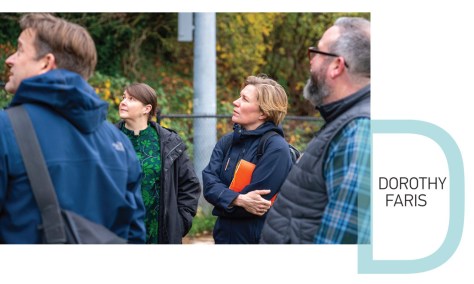 Dorothy Faris, ASLA, values working across scales and disciplines at Mithun. Photo by Merith Bennett/FORMA Construction.
FRANCIS: There’s no competitive bid process either, really. As soon as you get someone in early, they’re locked in, and then they’re forming a relationship with the client. They’re forming a relationship with the design team, and so we’re working with them to get it done. It’s almost design/build in a way. And it’s tricky, because it feels like dipping into design/build, even though it’s technically not.
GUY MICHAELSEN, FASLA, Berger Partnership: I want to bring us all the way back up to the original question. We’re really good as a partnership group about talking about things, and we are not making statements inward or outward because we want to work really hard to be a voice of calm and stability in a time of crazy. We all experience it; sometimes we are susceptible to it, and sometimes we are the cause of it. We don’t want to be part of a doom cycle. We’re working really hard to separate our personal comments and beliefs and fears from those of running a business and being professional.
We just had someone leave our office to move to another city. One of our conversations is, do we replace this person? That’s where we start to get into the doom cycle of, “Well, what if the work goes away?” But wait a minute—the work that that person was doing is still here. Do we not hire because we’re worried about things going south? Does it become a self-fulfilling prophecy?
One thing that I am really worried about, but I can’t point to any projects yet, and this is where we don’t want to become doomsayers, is the projects that may never go forward because of the insecurity around costs, private and public.
On the public side, there’s the concern over funding vanishing. On the other side, we know that the private sector likes surety, and we have anything but that now. A developer needs actual costs to green-light a project, so if they were going to spend $100 million, not knowing if it’s going to become $125 million, those are costs that we worry will cause projects to not go forward.
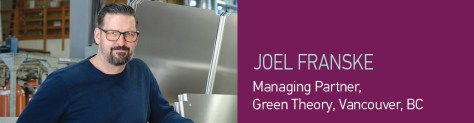 Joel Franske at Green Theory’s office in British Columbia. Photo by Green Theory.
It’s been hard to keep up with the constant changes. We’ve had meetings with our management and all our staff, and we’ve been strategizing with management and assuring the staff that they need not worry. We did issue a statement through our marketing, but it just let our customers know, on both sides of the border, that we are closely watching the situation and are doing everything we can to minimize any impact to them. It was pretty generic. Any more than that and we’re just selling fluff, because no one knows what’s coming next anymore.
We are definitely seeing increases [in costs], and as of writing this, we are subject to the 25 percent tariff on metals. Rising costs are easier to navigate. It’s the uncertainty that’s rough water to sail in.
-Joe Franske, Green Theory

McCAULEY: We meet regularly, and since the election it’s quite often. We’re in Chicago. It’s a very left-leaning, liberal, sanctuary city, so there’s been a lot of uncertainty here. A lot of things not going on or off the shelf, but just sitting there a little bit while they’re figuring it out. And also, people have just been slow to pay their bills.
TIE: I was just having this conversation with one of my partners this morning. He says, “It’s never been this bad. It’s never been this bad.” It has been this bad before, but we all see the ebbs and flows of how quickly people pay their bills, and it’s usually an indicator of fear or uncertainty. And right now, we are definitely just in a slow time on paying bills.
LAM: I’m curious, where are you getting the news and information about economic forecasts in your particular sector that informs the way you think about your business? Where are you getting the information that you’re using to make decisions about the next year?
MICHAELSEN: I would love to have this really cool strategic answer about our source for information. I think our answer is, we don’t hire or not hire based on forecasts; we hire based on the work we have and on “gut feel,” so it’s very personalized. These are the things we have in hand, and it is likely we’re going to get some of those projects. I guess we’re very reality focused. We don’t want to start making a decision based on what someone else is telling us our reality is.
The anecdotal part is scary, because there are firms in our city right now that are not doing as well. And I know firms firsthand that have had projects go on hold because of some of the statements, the proclamations. Luckily, we haven’t had that impact us yet. So it’s scary, but we don’t want to react on fear.
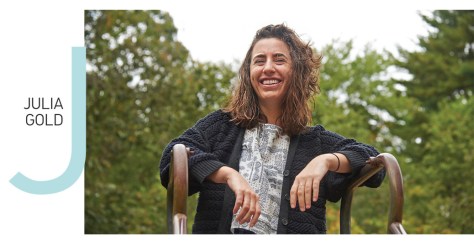
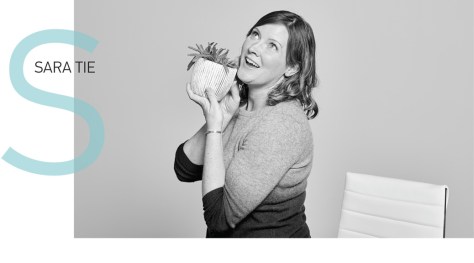 Sara Tie, ASLA, was a partner at Connect One Design, which recently completed a merger with Studio Balcones and Lionheart Places. Photo by Dallas & Harris Photography.
TIE: I think a lot of what we do is feelings-based: I feel this. We feel busy. One of the things that we are really trying to move away from, and have been for years, is getting away from how we feel about it and looking at our actual numbers: “We are busy. Our forecasts are this. If there is a bunch of uncertainty in the world, let’s assume that 30 percent are not going to move forward, so I need to pack my pipeline 30 percent more.”
Our conversation two years ago with the staff was, “Do you feel light? Do you feel heavy? How do you feel?” Our forecasting was very nebulous, and it was very feelings-based. If one week somebody was just freaking out, they would say they feel heavy, and then the next week they’d be like, “I feel light.” I really want to get away from feelings and into actual firm data. To what Guy was saying: Look at your own reality. And if your reality is looking thin, figure out how to pack your pipeline with things to keep your people busy. And one of the things that we’ve tried to build is a little bit of a cushion with fluctuating workloads by using contract outsource team members.
FARIS: I’ll speak for the whole firm, not just the landscape architecture discipline within it. Similar to what Sara was just saying, we look at our backlog, pipeline, to understand how much work we have coming, how long that will continue, what our contracts are out for those projects, versus our current staffing capacity to evaluate. Then we can see that we’re really running light and we need to hire more, or if everyone’s starting to be a little light on work and we need to slow down on hiring. One thing that I imagine happens in other areas, but certainly happens a bit in Seattle too, is that as some firms are fluctuating they have less work, and they’re looking to maybe keep their own teams but find other work for their team. We’ve borrowed from other firms before and had them on contract just to support staff. They might join our team for three months, and they’re not a full Mithun employee. If we’re a little nervous about hiring more, can we help another firm out by making sure that some of their staff have continued work to do? We’re always looking at our backlog and evaluating how much it’s changed month to month.
I agree the feeling-based approach is really important too. It’s this balance of the financial side and the real numbers, but also what it feels like. Then we look at how our utilization rate is tracking as a way of seeing how busy we are. And if it gets too high, then we know that people are probably starting to burn out, and they’re working really, really hard. We want to find that right balance and make sure people feel supported.
“All the things that we’re excited about working on,
I hope they stay the course.”
—Julia Gold, ASLA
FRANCIS: I was going to come back to this thing that Sara said about feeling it, which is so great, because I feel like I’m an intuitive guy.
When Trump got elected, we were all put on notice that he’s coming to town again. I’m like, I need to push into the public sector, because I think there’s going to be a recession. I think he’s going to mess it all up, and he’s going to put the private sector into turmoil. The public sector will be fine because there’s a bunch of funding already set, so I really actively pushed for more public work. We just won this on-call with the City of Tucson. This was my first foray into Arizona, which was awesome that we got it, because I was seriously focused in November and December on the need to re-shift.
Then the rug gets pulled out—all that funding, just all of a sudden…. I’ve won this on-call, but I have no idea what they have and what has been usurped potentially. Do I also have to think about blue states versus red states? The blue funding might get dried up and the red funding is where I need to go, because that’s where the money’s going to be safer, which is an absolutely insane conversation to even be having.
FARIS: I think a big lesson from previous recessions is the importance of diversification. We used to have a big workplace sector, and the pandemic really changed that. We’ve been working to actively diversify, and we were already doing that after a lot of hard lessons from the Great Recession. But this recent change has made me start to wonder if we need to be thinking about diversification in a different way, not just public and private, because certainly interest rates are making private development really difficult, but also should we be thinking about diversification of geographies? There was a time when international work was really unpredictable, so we were inching away from it. I think diversification is important, but in multiple ways.
GOLD: To that note, we worked hard to build up a diversification of services. We do landscape architecture of record. We do operations and maintenance planning. We do cost estimating. We write specs. We are trying to be able to insert ourselves anywhere along a project timeline to help all kinds of clients. Trying to get in at the beginning, trying to get in at the end, having that guide us and our clients along the entire project spectrum. We have been lucky to do a lot of high-profile public realm work, with both public and private funds. Like everyone else, we’re trying to keep that spread and see how it goes.
McCAULEY: But you’re right with the add-ons, value adds that you can bring to your contract, like long-term care, the spec writing, the up-front costing.
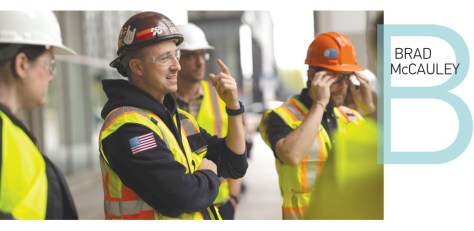 Brad McCauley, FASLA, on-site in Chicago for Site Design Group. Photo by Scott Shigley for Site Design Group, Ltd.
GOLD: And all of that serves us as we do landscape architecture record work, too. You can wrap it all into your experience and your services.
MICHAELSEN: As we talk about the impacts of the new administration, there is the running of a firm, bringing in work, and navigating construction costs, but there is also advocacy for the issues we care about as a profession. The thing that I am worried about with the policies, there is this undercurrent that feels anti-public in both agencies and entities, but also in amenities—like parks and other public spaces are bad. Public is bad.
That is, to me, an incredibly scary thing, so that is a place where we feel the need to redouble our advocacy for publicness and public space, but to do it in a way that is inspired. The reality is, people value public things and use them. They just don’t know it. How do we re-message and reintroduce? Clearly we’re a small cog in a very big wheel, but how do we defend and reinspire the value of public? It’s a long game, but it’s being attacked right now.
A little story: I was in a very red state last week for a project interview and had the most amazing conversation with this interview panel. They were phenomenal, and they were inspired. We have to be careful not to try to put everyone in their box. One of the things we made a point of saying is, our job is to help you inspire your community to support you.
Even as “public” feels under attack nationally, that’s not the case locally in Seattle. We are in the middle of this amazing moment where our waterfront is opening up, led by Field Operations, and it’s been 20-plus years in the making. You can feel it lifting up the whole community, and it’s not even done yet, but it’s going to elevate our whole city. I’m a rose-colored glasses guy, but for Seattle, one of the things I’m excited about is I feel like Seattle’s appetite to dream and do right now is really, really big. It’s almost like it’s being inspired by this public space, and that’s how we’re going to counter this anti-public narrative, is to double down and invest in our realm.
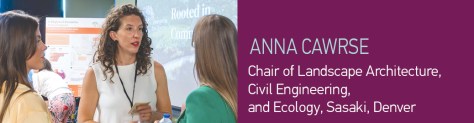 Anna Cawrse, ASLA, of Sasaki at work on the San Antonio Arboretum master plan. Photo by Sasaki/Robb S. Garcia.
While our clients are cautiously proceeding with construction projects, I do believe clients in the public sector and associated agencies are currently assessing funding priorities as best they can. We may see a growth in public–private partnerships, and it means that strategies like phased approaches, adaptive reuse, and alternative funding mechanisms can provide some possible paths forward. Although some of the new projects that received federal funding may not proceed, we are helping cities quickly transition their projects to city bonds, general funds, or creative public–private partnerships.
-Anna Cawrse, ASLA, Sasaki
LAM: Changing gears, what are you hearing from your clients? It doesn’t sound like anyone has had a client press pause on any projects, but I wondered what you think the triggers for someone doing that might be, especially since two of you have mentioned firms that you’re aware of that are struggling.
MICHAELSEN: What pains me is these are firms that I respect and love, and I don’t think they’ve made a misstep. If you’ve been in this business long enough, you know there is a cycle where you just can’t catch a break. Unfortunately, if a big project goes on hold or you miss one big project you were really counting on, or both those things happen, it’s catastrophic. I do know of firms who have had higher education projects go on hold. That does have that immediate impact. You just can’t carry people when big projects dry up instantly.
FRANCIS: That’s true. There are specific sectors and specific funding like the Department of Education, and yes, that is going to be a massive impact.
FARIS: We do a lot of higher ed work, especially around residence life projects, and there’s definitely a lot of concern about costs. It’s rethinking phasing and how quickly they can support projects coming online. Maybe it’s a longer-term, phased-out investment than what we originally thought, or just being even more scrupulous or careful as to how we’re budgeting those projects and how much they’re investing in them, because there’s just a lot of uncertainty in those institutions. Even though a lot of times the financing of housing is different than the financing of institutional academic projects, it’s all the same institution. They’re just being very thoughtful and approaching somewhat cautiously with the amount of unknowns.
LAM: Your clients in those sectors have expressed that to you already? They’ve come to you and said specifically, “Can we rethink the phasing of this right now?” Or is this something that you’re doing proactively?
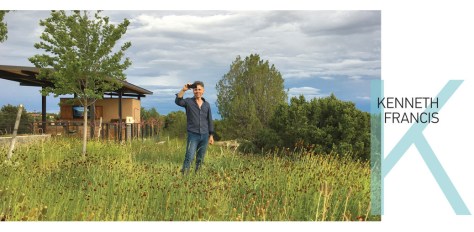 The firm founded by Kenneth Francis, FASLA, is focused on regional design and planning in the Southwest. Photo by Steffany Hollingsworth.
FARIS: No, I don’t think anyone’s saying it outright. I think it’s a lot of, “Okay, let’s be really careful about how we hit this. This is the budget for this project, so we really need to stay on this budget.” We went into some projects with certain phased timelines in mind as to a delivery of when a project would come online. And now they’re thinking, “Let’s spread that out so that we can make sure in the first phase, we get the return on the investment before we can move on to the next phase.”
GOLD: I think like many of us, you’re in a pretty good position, feeling pretty busy, and we’re at the start of a lot of things. Maybe we’ll see that change as we move forward. All the things that we’re excited about working on, I hope they stay the course, but I guess we’ll find out.
LAM: I think that we can expect that the funding for projects that are underway in the public realm—federally funded transportation projects that have to do with bike infrastructure, climate, highway reconnection projects, reconnecting communities, and other grants that were rolled out under these big Biden-associated bills—will go away. What does this mean for landscape architects? Is there more commitment to doing this kind of work or thinking about things in a different way now that landscape architects don’t have that support?
McCAULEY: We do have some projects that will be impacted. To be really direct, I don’t feel like the full benefit of what was out there, what was available, actually made its way finally into projects yet. It wasn’t signed into law and automatically a million projects happened. Like everything, it takes time. We’re talking about the administration and their changes—it’s going to take time to have those impacts. I think the Biden policies weren’t fully having their impact yet. Therefore it’s going to be less of an impact now. I do think that it has certainly made it easier to know what’s under attack and know what we should fight for and know what we should be pushing for. It kind of reveals their cards a little bit. Maybe I’m getting too much into the ASLA advocacy front and not the economic impact front, but by nature, things go up and down. Defending our work and profession on the downs is a major reason we exist.
TIE: I think the pendulum swings, and it swings far one way and then, as a result, it swings far the other way. Per Guy’s earlier point about advocacy, I think it just changes where the impetus for projects has to come from, and it changes where the money for projects has to come from. It puts the impetus or the onus back on other groups to keep that advocacy going, to find that money to do the hard slog and get some of these projects through. I would say that it’s not that the desire for these projects has dried up. Maybe the big federal dollar funding source has dried up, but I think the projects will happen. Maybe they’ll happen slower. Maybe they’ll happen with different money, but it’s spreading out this responsibility to make them happen.
“If there’s a bunch of uncertainty in the world, let’s assume that 30 percent [of projects] are not going to move forward, so I need to pack my pipeline 30 percent more.”
—Sara Tie, ASLA
MICHAELSEN: I have one of those projects, a really great rails-to-trails project with a significant federal grant. It could be presented as one of those green, climate change, active transportation, bike things to strip away as not a priority. That funding is at risk, but I actually don’t think that the project is, because it’s so massively supported that it would find other funding. It should have been funded federally—and it was. Will they claw back money? I do think it might make the timeline change, but the project will still happen because it’s massively supported, and it’s massively supported through a very purple community.
Some support it for the active transportation and for the green catalyst that it could be, but even more support it because it’s just a great connection and a fantastic amenity that everyone will love and will make a community better, so it will happen. I do think there’s going to be a need to reposition some projects.
I was on a call with a board the other day, and they were trying to figure out this massive, very future-forward resilience initiative. I was listening to this board struggle with, “Well, how do we change?” And one of the board members beautifully articulated, “It’s not going to change at all what we want to do or our mission, but it might change how we message and prioritize the execution of that mission.” It was really fun to see them move in one conversation from panic and sadness to empowered excitement about repositioning something.
LAM: That’s a powerful idea to end on. What do you wish we’d had time to talk about?
FARIS: I guess I’m curious how we keep our optimism up in the workplace when every day there’s more news coming in. Starting in 2019, we made a real effort with our JEDI [justice, equity, diversity, and inclusion] initiative and have been really pushing that forward in the years since. We did say, regardless of what you’re hearing in the news, this is still a top priority for us. It’s more than just how we approach our JEDI initiatives. It’s about how do we keep our enthusiasm for the built world, for the work we’re doing, for the larger socioeconomic environment in which we’re all day-to-day living? How are we keeping optimistic?
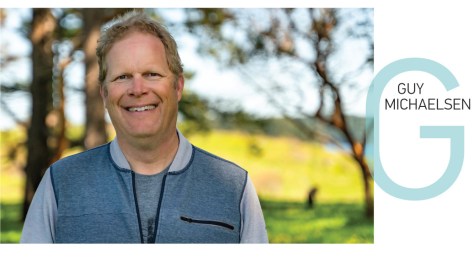 At Berger Partnership, Guy Michaelsen, FASLA, focuses on urban environments. Photo by Built Work Photography.
McCAULEY: I love what Guy was saying earlier: You keep it level. You don’t say anything. You do say something. All that kind of stuff. And I’ve found, on our side, that right after the election, the mood was down. Giving some level of a public service announcement to the team every couple of months, like, “This is where we’re at,” it’s led to hyper-transparency: Here are the projections. Here are the finances. We’re letting people know across the team what we’re invoicing, what we’re bringing in, so they know we’re all in this together.
TIE: Our team is in a huge amount of upheaval. One of the things that has been important is letting them know what they can do on an individual level. It is about what they have agency over to change and how that change ties in with the firm’s success or local or national politics. Bringing it back down to a level of “You are you. How does your action relate to the larger whole—whether it’s our success as a firm or whether it’s the country’s success?” I always liked this quote from Barbara Bush that says, “Your success as a family, our success as a society, depends not on what happens in the White House, but on what happens inside your house.”
I think that’s super important for our team members to remember. It’s our success as a firm, as a country, as a community. It builds on you and what you do. Don’t get too worked up about things that are happening to you. Look at how you can effect the change, or how you’re playing into those larger things.
FARIS: I will say that we had our 75th anniversary as a firm in November, and we planned this big celebration. It was the week of the election, and we had a day and a half of workshops for the whole firm. We hired a futurist to come out and lead us through these activities, and it did wonders for our optimism in that terrible week because you’re imagining many different futures. It was fantastic. I think we all came away feeling better, but I feel like now I need to do that once a quarter.
GOLD: It’s a new moment, but it’s not a new moment. We’re a small, woman-owned business. We have stuff in the pipeline. We keep working to fill our pipeline. We have a good group right now. It feels good to be in the office and to collaborate and work. We just keep doing what we’ve been doing. It’s worked so far, and we’re facing a new moment, but maybe it’s not actually as different as it feels.
This conversation has been edited and condensed for clarity.
Like this:
Like Loading…