
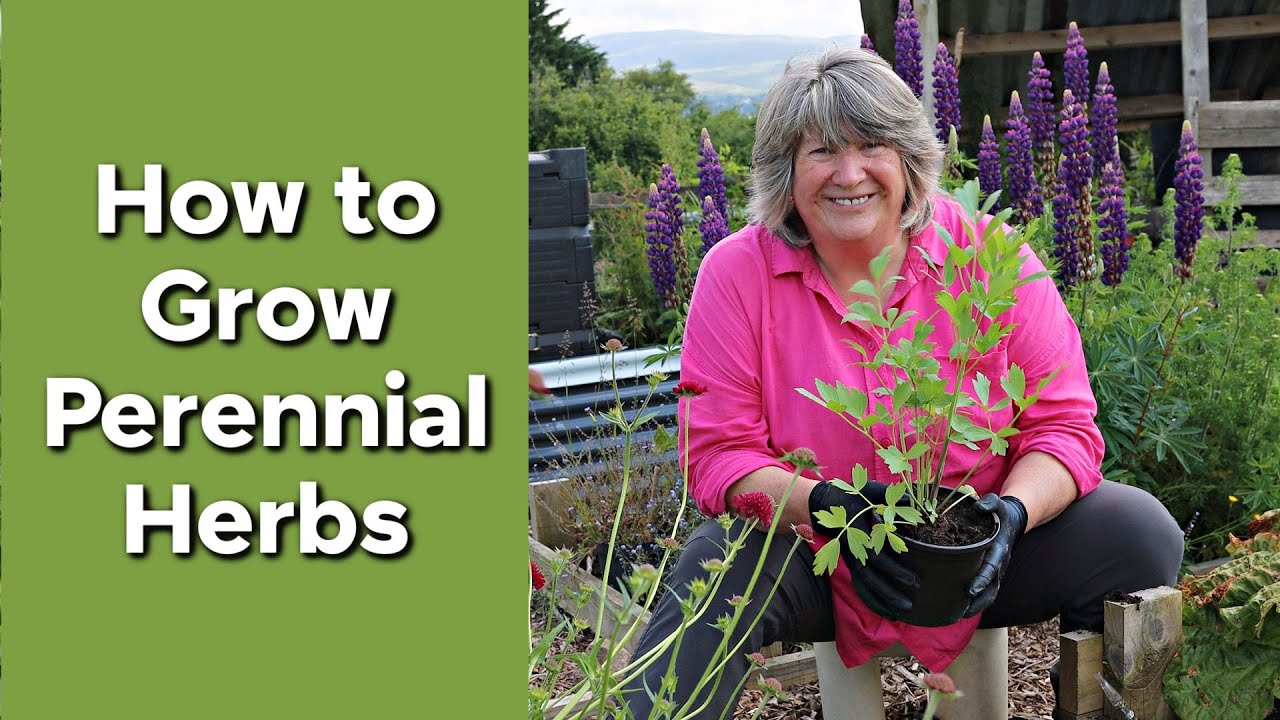
5 Perennial Herbs and How to Propagate Them | Gardening Skills
15 Must Have Herbs for the Kitchen https://youtu.be/1EpY1PElF6g
Order my books at https://bytherfarm.com/books or on Amazon.
Subscribe to our newsletter here https://bit.ly/2qbsdY5
You can support this channel on Patreon at https://patreon.com/LizZorab
Many of the links below are affiliate links. This means that I may earn a small commission when you purchase using my link, but it will not cost you any extra.
Merchandise – Find Byther Farm merch at https://byther-farm-merch.creator-spring.com
Amazon As an Amazon Associate I earn from qualifying purchases.
UK https://www.amazon.co.uk/shop/lizzorab-bytherfarm
USA Amazon Storefront https://www.amazon.com/shop/lizzorab-bytherfarm
Chapters
0:00 Introduction
0:56 Garlic Cress
3:05 Winter Savoury and Mint
6:13 Walking Onions
8:49 Lovage
10:31 Sweet Cicely
DISCOUNTS AND OFFERS
Direct Plants https://www.directplants.co.uk For 10% discount, use the code LIZ10 at the checkout
Plant Surge Garden Water Softener https://plantsurge.co.uk/?ref=LizZorab For 10% discount use the code LZ10 at the checkout
Footwear from Muck Boots. Muck Boots offer our viewers 15% discount when you use the discount code 24BYTHERFARM15 in UK, and in US and Canada use BytherFarm15.
About Us.
Byther Farm is a small organic homestead, being designed and managed using permaculture practices. We aim for self-sufficiency in fruit and vegetables for increased self reliance and better resilience to the modern world. I recognise that we are unlikely to be truly self sufficient, but do the best we can. I share our home with my loving husband, Mr J and our cat, Monty.
We are a fifty-something couple who live on a smallholding in Carmarthenshire, Wales. We are going green and creating a gentler, cleaner and more healthy life for our family.
Having had a highly successful smallholding in Monmouthshire, we hope to recreate the abundance at our new home. There will be a large organic kitchen garden with no dig gardening raised beds and young food forest in which to grown our fruit and vegetables.
We keep a few sheep and Aylesbury ducks.
Music from Epidemic Sound.
hello I like to cook with as much homegrown produce as I can whether that’s a big leaf from the asuran tree cabbage or some little baby yellow cett or even the tops of my broad beans fa beans which are great wilted down with some garlic and give you a real Bean taste but the other thing I like to use is plenty of homegrown herbs I think there’s nothing nicer than using a selection of herbs that you’ve grown yourself and you can pick and use and they’re Absolutely Fresh in your meal and so in today’s video I’m going to look at some perennial herbs and look at how I propagate them different herbs different propagation methods I’m Liz zorab and this is by the [Music] farm and the first one I want to tell you about is this it’s garlic Crest isn’t it pretty when it’s in flour now I got this uh from Mandy at Incredible Vegetables and the leaves are very mildly garlicky in fact when you first chew them they don’t really taste of much at all but then you afterwards you get this kind of hint of garlic now I bought this as a 9 cm pot so it was a really little plant and it’s been in here uh a bit over a year and and it is now at least a meter across if not more so it’s only good if you’ve got a lot of space or if you’re going to grow it in a pot now I actually want to move this um and put it somewhere else in my food forest and I found the easiest way of propagating this is literally to pull pieces out of the ground so effectively you’re going to divide it and I would say lift it all in one go but this plant is too big to do that so I’m going to start by cutting back some of the leaves and taking off the flowers I am going to leave some of the plant there with the flowers on it uh because I want to be able to collect the seeds from it as well pop that to where I’m going to collect it and then um you can either uh lift by just pulling which I’ve which I’ve done done with these but they haven’t brought up very many roots so I suggest you use a TR and there we go you can see they’ve got really long roots and then they send up new sheets at intervals this is a bit of a thug as I said so uh be careful where you do plant it however for meit the garden this is a herb called winter savory and it’s one that I wouldn’t want to be without in my kitchen now it tastes slightly of thy maybe a bit of Rosemary and adds a really warm rich flavor to soups and stews and I’ve even used it in chicken dishes in place of lemon thyme although it’s not lemony but it did give a really good flavor to the meal I grew this from cuting for from a bigger plant and what I did was cut pieces about this size so 3 to 4 in 7 to 10 cm and I removed uh most of the lower leaves and then I put this into soil but one of the easiest herbs to grow from cuting is mint I know mint is a fairly common herb but I like to collect different flavor mints so this one is a chocolate mint and this one is a black currant mint I took these cuttings about 3 weeks ago so they are just in water uh so again I took the cutting I then removed the lower leaves and I placed them into a jar of water and I’ve kept it topped up and after 3 weeks I’m pleased to say that it is already producing tiny little Roots so there’s little white Roots uh coming on these stems already now you could put them on at this stage or you can leave the roots to grow a bit more so I like to leave them so there’s actually quite a few roots and then I’ll po them on which is what I did to these ones about three or four days ago so there are four cuttings in this pot and they’ll stay in the pot they stay outside the poly tunnel so they’re in a sheltered spot I make sure that I do keep it watered and I’ll leave them in this pot until Autumn and then I’ll decide whether they need to go into a bigger pot or not now mint can be really rampant in your garden so best advice is to grow it in pots and to raise the pot up off the floor using some stones or pot feet you can buy little feet for the pots but so that the roots don’t come out of the pot uh and go into the ground and then and then it will run away now I have got places in my garden where I do plant mint in the ground uh because I’ve got a really big space and I’m quite happy for it to grow into a really large clump and I mow the grass each side of that bed on a very regular basis so the mint’s not going to escape too far but uh you’ve been warned now if you grow several different types of mints don’t grow them in a pot together uh or even in a bed together you want to have about a meter apart from them because otherwise there’s a risk that fragrance from one will contaminate the other and then you’ll end up with neither black current nor chocolate it’ll just be a somewhere mix in the middle gosh it’s one of those really hot mornings where it’s warm and it’s very humid due to rain very soon but in the meantime gosh it’s warm so the next one I want to tell you about are these now I no longer grow bulb onions for the kitchen cuz I just find them too strong but I do grow lots of other plants from the onion family and this is one of them if I move that you can see these are Egyptian walking onions they produce leaves which is what I harvest and use in the kitchen and then they produce these flower stems with tiny little flowers on the top of them but they’ve also got little bow bubs so little onion bulbs sitting on the top of these stems this one has got flowers and B bills and then sometimes they send up a secondary shoot like this one uh with some more bubles on the top and how they reproduce is the top gets so heavy that it actually bends over uh down to the ground and then the B bills will fall off and root in the ground so it almost walks its way around your garden hence the name walking onions so to propagate them you can either wait for nature to drop them on the floor and for a new Clump to grow and she says pulling this as though it was really easy this was actually a bit of a fight but here we go here’s the new we don’t want that weed but here’s the new Clump here so I can separate these out and plant these individually or if you want to be a bit more controlled over where they’re growing uh you can actually take these b bs yourself and plant them into individual pots or into the ground and then let them grow on and then you’ll know EX exactly where your walking onions are walking I propagate so many plants and I used to find it really difficult to remember which seeds I sewn where and when when I’d taken cuttings or even where I’d planted things and so I started keeping a journal and writing everything down so I’ve now created this it’s a vegetable garden planner and journal and there’s masses of space in it for you to take notes and observations to write down when you’ve sewn seeds or taken cuting and even when you’ve planted them I include a vegetable sewing guide so that’s times when you can sew various different vegetables there’s some information about perennial veg and also about composting and all the way through there are some hints and tips and some words of encouragement to keep you going in your garden you can order your copy of a journal either Direct on our website at by the farm.com or through Amazon and this is Lage it’s very easy to grow from seed I planted the seeds uh inside earlier in the year look how well the plants are doing now I’ve been potting them on on a regular basis I can see the roots are coming out of the bottom of the pot there we go I’m very pleased with that so this is absolutely ready to plant out in the garden I love it is a plant for uh the back of the Border or the center if you have an island bed so it grows tall uh in our last home uh I had Lage and it grew to maybe 8 feet high or more these very tall stems uh spread and they slightly flop in the wind uh so you might want to give it some support it doesn’t need staking and tying in but you might want to put some posts around it and put wire or twine around those just to stop it from uh flopping over too much so Lage has a celery taste a really strong celery almost a yeasty taste to it um as a leaf uh I wouldn’t just eat it so I wouldn’t chop it and add it to salads cuz I find it far too strong but in stock in stews in soups it adds the most incredible celery warm uh rich flavor and in fact if you buy a powdered vegetable boo to add to your Foods then uh very often it has a high proportion of Lage in it and this is one of my favorite edible perennials it’s sweet Sicily and it has a very strong an AED flavor to it and I use it by gathering some of the leaves and adding them to rhubarb it kind of takes the that real bitter Tang out of it and provides an an AED sweetness to it and it means I can use about 25% less sugar um in my rubub which is great um and also the seeds are absolutely amazing so when they’re still green uh you can pick the seeds particularly when they’re first formed and you can just eat them like this and you just chew them and it’s like having those little Ana seed ball sweets that you had as a child it’s a real hit of Ana seed and they’re absolutely lovely now I found the very best way to propagate sweet Sicily is uh through seeds and thing about sweet Sicily seeds is they need a period of feralization so they need to have a winter of cold to actually get them to germinate I’ve tried putting in the fridge to trick them into thinking they’ve had period in in the cold and it just hasn’t worked but what works really well is just to throw them on the ground around your sweet Sicily plant and some of those will germinate and grow the next year now this is another one of those plants that they say you know once you’ve got it you’ll always have it my sweet Sicily last year died it just didn’t cope with all the rain that we had at the end of The Summer and Autumn last year but luckily there are several new little plants growing in the vegetable garden so as they say once you’ve got it you’ll always have it there are actually so many perennial herbs that will grow quite happily in a temperate climate and if you’d like to find out about some more I’ll leave a link on the screen and also in the video description and just click on that link and it’ll take you straight through to that video
15 Comments
This is fascinating Liz.
Hi Liz. Following your advice on screen and from your book, I have planted a lot of perennial herbs and veg in my permaculture garden and in the guilds around new fruit trees. They are all doing well bar the lovage which had to be replaced this year and is being lovingly cared for. It’s already been used in stocks and minestrone soup this week ! So useful. I think that the Egyptian walking onions are crazy plants and this year they’ve been a delicacy for the slugs who eat them inside out, fortunately there are still plenty of bulbils to plant out. There are indeed so many gems in your latest book, it is always there on my bedside table …
nice video liz
As an aside, I love your hair like that, Liz! ♥
I planted sweet cicely after hearing you talk about it and I love it! Thank you!!
😊🌱💚🌻🐝
Hi Liz,
Can you recommend a good herb seed company that has an online catalogue. I can then order using my daughter's address and pick them up when I come over on holiday.
Thanks
Dave (Davut) NW Turkey
Thankyou Liz, these look like something I should have a go of this year.
In German, lovage is called Maggikraut, precisely because it does taste like that seasoning liquid!
Your looking radiant Liz hope ur well.
My current opinion is that we should strive to create a garden were we can make complete meals from our gardens.
I would put lovage leaf in salad and pasta.
Also, harvesting the outside stalks can help maintain an upright form😊
HI Liz, great video as always. I bought a sweet cicely plant 3 years ago. It grew beautifully and looked great in my kitchen garden. Then it suddenly died. It did flower and I left the seed heads to fall tohr ground. Sadly non of them germinated and so I now don't have sweet cicely in my kitchen garden.I am thinking of buying another plant, but what are the best growing conditions for it please? Thank you. Happy gardening 🙂
❤🍀🌱
Good video