
http://www.edibleacres.org
https://en.wikipedia.org/wiki/Vanessa_atalanta – A starting place to get some more information on the being that every few seasons does some serious munching on some/most of our nettle patches…
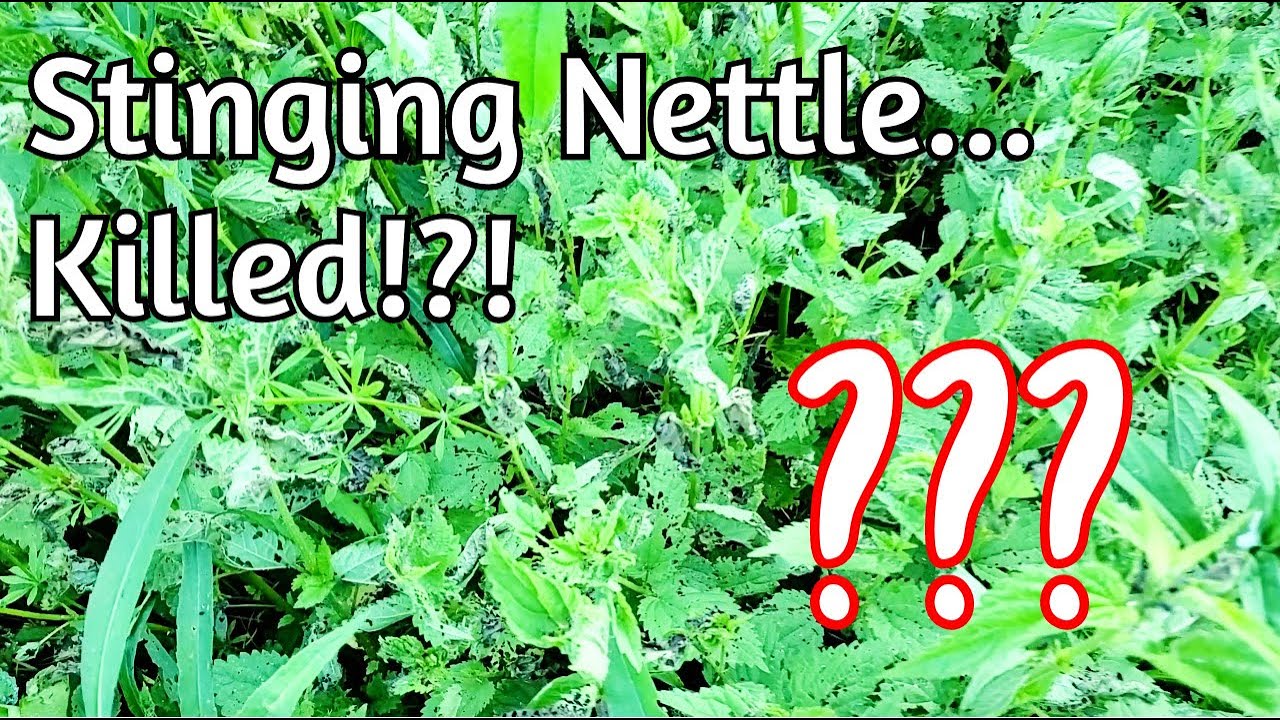
We love Stinging Nettle as a super early cooking green and as an herb to dry and enjoy as a nourishing and very satisfying tea all winter. It is a pretty important key part of our food system. Seeing a being come in and really put a hurting on our patches was very hard to take (at first). Understanding that we can steward nettles so easily and help them have ever expanding patches coupled with observation that this grub definitely puts a very intense set-back into our patches but every single time they rebound and are able to survive and thrive is what helps make better and more gracious decisions. The best news? We can just let it happen without any intervention and just enjoy the process! Pretty fun to observe and learn that the interact part can be just watching 🙂
https://www.youtube.com/channel/edibleacres/join – Join as an Edible Acres member for access to members live Question and Answer sessions and to support our work!
https://www.paypal.me/edibleacres – A simple and direct way to ‘tip’ to help support the time and energy we put into making our videos. Thanks so much!
Edible Acres is a full service permaculture nursery located in the Finger Lakes area of NY state. We grow all layers of perennial food forest systems and provide super hardy, edible, useful, medicinal, easy to propagate, perennial plants for sale locally or for shipping around the country…
http://www.edibleacres.org/purchase – Your order supports the research and learning we share here on youtube.
We also offer consultation and support in our region or remotely. http://www.edibleacres.org/services
Happy growing!
about 15 years ago or so I was turned onto the idea of stinging nettle as a food and medicine and it seemed extremely compelling the the idea of this hearty perennial plant you can’t kill that burns the heck out of you when you touch it and also fills you with medicine and food and is nourishing and satisfying seemed so compelling so I started bringing those plants into our landscape and I was super loose and pretty wild with how I planted them which is kind of how I do all the planting that I like to do uh put them in all sorts of nooks and crannies found varieties along the river banks of the Delaware River uh down in New Jersey visiting with my friend Dana on a kayak one evening and buying them in from different nurseries for different cultivars finding them along railroad tracks and different places nettle was something that I really wanted to work with and understand and Sasha finds it super compelling to work with as a tea in the winter so she likes to dry nettle uh this is the time of year mid to later May that we do so but a number of years ago we started noticing that in our nettle patches so here is a stinging nettle plant under extreme duress in fact there’s lots in here that look oh my God so torn up so so bad when they could be looking like this these are stinging nettles that are in our chicken yard that have no issues whatsoever what the heck is going on the first time I saw our nettle patches uh decimated at least that’s what I thought I was seeing it was extremely infuriating I was like w the heck is in there what are they doing how dare they hurt our Nettles back to this patch out in the main Garden I found when I opened them up this little character deep inside let’s see if I can get them revealed strange dark grub making a cocoon out of our beloved nettle leaves I’m going to be honest back when I first saw these this was a little bit before I started to really think in a deeper way about hey let’s observe and let’s try to understand let’s try to have names for these characters before we interact um but I just went at it I just started I put on gloves and started squishing these little bastards let’s get rid of them was my feeling they’re killing the Nettles let’s get rid of them and I talked with my friend s song who is a really wonderful herbalist in the itha New York area um about this and he said he saw the same thing he was like what the heck is happening all of our Nettles are being destroyed there’s this tiny little nasty grub what the heck do we do how do we eradicate this invasive how do we get rid of this horrible creature that’s killing all of our Nettles but luckily we spent a little bit of time and try to track down who the heck this character actually is and a turns out this is a grub or a larval stage of the red Admiral butterfly I’m going to be very straightforward here I I I’ll skim the surface of what my understanding of this is basically this is a butterfly that leaves uh somewhere in Costa Rica somewhere in Central and Southern northern half of Southern America and travels many thousands of miles gets their selves gets themselves into the Mid-Atlantic states of the United States and then maybe sometimes gets themselves up to New York state turns out with the way things are getting warmer and warmer the Atlantic warming up they’re able to travel further north and so they’re landing and hosting inside some of these Northern nettle patches and so now there’s a conundrum we’ve got these Nettles that are growing but being decimated being hammered by this creature are they they’re not native they’re from somewhere else but they’re visiting here are they special are they endangered well heck it turns out stinging nettle is phenomenally hearty and resilient and fantastic and makes a beautiful host for these long Travelers these non-native uh InterContinental Interlopers these tiny little grubs that will somehow nourish themselves deeply and thoroughly it makes sense cuz nettle is so phenomenally nourishing turns out they like hops as well and they’ll do their thing eat the heck out of these and then take flight when the time is right and head Southern bound and oh my gosh what a wonderful event to be able to host such a longdistance traveler the best news is it turns out they get here a little bit later than when the Nettles are first up so if your interest is in Eating spring greens nourishing uh rehabilitating greens you can Harvest a little purple nubbin coming out of the ground late March early April they’re not here yet they’re Southern they’re very very Southern being on their way slowly moving up and once they get here if you harvest some patches you’ve got Patches in many areas really great reason to plant all of your plants that you care about in many different places they’ll find some like this patch in the garden they’ll Miss some like the ones in the chicken yard I think the chickens actually eat the butterflies before they have a chance to lay their eggs and it all works out it actually works out just like most of these things work out uh these are Hardy perennial plants they host this beautiful little uh butterfly creature in an a very intimate and needed moment to nourish them on the the plant material they’re eaten down there’s a ton of Duff and debris and uh feces from these tiny little ones that nourish the nettles in return they take flight they leave and everybody rebounds so there are some patches in our garden where they are really phenomenally heartily hit and now I’ve learned over the years oh my gosh I’m so thrilled that we get to be able to host this character that comes here from so so far away and can live here for a little bit and then make it home for another life cycle and the question of hey is that an invasive is it illegal is it immoral is irrelevant in my mind because we are able to harvest as many Nettles as we need you can see this patch is extra well fed it seems as though this little sweet tender larvae um doesn’t hurt the extremely well-fed the super happy Nettles it’s the ones that are under a little bit of duress which is a very common theme the characters that are able to do the most damage like um snails and slugs tend to eat the plants that are under a little bit of duress but so we have Nettles we can Harvest if we need it’s a little past prime anyway we’ll just let the cycle happen and feel rejoiceful that we get to be stewards of a landscape where we say yes to characters coming in from far away they can visit for a little while they can do what they need to do and then take flight and leave the red Admiral butterfly and the stinging nettle an interesting combination of characters interacting in our landscape I would would not even pretend to say I understand the full depth and complexity of what this means or what this translates to as far as nutrient flow and needs uh I feel like my responsibility is to establish as many plants in as many places as possible try to observe the characters that show up learn over time to feel more and more grace and difference to who are you what is what is the deal what are you up to are you providing a net benefit U deficit I’m not quite sure if these are actually uh beneficial so to speak for this landscape but they’re Landing here they’re they’re meeting their needs and they’re traveling onward and that feels like a really special character to say yes to especially with the fact that our Nettles each year rebound just fine and expand every single year we’re able to eat what we need Harvest what we need dry what we need and allow this sort of weird strange Intercontinental drift of beings uh as part of our picture and I appreciate all of you watching and being open to the idea of my observations I’m not promoting some idea that yes there is so amazing and this is so bad and this is so good as a non-native technically invasive to this continent myself I like to try to be careful and tread lightly in who I ascribe positive and negative attributions to I’m really interested to understand who they are who you are before I get to make decisions about how I manage or how I say yes or no to you in your landscape do you have stinging nettle that you count on and depend on and really appreciate and are they getting wailed on by some little strange creature from Super far away little little alien a little friendly or unfriendly alien let us know in the comments too and thanks for watching let’s have some discussion down there keep it friendly and open and thoughtful that’s my hope uh I I’m presenting in the spirit that I am with the expectation and anticipation that when we have dialogue about this in the comments it matches the spirit of this and I would ask for that so thank you very much for watching
42 Comments
I just love your philosophy, rock on Sean!
I shuddered every time you touched a nettle. I cannot, I react so strongly to nettle, ouch!
If everyone were as curious about nature, and if they pursued a deeper understanding of nature's complex system, we'd all be in a better place. Thank you for continuing to share this important message of appreciation.
The phenomenon may not occur every season too. Observation is the key as you point out.
Larval butterflies are called caterpillars, not grubs. Red Admirals are considered native but migratory, like monarchs. According to James Scott (who wrote the best reference on North American butterflies, in my opinion), they sometimes reach Greenland. They are in Chicagoland by lilac blooming season every spring.
Fascinating and good to know!
Ms. Vanessa Atalanta.
Awesome 🦋
Nettle's have 4 times the vitamin C as oranges ounce by ounce! Plus many other nutrients! You can also ferment Nettles with organic brown sugar and make a concentrated liquid foliage spray that will mix 500 parts rain water with only one part concentrate. I also use the fermented liquid to soak my bio char in for a week or 2 before I apply it. 👍
In North America, several butterflies use Urtica as host plants (I believe something callee a Fire Rim only uses them), but I have only seen the Red Admirals. Most of the nettle eaters prefer fermented fruit or sap to flowers as adults, but I have seen Red Admirals visit Allium, Hylotelephium, and lilacs. If you bait with fermented fruit, you need to block ants (the sticky tree glue stuff works).
According to my insect guide, Red Admirals feed on hops, ramie, & nettles. The Red Admiral is found the world around in the northern hemisphere.
Regarding stinging nettles, when I was a kid we visited an uncle in France. I was amazed to see that the local farmer fed her chickens stinging nettles. She waited till the nettles were wilted before feeding them to the chickens. I still remember seeing the hens rushing to be the first to eat the nettles.
I wondered the same thing when I saw it in my nettle patch also. I have already harvested some for tea so It al works out. Thak you for this invaluable information.😃👍
Years ago I raised one of the caterpillars to observe their lifecycle and a parasitoid wasp hatched instead of a butterfly. So the predators are also already here to keep their numbers in check.
Red admirals are native in Minnesota, as migratory visitors. I keep a patch of nettles just for them, just as I allow milkweed to thrive for monarchs, and dill to grow where ever wants for our native black swallowtails. (The dill isn't native, but I don't want most of their native host plants in my garden)
Telling people to disregard warnings from biologists, ecologists, etc. about invasive species while presenting misleading definitions of “invasive species” is dishonest. I hope that, as someone who is educating people about plants, you will reconsider and stop doing this. You can’t observe and interact if you aren’t honest with yourself and others.
I believe God created everything and with purpose. Where there is a poison plant there will be a healing plant close by. Same for insects. There is usually something close that will control the damage. If we humans would stop thinking we need to kill everything with poisons because we don’t understand how things have been orchestrated. 😊
Love how you plant everything. Order in chaos. 😁
Your channel, lectures and information is really astonishing and hopefully influential to your audience. You are doing a great job. Thank you for sharing your education and understanding the cycle and patterns of reality.
We have these in western europe aswel, often 2 generations a year. After the butterflies pop out, you can cut the nettle patches back and get fresh new growth.
They are gorgeous butterflies! Nettles are one of their the host plants. Very special to see!
In Germany gardeners are encouraged to keep a nettle corner as an ecological niche for butterflies. Nettle manure tea (?) is a go to fertilizers here.
Nettle tea is also a great rinse for dark hair, the seeds are great in salads and and Muesli.
Stinging nettle also makes a very good compost tea.
Thank you for sharing what you have learned so if some of us find these we will think twice..😊 looks like one of those perfect symbiotic relationships!
As others have a commented the presence of all of those larva provide spring food for baby birds and of course butterflies are good pollinators so they are benefiting all of us.
Beautiful how very respectfull you're talking about them 🙏🏼 It's our duty to respect ALL of creation and not only those of them which we like! 🤷🏻♂️
Observation and learning is the only way humans will stop trying to control and ruin nature's balance. Thank you for taking the time to learn about what is happening:)
Thank you for this welcome call to mindful ecosystem stewardship.
I’ve got those on my nettles too
Red admirals are native to New York. Meaning they coevolved with the local flora and fauna and are an important part of a diverse ecosystem there, even if they winter in the southern us or Central America. This is very different than non natives that are well behaved, do not spread quickly and do not harm native ecosystems or invasives that decimate/eradicate biodiversity in whole regions of a country- other plants, insects, birds etc. invasiveness is less about where something is from and more about how deadly it is to all other life that evolved in that region of the world.
What a beautiful perspective! Thank you for offering a way to reframe our thinking by observing before taking action, being curious, and openheartedly kind to all life.
I also was distressed to see the caterpillars on my nettles, took a few inside my house, they ate nettles like crazy before cocooning, and I was thrilled to release the butterflies when they hatched. Now I’m ready and harvesting the nettles I need before they show up.
This was the most fantastic spring for the Red Admiral here in Central Texas on their way north. It was truly magical, with dozens of them visiting the garden each day.
Meanwhile I grew nettle for the butterflies that consume them for caterpillars. Not just red admirals but many other butterflies that rely upon them as host plants. We all learn and can all make mistakes but the red admiral Vanessa atalanta is a native butterfly species to a majority of the world. Me I would have been taking every caterpillar, raise them and then release them once they become butterflies.
Missing nitrogen! nettles are indicators of N rich soils. So if you plant them there you gotta look for plant nutrition 🙂 Just watched 3 mins rn, maybe you talk about it but ya
I brought nettles to our urban/suburban backyard intentionally. (It’s native in France). Even hubby that likes a more manicured garden than I do approved. It’s an extremely useful plant.
Butterflies are prime examples that if you want beauty in the garden, in life, you must accept the chewed out /caterpillar phase before the ’show’ 🙂
I had some of those in my patch this year as well. Thanks for figuring out who the guests are. I also was just watching a video from the UK and saw a photo of the red admiral butterfly her in their garden.
I too, plant my plants in various places, nooks and crannies! As in your experience, some might be a host and others thrive. Its so wonderful being curious and experimenting with nature!
Thank you for your video.
When people see some things as beautiful, other things become ugly.
I installed bug app so I don't kill good bugs in my garden.
The chickens probably ate the tiny caterpillars right after they hatch. Red Admiral is a lovely butterfly and the nettles will spring back. I planted nettles specifically for butterflies…and me. Butterfly feces 💩 is called frass. 💖🦋🌿
I've let the yard and garden overgrow with weeds to see what comes. Noticed two garter snakes, what benefit do you think these guys bring?
How amazing is this!
Beautiful thoughts! Nature can teach us that diversity makes our lives rich and nourishing. Thank you for your encouragement to use observation and curiosity as tools to create a better life.
Thank you for this video! I just discovered them on my nettle patch today and was stumped and alarmed at the extent of damage and how quickly it happened. Especially when I didn't recognize the caterpillars. First time in all my years that anything has fed on ny nettle and it is a sudden and dramatic decimation. I feel so much better after your video though! Guess the butterflies get the first harvest. Have you found that cutting it back after the butterflies emerge helps the nettle to rebound?
Lovely human being