
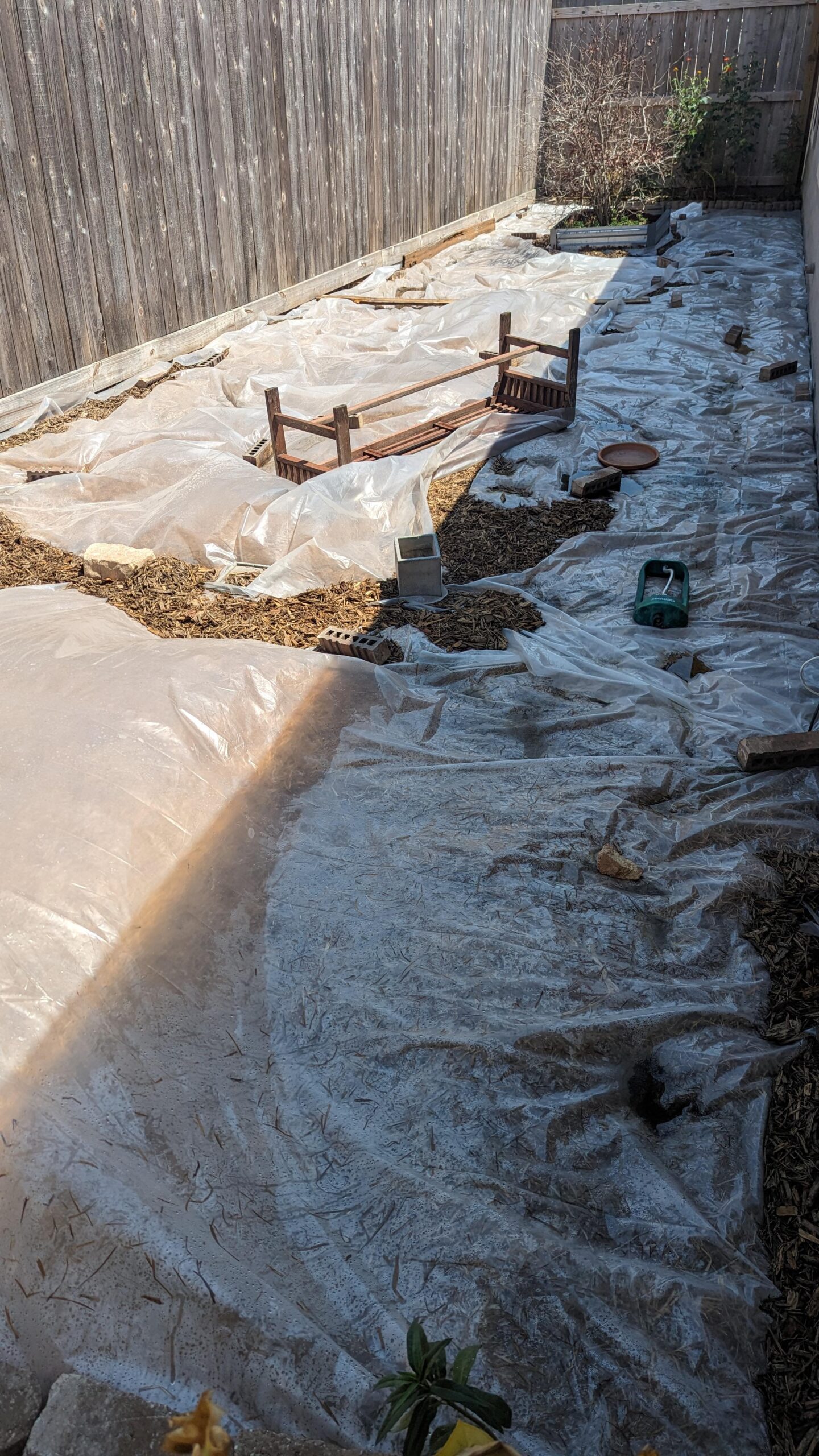

I decided to take advantage of the 100+ degree days and drought this summer and begin transforming my side yard into prairie. This used to be all St Augustine but had been taken over by all sorts of weeds and bermuda grass. 3 weeks ago I watered it and covered it with 6-mm clear plastic. I’m in Texas, zone 9a.
I’d appreciate some advice on what to do now.
Although the grass is entirely brown there are some weeds thriving under the plastic, including a few stalks of bermuda grass. It’s not many, but I’m wondering if I should expect all of them to die in the next few weeks before removing the plastic? This morning I did spray what I could with Spectracide.
After removing the plastic my plan was to get some free wood chips from a local company to put down and prevent more weeds from growing. Now I am seeing two possible issues with this:
– Since there was bermuda grass in there do I need to take any additional steps to prevent it from coming back after removing the plastic? How do I keep it from growing in from the next door neighbor’s yard? I’m planning on planting some native shrubs like Turk’s Cap next to the fence, but not sure if that’ll be enough. Bermuda grass has been the bane of my existence for years, it grows through inches of mulch in my garden beds that I had created using cardboard and newspaper to smother.
– I would like to spread a mix of seeds from Native American Seed into the old sod. Would I be able to do that and then add a layer of wood chips on top? Would the plants be able to grow through that? Is there a good way to plant seeds while also protecting the ground from weeds?
by rightsaidded
7 Comments
Good lord I couldn’t figure out what I was looking at young man!
I think it takes more like 2-3 months for solarization. If that were my yard, I’d leave it covered until it’s time to plant for spring.
I’ll try hitting most all these questions
– 3 weeks is not long enough for this method. Water, let uncovered for a week, recover, wait 3 weeks, repeat twice more. Even better through November
– Bermuda will probably NEVER go away. Do your best and get things growing and crowding it out
– Seeds need soil contact, water and sunlight. Do NOT cover them with wood chips or anything. Wood chips and mulch are for traditional landscaping with nice neat evenly spaced mature plants. That is not what you’re going to get with seeds.
– If you want less weeds avoid disturbing the soil
– Soil disturbance aside the best defense from weeds is overseeding and getting your native plants growing thick and fast
– Plan to use 2-3x the recommended seed rates and seed not just once not twice but 3x…this fall/winter, just after average last frost, fall/winter again…declining rates each time
– People will do anything to avoid spritzing some herbicide on a few trouble spots. It’s not some moral failing to use an herbicide as directed if needed. You’re trying to restore something, not create an industrial agricultural hellscape. It’s a means to an end not an ongoing application regime
Plant cover crop such as buckwheat
get your chipdrop first BEFORE you remove your plastic.
Lay down heavy cardboard, after removing tape sn labels. Cover with chips from Chip Drop. Plan and order your seeds over the winter. Visit the Texas Cooperative Extension Service website and do some research on establishing prairie, native wildflowers prairie grasses, etc. Look for sources of seeds. Be careful there are a lot of scams out there.
I just did this during the summer. I live in a hot, arid climate and I did 3 months. I replaced the plastic 2-3 times due to breakdown from the sun. Aside from bindweed surviving, nothing else did. If I were you I would try the cardboard/compost method in those areas with the Bermuda. I read somewhere Bermuda can take much longer. Or re-cover to give more time. I agree with you clear plastic is the way to go. If you cardboard/compost you could still plan around that.
I went to my local native plant nursery and they told me to just plant into the ground. I’m starting that process this fall. I plan to mulch around the new plants as well.
Good luck!