
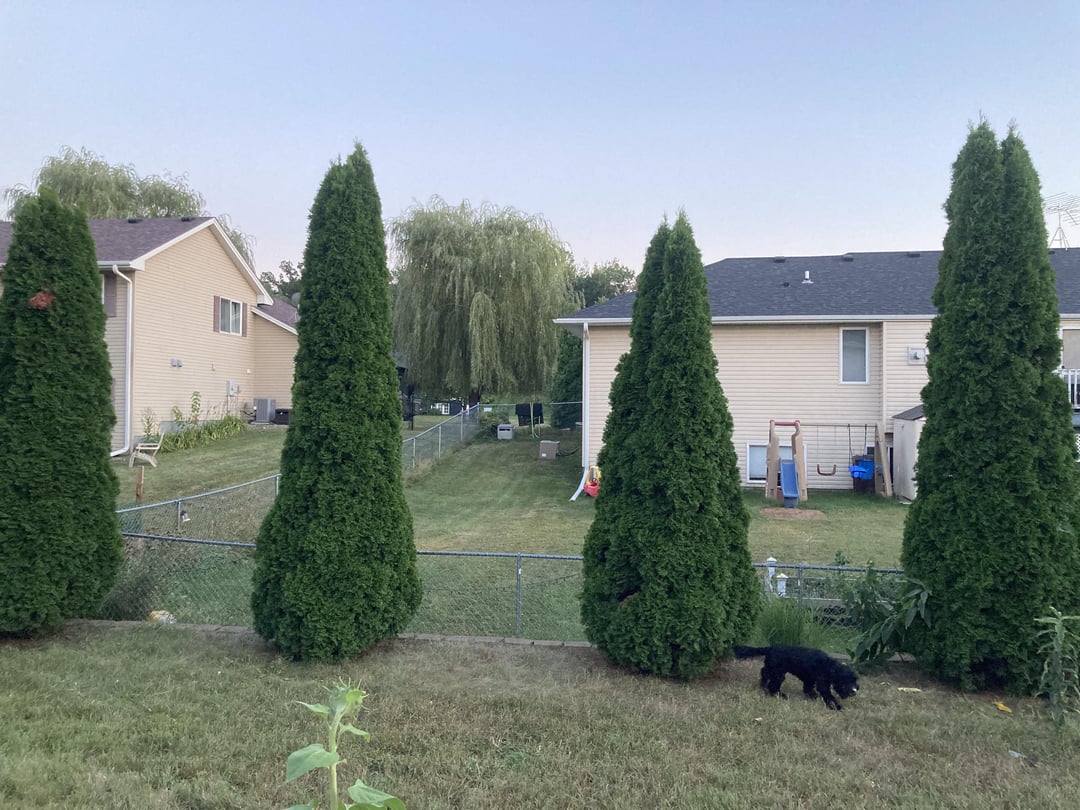
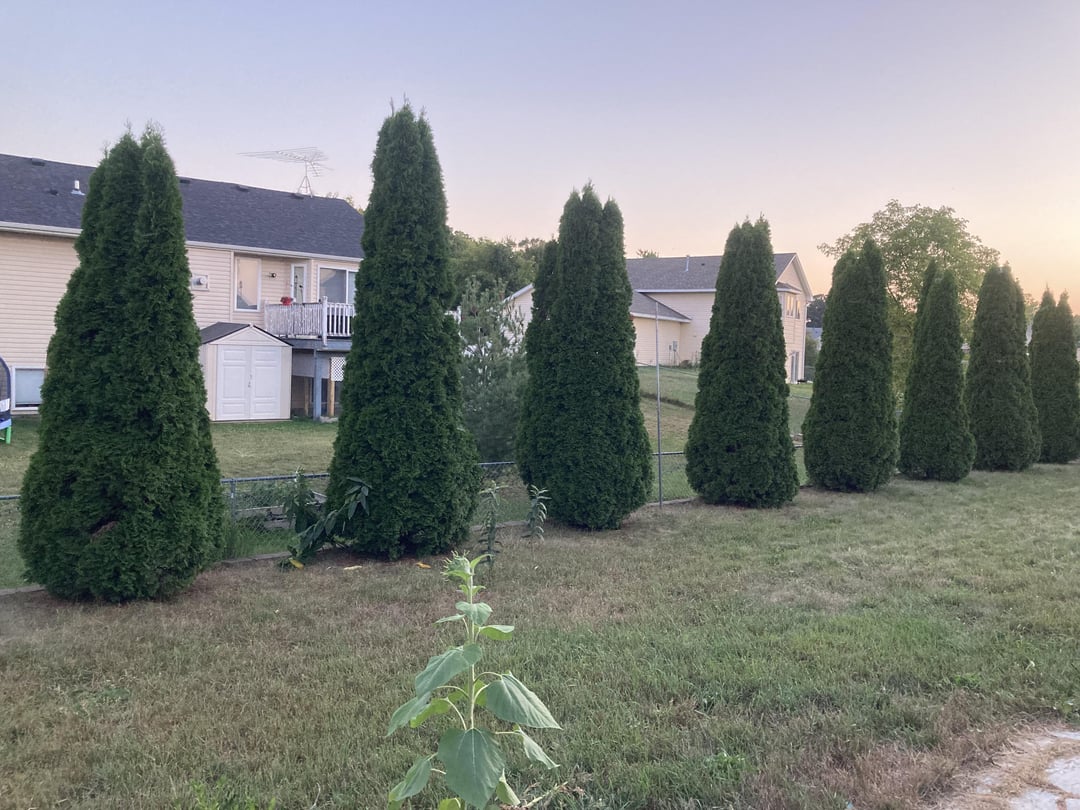
I live in Western Wisconsin zone 4b… These arborvitae are probably about as old as the house, about 20 years old. I don’t think they’ll ever grow in to make a proper visual border.
I’ve had the idea to plant lilacs or some other flowering shrub so we can at least achieve that privacy in the summer… do you think that would work, or do you have any other ideas? Thanks!
by killerplank
21 Comments
Rhododendron
another row of arborvitae but offset from the first row? I just did this with thuja green giants
Big grasses would look cool but pulled out away from the arbs. But if your looking for height to block the neighbors lilacs are not a terrible idea but you would want to pull them out away from the arbs, you don’t want then touching. more arbs probably makes the most sense
Umm more arborvitae? I like my neighbors but not that much
Lilacs, tall grasses, ninebark, different types of evergreens – junipers, other arborvitae’s, spruces, etc.
I like your lilac idea. Or maybe saskatoon bushes (serviceberry) and get some extra food in the late summer, if the birds don’t take it all.
You have a lot of lawn so you have space to plant them out in front somewhat. If you try to plant them directly in between it’ll just create too much competition for nutrients, water and light.
Other evergreens- hollies, magnolia, cypresses, spruces, junipers
I would personally like flowering deciduous shrubs to add variety and summer interest. Remember they don’t all have to be the same thing. The arbs provide a nice structure/backbone to create a natural mixed hedge. Large flowering shrubs to fill those gaps with a variety of smaller shrubs and perennials in front looks best.
As far as the actual plant selection, 4b is a bit tough. Lilac is a good choice for cold hardiness but flower season is limited. Hydrangeas get large and would be another good choice. Could also look at smaller flowering trees like cherry or crab apple.
I third more arborvitae
Go with cryptomeria japonica. Different texture but a nice, solid evergreen.
Clematis virginana for the fence. Big blue grass in between the arbs.
Lilacs would work, but they only flower for about a week. Hydrangeas flower much longer, and oakleaf hydrangea can grow up to 8 ft tall. Other options: boxwood, holly, ninebark, clumping ornamental grass, juniper, weigela, or viburnum.
More arborvitae.
another “breed” of arborvitae like a goldy
I’m not sure whether or not growing if they’re 20 years old. But what you need is another arborvitae staggered between them. 2 ft back on center. You might try a green giant but give it room. It depends how far north you are if you’re in zone 3 Green Giant may not be the best four five better.. or just get more of the same variety that you have and there are several others to pick from as well. But you don’t want to mix anything else in here that would be a mess
Smoke trees, hydrangeas, out fringe trees.
Evergreen, color contrast, fast growing: skyrocket juniper
Then build a short flower bed in front
Tear out the arborvitae and get a nice fence those suckers are nasty when they get huge.
That cat looks like a dog!
I’m no expert – but if it were my yard, I’d plant some tea rose bushes between them. They can get pretty big over time and would provide some privacy I think. Especially if there was a support you trained it to grow on at a height you wanted.
Not sure how it would do in Wisconsin though. Roses survive winters out west but you guys get more snow
Plant some other native trees that would normally grow with them. Maybe a different one in each space and some other native shrubs and perennials that would grow with them in the wild. You could make a little native habitat as a privacy screen! The birds and butterflies would love it too!