
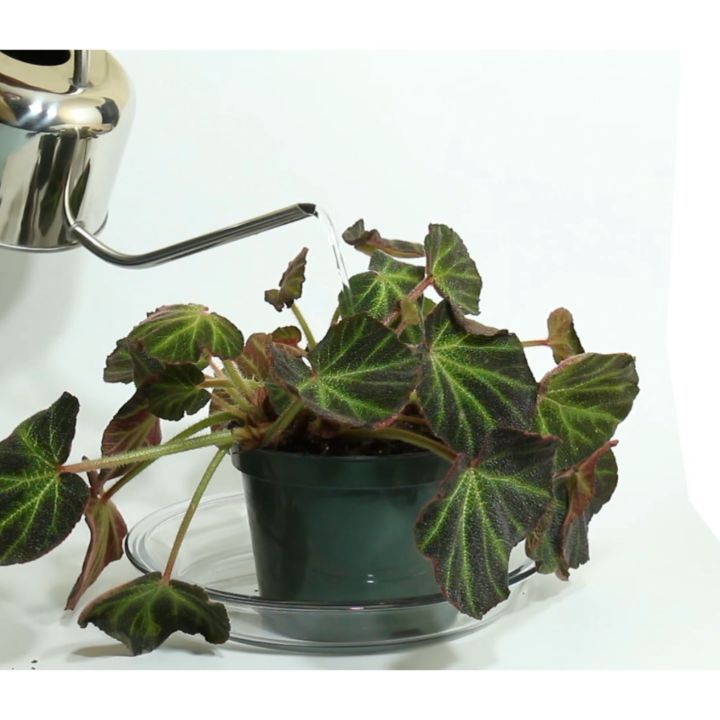
Let me try to impart as much house plant insight as I can with this one time lapse:
▪️Soil aeration: you water your plants because it doesn’t rain inside your house. You should therefore aerate the soil occasionally because there are no worms inside your house plant soil. Soil structure matters! (more on this in the link in my profile)
▪️Soil drainage and saturation: see how “excess” water escapes from being absorbed by the soil as it pools into the dish below. But as the video speeds up – notice how that pool is sucked up into the soil. Thus, the soil was not yet at saturation because it had the capacity to take in more water – was no excess water here. For most tropical foliage plants, when they need water, you should bring the soil to saturation. Think of the jungle: “when it rains, it pours!”
▪️Afraid of overwatering? I know you thought of this after reading the previous point. If you did, you probably also think that soil just “dries out” in a passive manner. Fact: the majority of the soil becomes dry because the plant uses up the moisture – evaporation only affects the top inch of soil. The plant only takes in the water deeper in the soil when it is photosynthesizing in the right light. So, the counter example is this: if you put your plant in a decorative position that is far from any windows or has a limited view of the sky, it will not be photosynthesizing as quickly, which means the soil will stay moist for longer, which increases the risk of root rot.
~
~
#timelapse #houseplants #houseplantjournal #observe #plants #science #botany #horticulture #gardening #botanical #greenthumb #plantlife #plantlove #plantcare #wisdom #stayhydrated
Comments are closed.