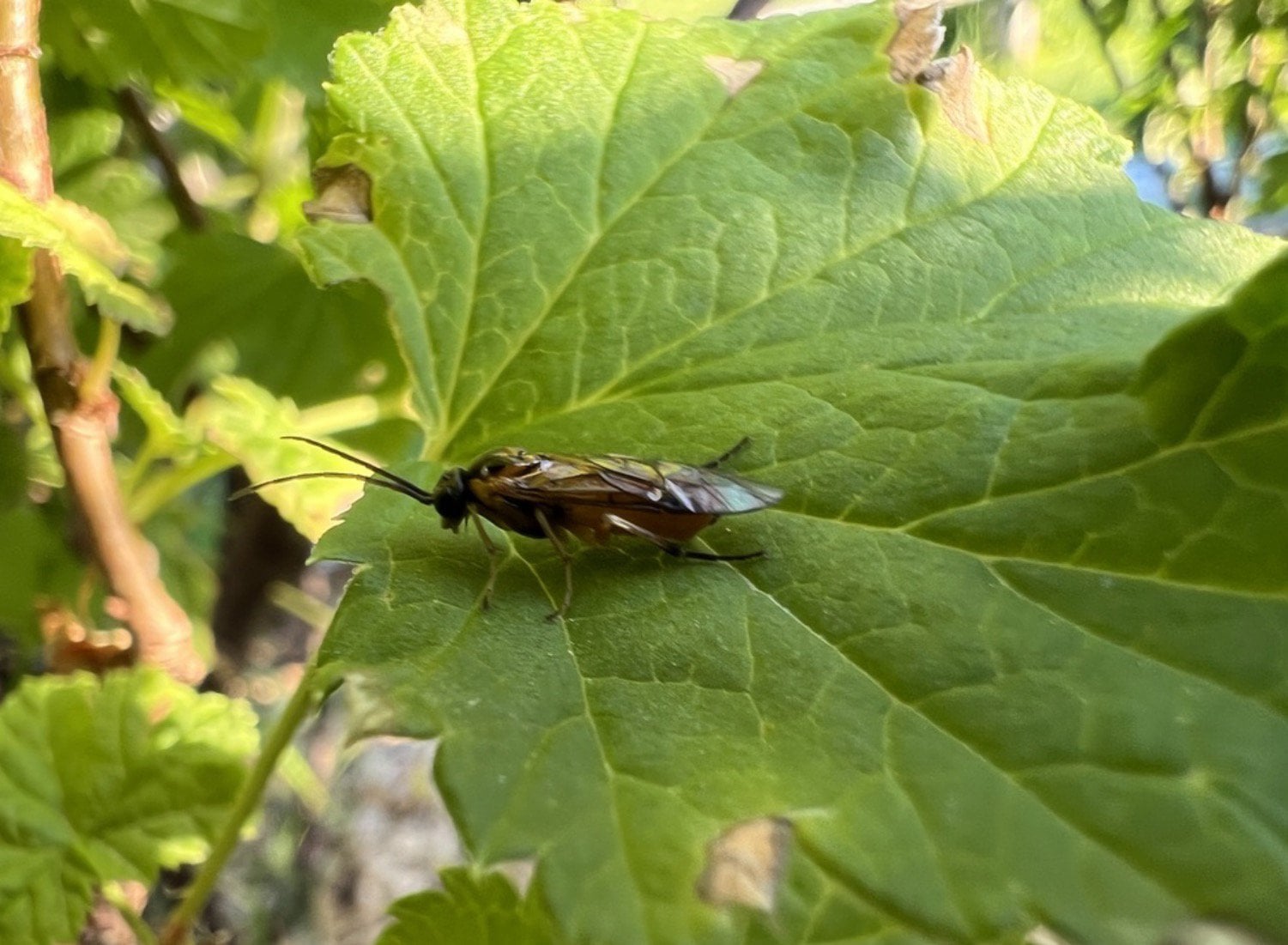
We have a row of red currants that have been infested with these for years. They’ll completely defoliate all the plants if we don’t do anything. If we’re on it and catch them early it’s pretty easy to manage by just picking them off by hand. But only because it’s just this one row of red currants. We have a patch of black currants nearby that is unaffected. We also have other red currants, white currants, black currants, and gooseberries elsewhere on the property (about a quarter mile away), which are all unaffected so far.
What I want to know is, did this infestation arrive with the red currant plants from the nursery about 7 years ago, and just hasn’t yet spread to the other plants yet? Or are they present in the area and found a foothold in this one row, but not the others (at least not yet)? Should we bother to completely remove that row of red currants and try to eradicate the sawflies, hopefully preventing them from spreading to the other plants?

1 Comment
We have a row of red currants that have been infested with these for years. They’ll completely defoliate all the plants if we don’t do anything. If we’re on it and catch them early it’s pretty easy to manage by just picking them off by hand. But only because it’s just this one row of red currants. We have a patch of black currants nearby that is unaffected. We also have other red currants, white currants, black currants, and gooseberries elsewhere on the property (about a quarter mile away), which are all unaffected so far.
What I want to know is, did this infestation arrive with the red currant plants from the nursery about 7 years ago, and just hasn’t yet spread to the other plants yet? Or are they present in the area and found a foothold in this one row, but not the others (at least not yet)? Should we bother to completely remove that row of red currants and try to eradicate the sawflies, hopefully preventing them from spreading to the other plants?