
WRITTEN BY SARAH WALKER CARON
There’s something so special about popping a warm, just plucked from the vine, Sungold tomato in your mouth on a sun-drenched day. Or about piling vibrant, freshly harvested greens on the counter for the meal you are about to prepare. Kitchen gardens are what make scenes like this possible.
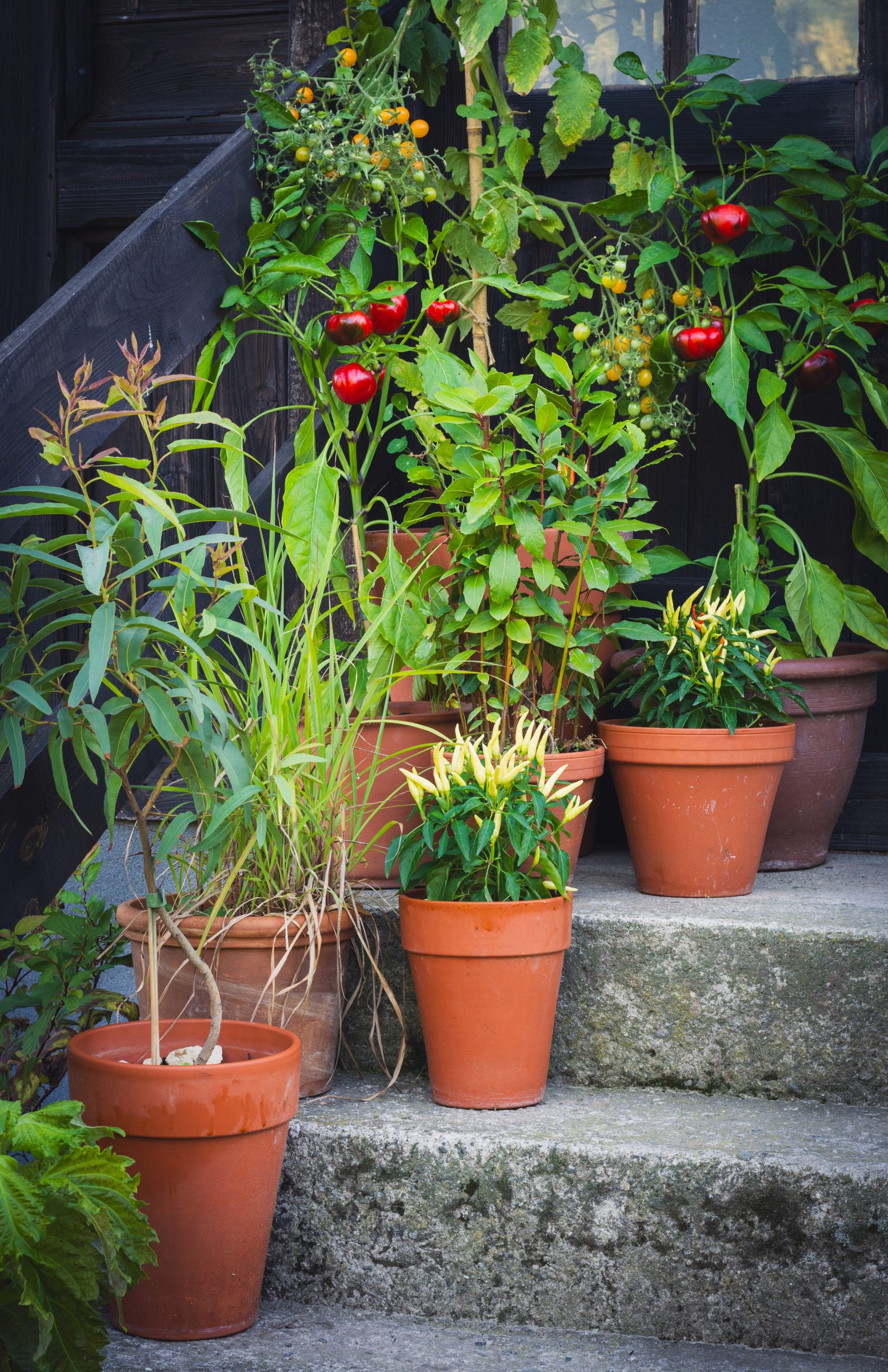
If you don’t have a lot of room, growing your own food is still possible with container gardening. All you need is sun, a little space for containers, and the right knowledge to make it successful.
Choosing Your Containers
For successful container gardening, you need the right size of container with drainage holes, according to Kate Garland, horticultural professional with the University of Maine Cooperative Extension. Whiskey barrels and other larger planters with drain holes have an advantage over their smaller counterparts.
“The bigger the container, the better it’s going to be in terms of water management. It will be a lot more forgiving, especially when we get into the hotter summer months,” Garland said.
It’s also essential that the containers are clean, especially if you are reusing ones from previous years, according to Garland. This ensures that any disease or pest issues don’t resurface in your current growing season.
How to Successfully Prepare Containers for Gardening
Next, you need to fill those containers, and what you choose matters a lot.
“The key factor is making sure that you are putting a good substrate in there with good drainage. If it’s too heavy, it can be really detrimental for root growth,” Garland said.
This means that soil directly from your garden is out. It’s likely too compacted, which will inhibit root growth and hold too much water. Instead, look for substrates that are labeled for container gardens or potting soil. You can also make your own mix with compost, peat moss, and other ingredients to ensure a loose and root-friendly environment.
What Grows Best
When selecting what to grow, pay attention to the amount of direct sunlight your container gardening area receives and choose plants accordingly. Tomatoes, peppers, and other seeded fruits often require full sunlight, at least 8 hours each day. Others like herbs and greens can thrive in low-light settings.
Garland recommends leafy greens like lettuce, spinach, and Swiss chard as well as herbs like basil, cilantro, oregano, and mint for low-light settings.
Mistakes to Avoid
With your containers selected, your plants chosen, and everything being watered accordingly, you’re all set, right? Not quite.
Garland warns that you shouldn’t skip fertilizer for your container garden. It’s essential to ensure proper nutrients for your crops. She recommends using a slow-release fertilizer, which should be applied according to package directions.
The second big mistake to avoid is not having a good watering plan.
“It comes down to watering when the substrate dries out. You want to get into the pattern of being able to check your containers every day,” Garland said. On the hottest days, it’s best to check the plants twice. If you have travel planned, make sure you plan for your plants, too.
Enjoying the Harvest
Once your containers are overflowing with fresh herbs and vegetables, it doesn’t take much to turn them into something special. This recipe highlights the bright, just-picked flavors of your garden.blooming.
Comments are closed.