
What to see and where to visit
Even though Milan is a fairly small city, it has many districts, each with its own identity. These are areas that are very much lived in by their inhabitants. My district is Brera, so when I need to think, I go into the courtyard of the Accademia di Belle Arti di Brera, which is housed in the same buildings as Pinacoteca di Brera gallery. Or I take a walk to the Botanical Garden. On other occasions, I go to Via Monte Napoleone. The people, the shop windows and this sort of retail amusement park all help me to focus. If you are a shopaholic, you should definitely head there. Another place I love to visit, on my way home from the studio, is the Galleria Vittorio Emanuele II (Italy’s oldest active shopping gallery). It is like a gigantic collage – a collection of characters I enjoy observing. At the Via San Marco street market, I always stumble across a rich mix of people and, every Monday and Thursday, I buy flowers there for the studio and my home. If you are interested, you should visit the Romanesque-style Basilica di Sant’Ambrogio, or one of the two basilicas in the Parco delle Basiliche. Or you might like to wander in the gardens of the Università degli Studi di Milano Statale and breathe in an atmosphere that has remained intact for more than 500 years in the grounds of the vast, elegant building known as Ca’Granda, founded as a hospital in the late 1400s. If I need a moment of quiet, the Biblioteca Nazionale Braidense is a wonderful place to pause and reflect.
I think the two places that illustrate the extent of modernism in Milan are La Triennale di Milano and the ADI Design Museum. They provide a more nuanced picture compared to places like the Tre Torri in the City Life district or Piazza Gae Aulenti. At these museums, you can perceive the depth of modernism and learn about its wide geographical origins. For me, the modernity of Milan is about a city that is not just bound to its past, but is also one that uses its past as an element necessary for growth. We are not a classic historical city. Milan was founded around 600 BCE but, despite this, we don’t base the strength and beauty of this city solely on our history. The joy of being in Milan is a presence, not necessarily a physical one, that nourishes us: the exhibitions, the shops, the work that is done. A highlight is the annual Salone del Mobile, where my new products for Alpi, Boffi, Glas Italia, B&B Italia, Kartell and Porro – among others – will be on show.
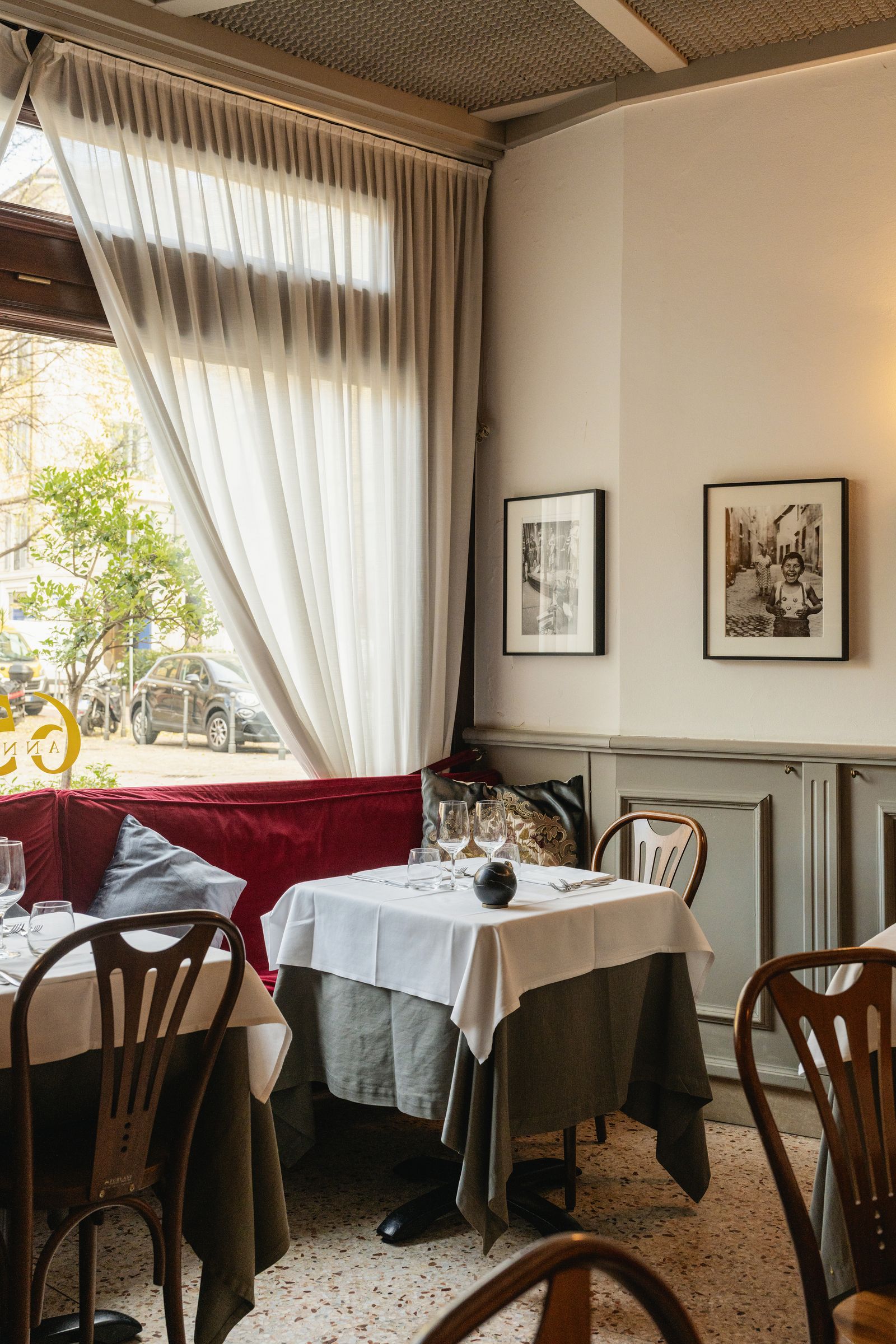
The interior of Rigolo, a favourite restaurant of Piero’s, which is close to his studio in the Brera district.
Lavinia Cernau
Comments are closed.