
Kate Brown teaches history at MIT and is the author of “Tiny Gardens Everywhere.” David Greenwood-Sanchez teaches political science at the University of Iowa.
A dozen years ago in Newton, Eli Katzoff built an A-frame structure that looked like it held up an elevated rail line in his father’s front yard. From it, he hung buckets in which he grew tomato plants to hand out to neighbors and food pantries. Early in the growing season, city officials put a stop to Katzoff’s ambitions, citing municipal restrictions against front yard structures. No pools, swing sets, or sheds. No tomato towers. Under threat of $300-a-day fines, Katzoff began dismantling the A-frame until a local school offered to take it and the seedlings.
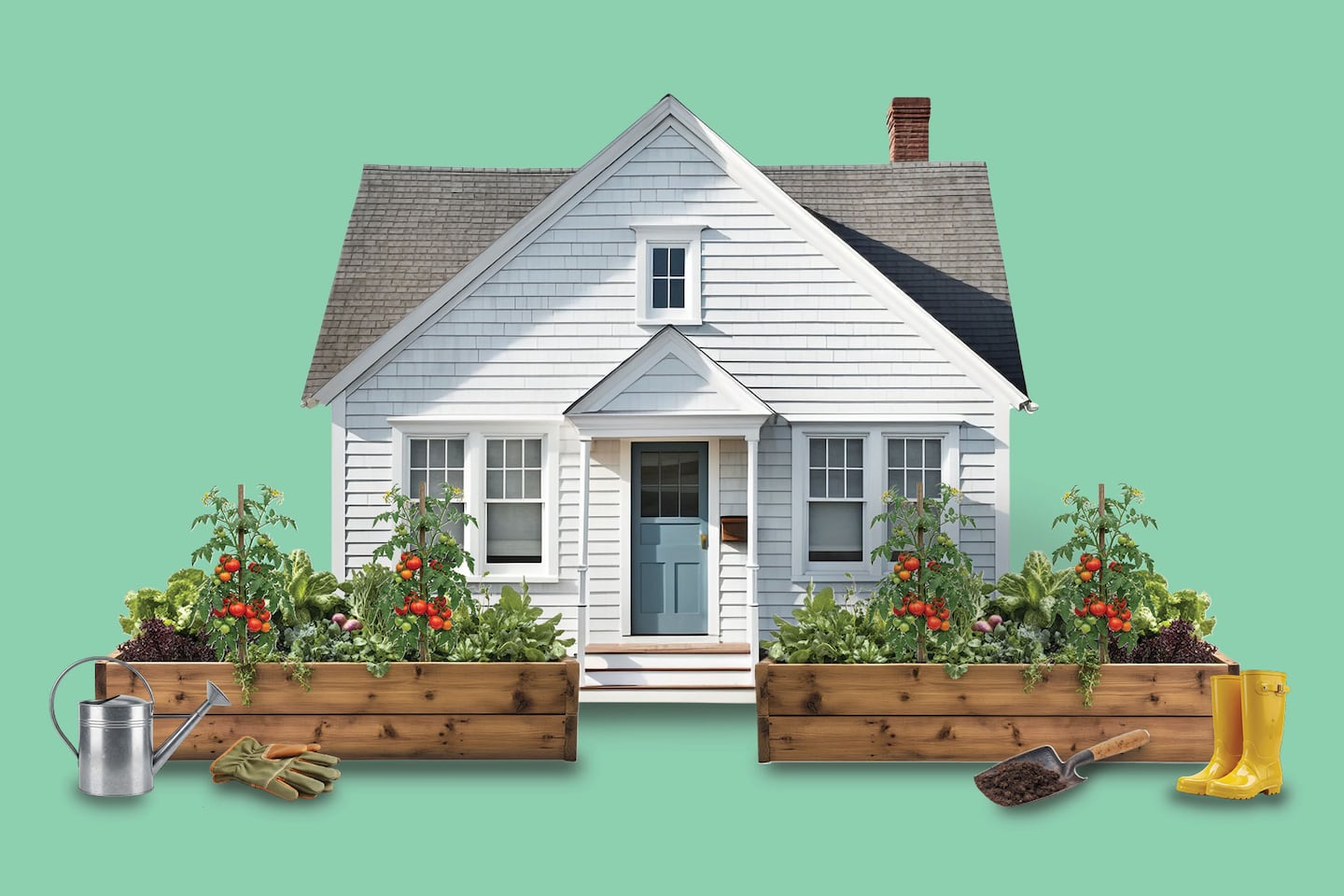
But what if this story had a different ending, one in which Katzoff was well within his rights to grow food on the front lawn? Our recent national survey, the first of its kind, found that front yard agriculture is exploding in popularity nationwide. It’s being spurred on by the joys of gardening, the prospect of homegrown food, and spiking grocery prices.
Get The Gavel
A weekly SCOTUS explainer newsletter by columnist Kimberly Atkins Stohr.
Existing regulations make it difficult. The media has covered plenty of stories of homeowners’ associations in battles with residents whose yards don’t meet aesthetic requirements. Municipalities, too, have restrictions on the size and height of structures that support gardening. Fines pile up against people who defy these regulations.
But despite the hurdles, a surprisingly large number of Americans are abandoning the traditional lawn to grow tomatoes, beets, and carrots.
And, our poll found, their neighbors support them. The survey, conducted in November 2025 with the polling firm YouGov, determined that roughly one-third of US households have a front yard garden of some kind. Of these, nearly half, or 16 percent of all US households, are using their garden not just for decorative plants and flowers but to grow food — fruits, vegetables, and herbs. These figures point to the emergence of a broad movement to restore the front yard to its original role as a place to sustain and enrich the household.
Since the 1950s, our country’s largest crop — bigger even than soy or corn in terms of land — has been turf grass, with front yards across the United States devoted to growing it. But in some ways, gardening on front lawns is even more American than the stereotypical green grass.
For most of US history, working Americans have used small residential lots to grow fresh produce. In 1917, a US Department of Agriculture agronomist calculated that in Washington, D.C., a small yard needed only a $5 investment and 58 hours of work over a season to net $1,306 per acre in fruits and vegetables, more than double the annual average wage at the time. “Tiny Gardens Everywhere: The Past, Present, and Future of Urban Self-Provisioning,” published this year and written by one of this article’s authors, shows that small vegetable plots enabled Americans to pay the bills, while garden networks connected people who helped one another out.
Our 2025 survey shows that front yard gardeners today are driven by the same practical considerations. The top three are to “enjoy fresh, nutritious food,” to “enjoy outdoor exercise and recreation,” and to “save money on groceries.” Most respondents spend a few hours a week and less than $200 a year on their vegetable plot — much less than what many Americans lay out for their lawn. Front yard vegetable gardeners are just as likely to be conservative as to be liberal, suggesting that this shift is pragmatic rather than ideological.
State laws are following gardeners’ lead. In the last decade, Florida, Illinois, and Maine have passed Right to Garden Laws that limit the ability of governments and homeowners’ associations to ban food gardens on private property. The justifications for these laws range broadly from libertarian arguments about property rights to claims rooted in respect for food as a basic human right.
Massachusetts, meanwhile, has Right to Farm Statutes that offer some protections for gardeners. But rarely would these laws override municipal or HOA restrictions on front yard gardens.
Katzoff’s Newton neighbors did not complain about his hanging tomato buckets. They encouraged him. Our 2025 survey shows a similar community enthusiasm. A litle more than a quarter of respondents stated that their plots prompted neighbors to start their own front yard gardens.
In a separate survey conducted by the University of Vermont, nearly a third of respondents in Burlington, Vt., asked for help transforming their lawns into gardens.
Residents digging in the front yard get to know their neighbors. They share seeds, advice, and extra zucchini. With the help of gardeners’ plants and blossoms, cities and suburbs are becoming hot spots of biodiversity, while households struggling to make ends meet cultivate increased resilience. This movement of self-help and mutual aid is occurring quietly — with no founding manifesto, backed by no particular party. One front yard garden at a time, Americans are remaking the landscape into something more habitable and humane.
When asked if he would be able to keep his tomato towers today, Katzoff was clear on that point: “No way!”
With food prices up 27 percent since 2020, it is a good time for Massachusetts legislators to consider protecting gardeners from vegetation restrictions so that they can grow plants that, in contrast to turf grass, nurture birds, bees, and the occasional rabbit — and their own families and neighbors.
Comments are closed.