
As you’re starting work on your garden, wouldn’t you like to know whether springtime is moving fast or slow this year? What insects and diseases to look out for, and when? And when it’s the right time to take measures against them?
For both home gardeners and landscape professionals, “more information is better,” said Sharon Yiesla, plant knowledge specialist in the Plant Clinic at The Morton Arboretum in Lisle. That’s why she writes the Arboretum’s Plant Health Care Report, published every week during the growing season.
The newsletter aims to provide up-to-date information to guide plant care for the Chicago area, especially pest and disease control.
It’s based on the scientific understanding that all kinds of organisms — including plants, insects and disease fungi or bacteria — respond to the weather. “If you know about this year’s weather and how organisms are responding to it, you can take action at the right time, when it’s most likely to be effective,” Yiesla said.
Tackling plant problems at the wrong time in a plant’s or insect’s life cycle can be futile and environmentally harmful. For example, a fungicide can only help control apple scab on a flowering crabapple tree if it’s sprayed just when the leaf buds are opening in spring. Horticultural oil can only control scale insects if it’s applied at the exact time that soft-bodied, immature insects are leaving the protection of hard shells to crawl to new spots on the tree.
Applying pesticides when they cannot work adds harmful chemicals to the environment for no purpose.
One way the Plant Health Care Report helps is by tracking units that measure how warmth is accumulating as days grow longer, affecting the development of plants and other organisms. Although they are called growing degree days, these units aren’t actually calendar days. They are a standard unit created to allow for the fact that because weather varies so much, heat doesn’t necessarily build up steadily according to the calendar.
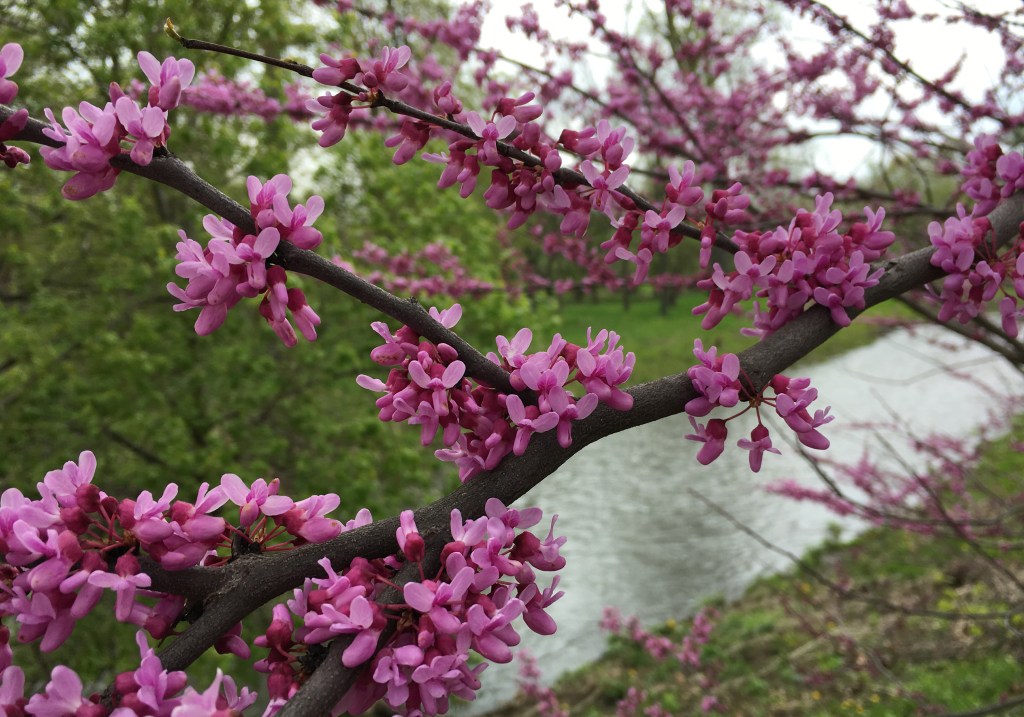
For example, it’s known that at about 100 growing degree days, redbud trees flower and pine sawfly larvae emerge. Depending on each year’s weather, that point may be reached in late March or weeks later in April. Following growing degree days, rather than the calendar, can tell plants’ caretakers when to watch out for pests and when to act against them.
The Plant Health Care Report includes other useful data such as soil temperature and moisture. It reports on pests and other plant-related phenomena that have been spotted at the Arboretum or reported to its Plant Clinic, and it gives expert advice on how to identify and deal with them. Other frequent topics include weather issues such as storms and drought and weed identification.
The Plant Heath Care Report is posted online at mortonarb.org/plant-health-report weekly during the growing season and sent out as an email newsletter. Anyone can subscribe through a link on the webpage.
“We’re aiming to help you get ahead of garden problems,” Yiesla said. “With this kind of detailed information, you can up your garden game and protect your plants.”
For tree and plant advice, see the online resources of The Morton Arboretum at mortonarb.org/plant-care, or submit your questions online at mortonarb.org/plant-clinic or by email to plantclinic@mortonarb.org. Beth Botts is a staff writer at the Arboretum.
Comments are closed.