
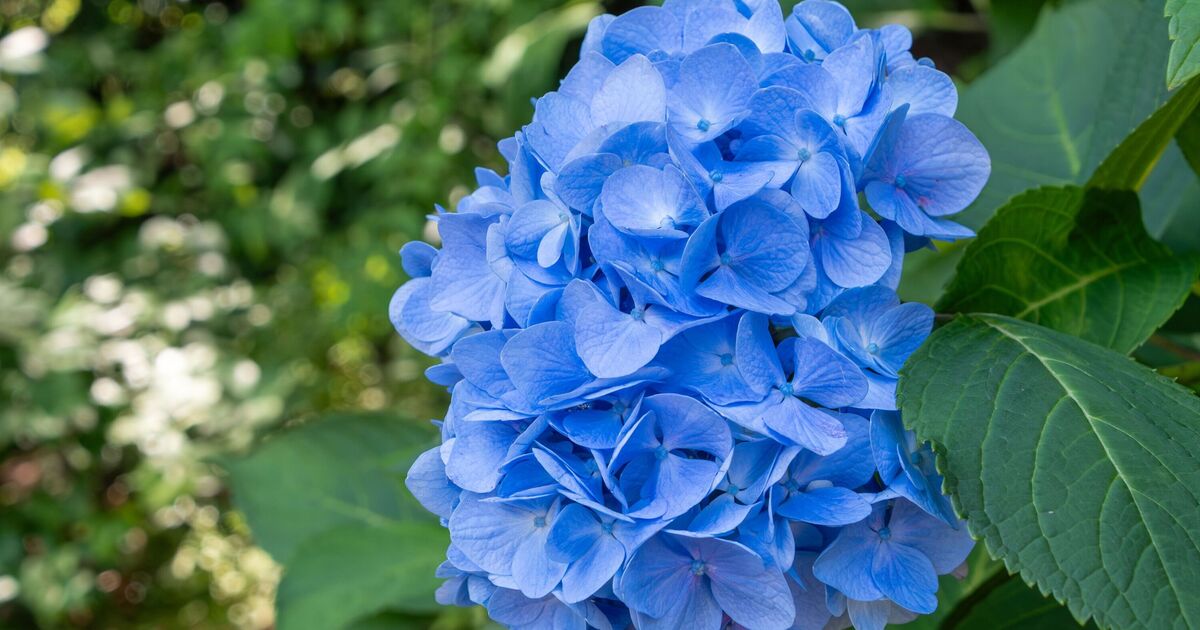
Gardeners can help blue hydrangeas keep their beautiful sky blue hue with one small change, experts say. Veteran gardeners will be all too aware of the phenomenon of hydrangeas losing their colour.
You may have bought a blue variety of the flowering woody shrubs in the past, only to find that the next year the bloom is pink, for example. And while hydrangeas come in various forms, the cause of this loss of colour may well be your soil pH, according to growing aficionados. But thankfully, small tweak to how you water them could make all the difference. While many plant lovers rely mainly on a garden hose or watering can to keep their leafy friends hydrated, the type of water you use and even where you are in the world can have a marked effect on how they develop.
This is true of blue hydrangeas, which can bloom in different colours depending on how they’re looked after.
Tap water, especially that which you’ll find in hard water areas, can be alkaline and cause blue-flowered hydrangeas to take on a pink hue.
To prevent this you can try using rainwater, which is more acidic, a quality that helps hydrangeas stay blue.
Gütegemeinschaft Substrate für Pflanzen e.V. (GGS), a German quality assurance organisation for substrates used on plants says to give hydrangeas “special care” you should have them in a “shaded or partially shaded spot to maintain the blue flower colour” because bright sunlight can make the blueness fade.
“Water regularly and use exclusively rainwater with a low calcium content,” it adds, explaining that using “water with a high level of calcium content” like tap water “will increase the soil pH level in the medium term”.
“As a result, aluminium ions will no longer be available to the plants and consequently not reach the flowers.”
It also recommends feeding them exclusively with special hydrangea fertiliser, as it helps keep the acidity levels in the soil, and also contains the aluminium sulphate that turns hydrangeas blue in the first place.
You can collect rainwater “from the roofs of homes, garages, greenhouses and other garden structures as long as they have gutters and a down pipe that enters the drain at ground level”, the Royal Horticultural Society (RHS) explains on their website.
The water can then be collected in water butt to be used on your plants.
Comments are closed.