
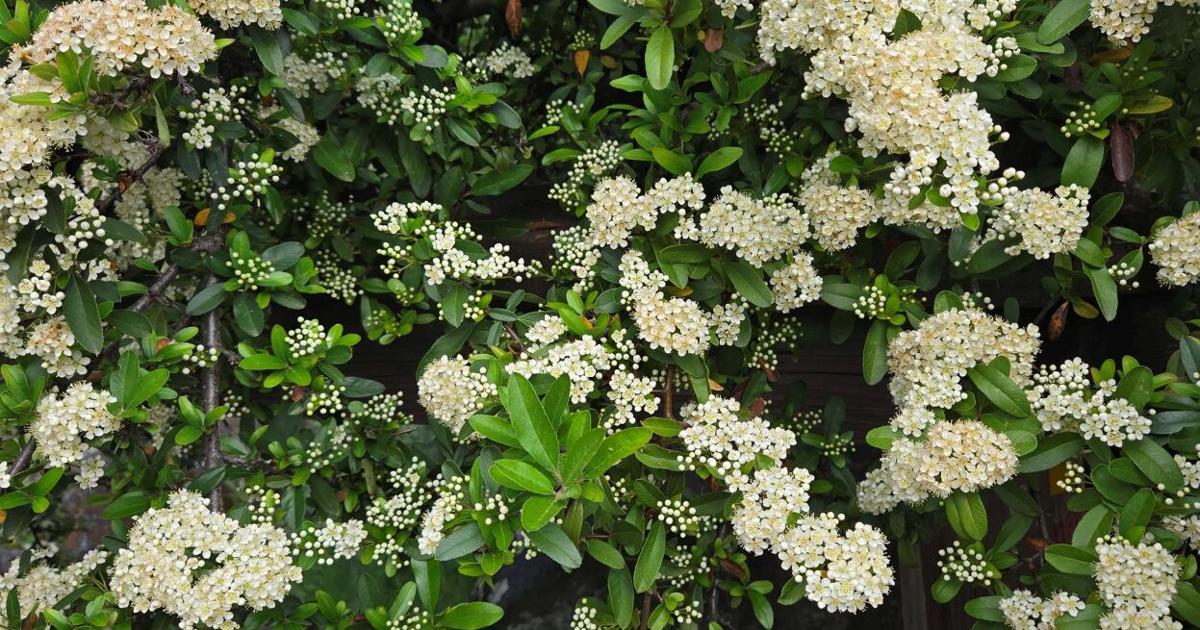
Spring time heralds an array of vibrant colors, plant textures and variety. As April unfolds, it’s clear that our very warm, dry March triggered early spring bloom. The lilac in the lower elevation communities have nearly finished blooming, while at higher elevations, lilac may be blooming now. Other flowering shrubs and trees are flush with blossoms, including a lovely pink dogwood which is now peaking in my Penn Valley front yard. Likewise, the large pyracantha is full of beautiful white blossoms and it’s also teaming with pollinators.
Spring time also brings many vivid scents emanating from the garden areas. Blooming lilac, forsythia, roses and peonies evoke childhood memories – like my aunt’s backyard peonies, or my mother’s favorite tulips, lilacs and all things floral. What is it that causes many flowers to smell so good while some, such as the pyracantha, have a rather nasty smell?
Scientists have identified chemical compounds in plants, referred to as “plant volatiles” responsible for scents that have served mankind for decades as perfumes, aromatic compounds as well as flavorings and food additives. However, the benefit to humans is secondary. Depending on genetic coding and a host of complex biochemical processes, plants emit scents primarily for pollination, or for protection. The flower that smells good to us may also attract bees, moths or bats! Likewise, plant scents may also serve as a protective mechanism for the plant; the scent from the plant may deter potential pests.
Spring is a wonderful time to enjoy the beauty of our region – take time to roam through some of our local gardens or take a guided walk at one of the state parks. Consider what you might want to add to your garden. There are many fragrant floral plants that attract humans and pollinators, including perennials and annuals: Daphne, cosmos, honeysuckle (Lonicera), mock orange (Philadelphus), sweet pea (Lathyrus odoratus), lilac (Syringa), giant hyssop (Agastache), iris, lavender (Lavendula), mint (Menta), daffodils (Narcissus) and of course the ever-popular rose!
April is a lovely time to spend in the garden, and below are some garden tips and activities for this month:Plant flowering perennials such as bearded iris, coreopsis, gaillardia, dianthus or yarrow. Put in some summer-blooming bulbs, tubers and corms such as gladiolus, dahlia, calla lily or begonia.After the last spring frost, fertilize roses, fall-planted ground cover and shrubs. Apply acid fertilizer around camellias, rhododendrons, and azaleas. The last spring frost date is variable depending on elevation and microclimates. Some local gardeners suggest that the best time to plant is after Mother’s Day. The UC Master Gardeners of Butte County planting guide suggests that while weather is unpredictable, some rules of thumb for last frost dates are based according to elevation. For example, in communities at 1000 feet, the last frost date is April 15th, for folks at 2000 feet, April 22. For elevations at 3000 -4000 feet, the last frost date falls between April 30th and May 7th.This is a good time to deadhead rhododendron and pansies after the bloom. (Do not disturb new rhododendron buds under this year’s flowers.)Now is a good time to trellis trailing blackberries, weed, fertilize and mulch upright varieties of berries.At lower elevations or sites with warm exposures, the first sweet corn, cucumbers, summer squash and string beans can be planted now. Wait to plant other, tender summer vegetables such as tomatoes and peppers until the last part of April or first week of May.
With Mother’s Day planting in mind, mark your calendars for Saturday, May 9 from 9am to noon for the UC Master Gardeners of Nevada County Spring plant sale. We will offer a huge variety of vegetables – tomatoes, peppers and more, as well as flowers and herbs. This year we are also offering a number of garden craft items. The sale will be at the Demonstration Garden, 1036 W. Main St. in Grass Valley.
Public workshops coming up include Firescaping – today, from 10am to noon at the Madelyn Helling Library in Nevada City. On May 2, we will offer: More Plants, Please: Propagation from Cuttings at our Demonstration Garden, 1036 W. Main St. in Grass Valley (on the NID grounds).
For more information about Master Gardeners’ events or for home gardening questions, go to our website at https://ucanr.edu/site/uc-master-gardeners-nevada-county. You may also call our Hotline at 530-273-0919 or stop by our office at the Veterans Memorial Building (255 South Auburn St. in Grass Valley) on Tuesdays from 9am to noon when a UC Master Gardener will be in the office to help answer your questions.
Ann Wright is a Nevada County Master Gardener.
Comments are closed.