
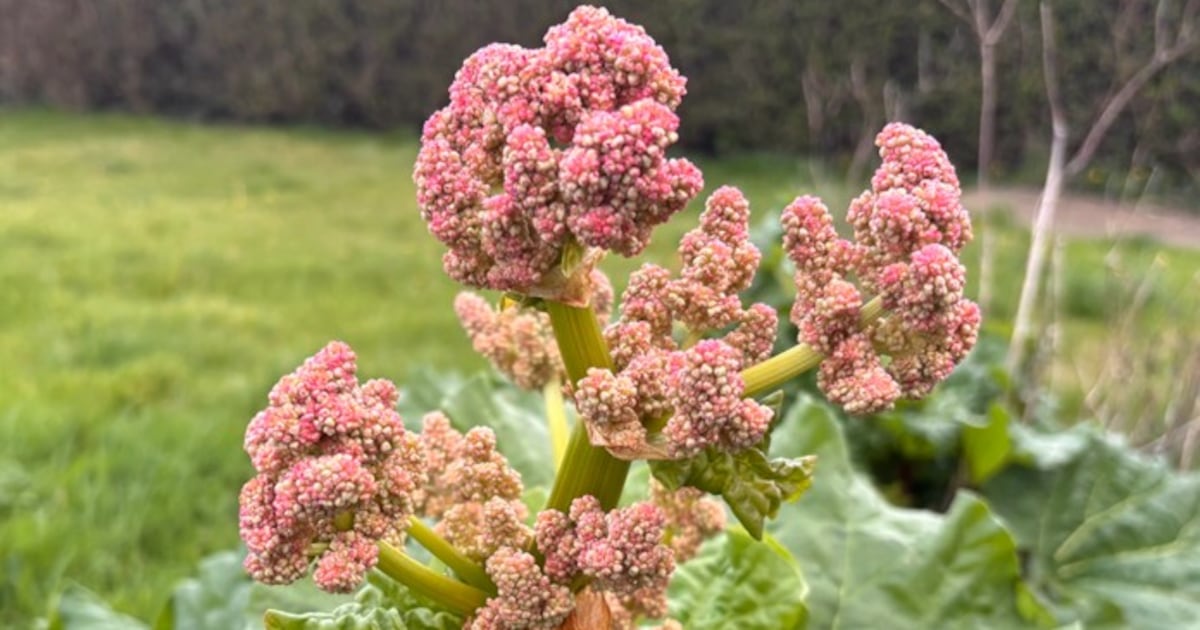
We gardeners are supposed to cultivate flowers and celebrate their abundance. When it comes to rhubarb, however, it’s the opposite case.
Rhubarb blooms are comparatively rare. The flowers are a shapeless pinky cream-coloured plume that appear from spring onwards. They aren’t especially attractive and are an indication that the plant isn’t in great health.
Bolting in edible crops – of which the flowers are a symptom – occurs when a plant is stressed.
With rhubarb, it tends to occur in mature plants that have become crowded and is often triggered by erratic weather.


In the short-term, remove any flowers by cutting the stalk with a sharp knife as close to the base as possible. This will increase the plant’s production of edible leaf stalks as it focuses its energies on foliage rather than reproduction.
Read more: Casual Gardener: How to grow prize… frogs
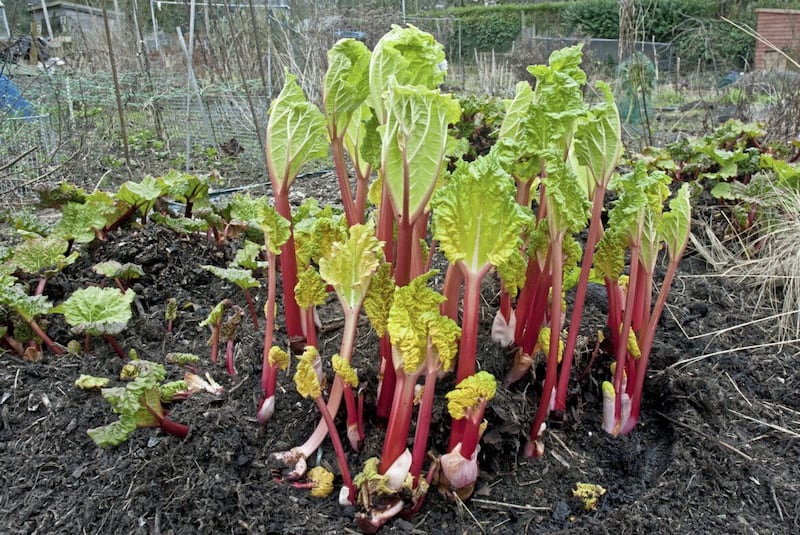 Rhubarb grown from seed
Then next winter lift and divide the plant. Rhubarb benefits from being chilled over the winter, so whereas the instinct is to mulch and protect it, the best approach is to leave the crown exposed to the elements.
Few plants ask as little as rhubarb yet give back so much in return. The occasional removal of flowers and splitting the crowns once or twice each decade is literally the only maintenance you need carry out, but the plant will nonetheless reward your neglect, providing an adequate crop year after year.
“But I don’t like rhubarb,” you may exclaim, immediately arousing my suspicions.
You see, I can’t believe anybody dislikes rhubarb. Yes, it has a tart, zingy flavour that explodes in your mouth, but that’s a selling point rather than a drawback. Perhaps you just need to add more sugar, whether enjoying it in crumble, tarts, jams, or even infused in gin with its favoured partner, ginger.
If growing for the first time – and rhubarb is definitely recommended for novice gardeners – invest in a good variety for the best taste.
The occasional removal of flowers and splitting the crowns once or twice each decade is literally the only maintenance you need carry out
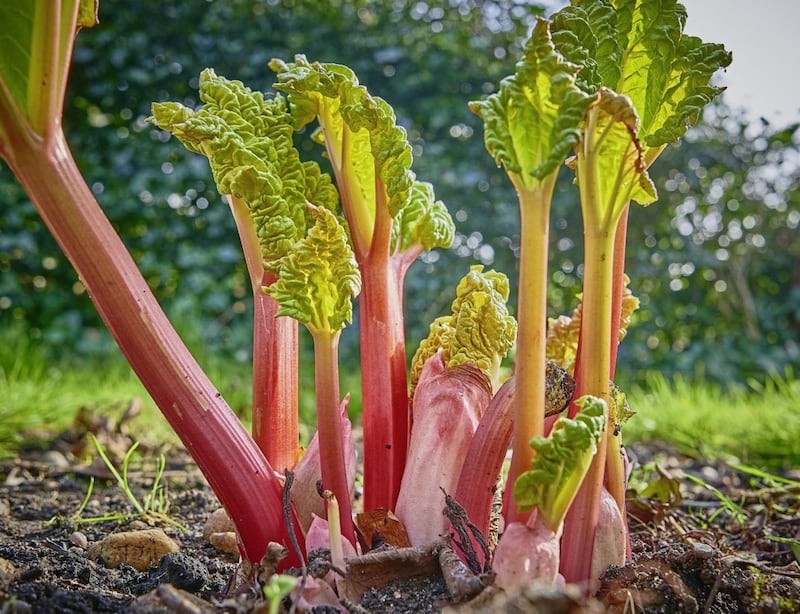 Rhubarb can be an acquired taste, but it’s a taste worth acquiring
Read more: Casual Gardener: The best pages to be leafed by green fingers
Notable varieties include the compact but high-yielding Hawkes Champagne, which has the RHS’s award of garden merit (AGM), the autumn-cropping ‘Livingstone’, and thick-stemmed, early cropper Timperley Early, which also has an AGM.
Also worth namechecking are ‘Valentine’ and ‘The Sutton’.
Normally sold in a pot, rhubarb can look rather underwhelming at the garden centre but in just a few short weeks, once it gets established, your plant should have at least a handful of stalks, which shouldn’t be harvested in the first year.
Ideally, it should be situated in full sun, in a decent-size hole backfilled with well-rotted manure and homemade compost.
The sweetness of the rhubarb stalks is dependent on the variety, age and the growing method, with ‘forced’ rhubarb, providing the sweetest stalks of all.
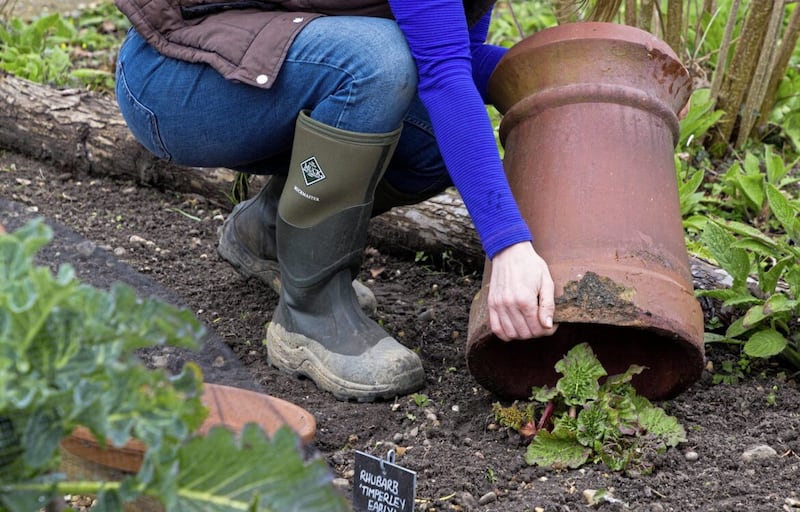 You can force rhubarb over winter to harvest in early spring by covering the plant with a large pot or upturned dustbin in late January to block out the light
In the ‘rhubarb triangle’, a nine square mile area of west Yorkshire, the plants are exposed to frosts in the fields before being moved indoors into huge heated sheds where they are kept in darkness.
As they grow in these conditions, the carbohydrate stored in their roots is transformed into glucose which sweetens the tender stems, which are crimson in colour.
You can force rhubarb on a more modest scale by covering the plant with a bespoke terracotta forcing jar or an upturned bucket, depriving it of light.
If choosing this method, give the plant a couple of years to recover before harvesting again.
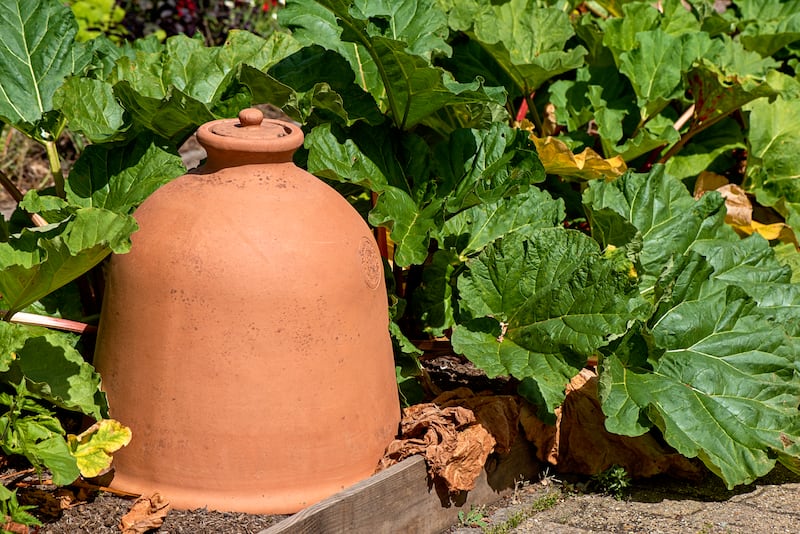 A terracotta rhubarb forcer (Jacky Parker Photography/Getty Images)
Comments are closed.