

Spring and the sunshine have finally arrived, which means – for many of us – emptying our bank accounts at the garden centre each Sunday, and filling the car boot with new seedlings and flowers.
But pause before planting those new arrivals says gardening expert Dan Cooper. Your beds and borders may look bare but what’s lurking under the surface of your soil? ‘Many perennial weeds such as dandelions, docks, bindweed and couch grass will regrow from the smallest fragment of root left in the ground,’ says Dan. ‘So if you plan to sow seeds directly into the earth, or plant a new space with flowers or vegetables, the first thing you must do is remove those roots. It really pays to be meticulous.’
Skip this step and the very act of planting could prompt an eruption of weeds, suggests Dan: ‘disturbing the soil will also prompt the seeds of annual weeds to germinate.’
So how do you get rid of pesky roots? ‘My advice would be to loosen the soil to a depth of around 30 cm using a border fork (the kind you use standing) then work through the soil methodically with a hand fork, removing strands of root as you go,’ says Dan.
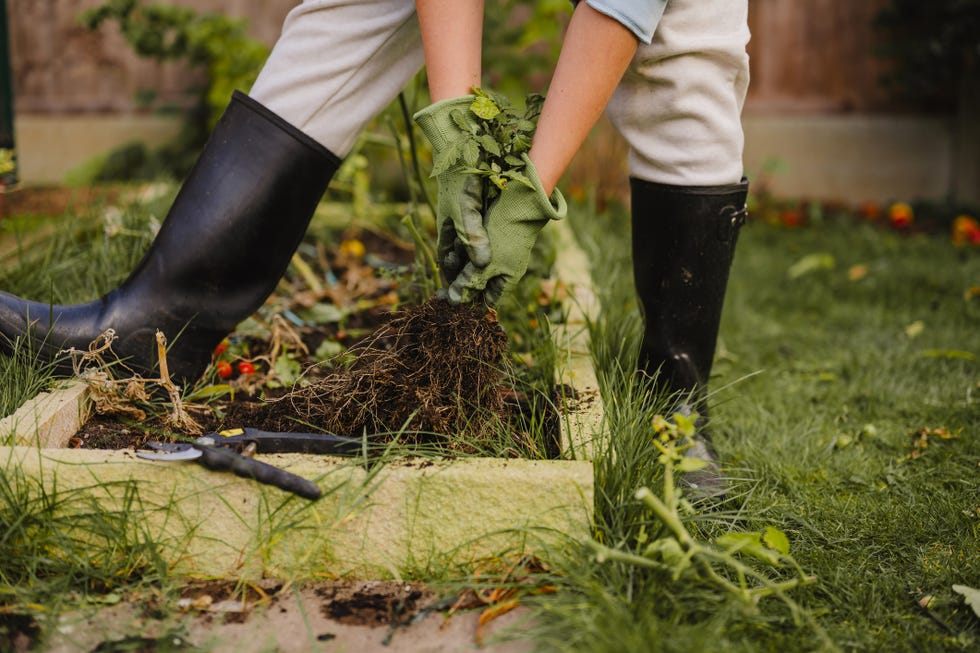
Westend61//Getty Images
Thankfully, most perennial weeds have fleshy or whiteish coloured roots so, says Dan: ‘once you’ve started, you get very good at spotting them.’ Ideally, you would avoid breaking the roots up, he says, as each individual section can then grow afresh. But in practice that’s near impossible he says: ‘just do your best. Weeds that regrow from these small sections will be weaker and easier to pull out, anyway.’
Partly for that reason, Dan staggers his own weed clearance: ‘I like to do one initial clearance in late winter, followed by another around now in mid-spring. That way, you can catch any perennial weeds that regrow and get them out before they start to mix and mingle with your chosen plants.’
If you missed the winter window, don’t panic. You can do your first sweep now followed by another in mid-May, he says, before planting out your summer bedding. Just remember – roots must not end up on your compost heap. ‘They’ll grow in your lovely rich compost and make it unusable!’ says Dan. ‘Better consigned to the green waste bin or burned on the bonfire.’ You have been warned…
Related Stories
Comments are closed.