
Tropical amaryllis is shown blooming in South Texas in spring.
Courtesy photo
Q: I save amaryllis bulbs soon after the holiday season from friends and neighbors and plant them in a protected spot in my garden. The plants do well, and the new bulbs usually bloom the first year, but rarely do I get blooms after that first year. What could I be doing wrong?

MORE SPERRY: This plant one of the most frustrating for gardeners
Article continues below this ad
This azalea has dead areas, but it can be pruned.
Courtesy photo
A: Christmas amaryllis are tropical types – not as cold hardy as the more common St. Joseph’s lilies that we see frequently in Texas landscapes. I would suspect that winter temperatures have damaged the buds before they could develop. Anything you can do to protect the plants with mulch and frost cloth when temperatures drop into the 20s and colder will work to your advantage.
Some folks leave them in pots. In September, they turn the pots on their sides and let the soil dry for a few weeks. Then they repot the plants into fresh potting soil, water them and encourage them to break their drought-induced dormancy and start growing again. That will often trigger the flowering process.
Q: I have successfully rooted passionflower cuttings by sticking them directly into 1-gallon containers. How soon can I plant them into my garden? Do I have to wait until I can see roots coming out the drain holes, or if I can see them around the sides of the soil ball will that be adequate? I don’t want to rush them.
Article continues below this ad
A: Growers will carefully turn a plant with moist soil upside down and tap it out of its pot to examine its roots. If the roots have done a good job of filling the pot, you can plant the new plants into your garden. However, if these are cuttings you took over the winter, they’re probably not ready yet. You won’t gain much by getting impatient.
Q: I’ve attached a photo of a tall azalea plant with lots of dead areas. I’d like to prune it to remove all the dead wood. Would that be possible, or should I start all over again?
A: I’ve seen much worse. I would definitely give it a try. Use lopping shears to remove unwanted growth. You goal should be to restore its natural growth form – rounded and not as a cube. As you do that pruning, you’ll be removing one branch at a time. That will give you the chance to tailor the thin area to conceal the fact that a portion actually died. Follow your pruning with an application of an all-nitrogen plant food and a deep soaking to encourage vigorous regrowth. You’ll be amazed at how quickly it will fill in.
Article continues below this ad
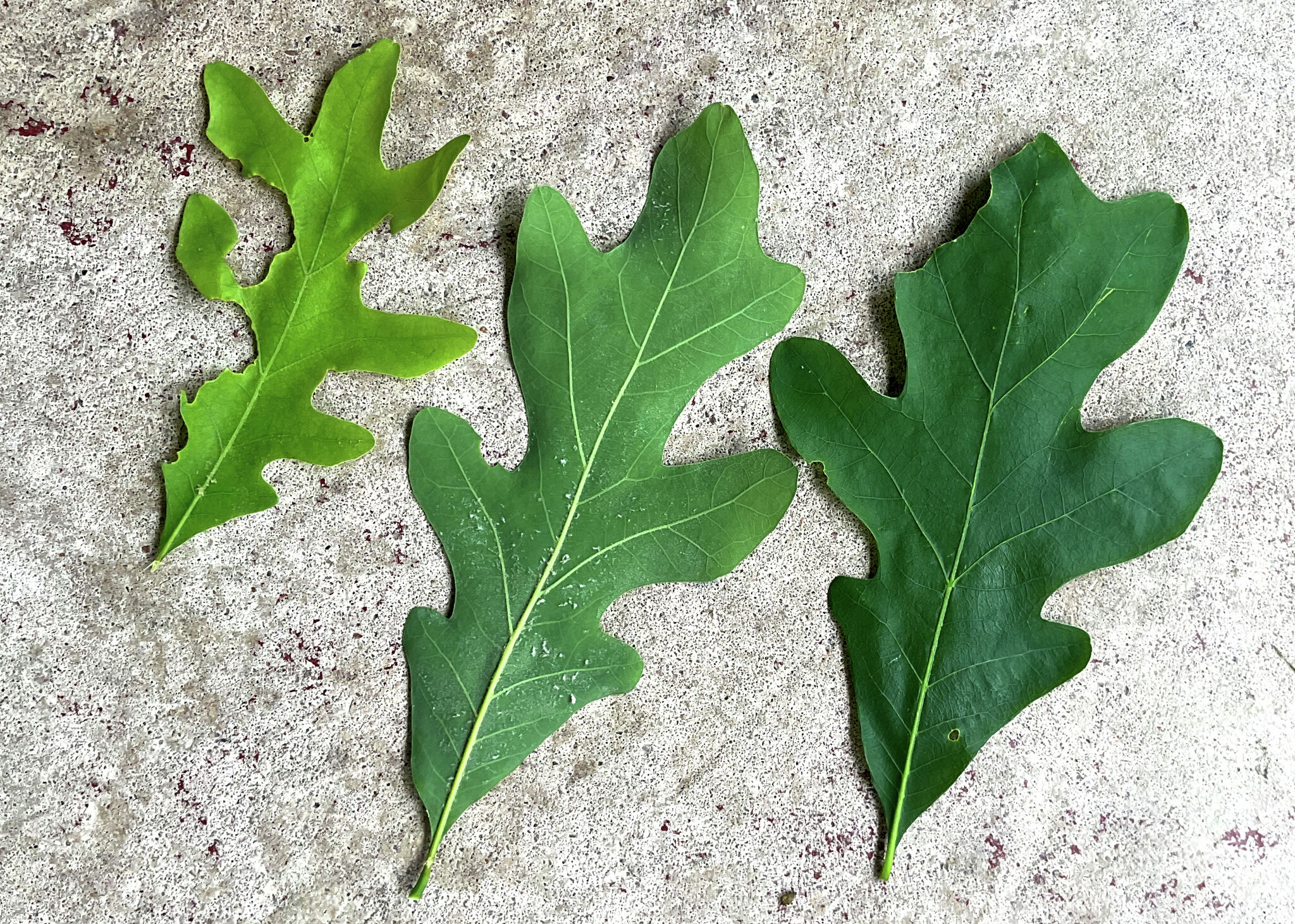
Oak leaves were likely nibbled by a caterpillar and shouldn’t pose a problem for the tree.
Courtesy photo
Q: Our oak tree was planted by our daughter 15 years ago. I hired an arborist to trim it last fall. While they did paint the cuts as they were supposed to, this spring when the tree leafed out its leaves didn’t look right. The new leaves didn’t have the pink tint I usually see. They’re also being eaten. What should I be doing to help our tree?
A: The unusual spring green-up was probably due to timing of a cold spell. Many of our plants behaved strangely. You had some kind of transitory caterpillar stop by for a few nibbles, but I don’t think it’s anything to worry about. You could apply Bacillus thuringiensis biological worm spray if you wished. It’s the best control, and it’s organic, so it presents no risk to you or your pets. Left alone without spraying I’m sure the tree will be fine if that’s your preference.
The bark on this red oak tree is splitting.
Courtesy photo
Q: The bark on our 45-year-old red oak is splitting, but only on the southwest side. Do you have any idea why this is happening?
Article continues below this ad
A: If you had said this was a 3-year-old red oak, I would have said that it was caused by sun scald. That often happens when a new red oak is planted without protection from the west or southwest sun. They have very thin bark that is easily hurt.
However, your tree obviously has much more bark and should not be vulnerable to sun scald. The cracking can be traced up to the two branches that were visible in one of your photos. Decay has set in, and it has moved right down the trunk. You need to get a certified arborist on the scene right away. They will have the proper training and tools and hopefully can save it. This doesn’t look good.
The bark is splitting on this red oak and decay is coming down from wounds. A certified arborist needs to examine the tree right away.
Courtesy photo
Q: My garden plants and even some of my weeds develop an above-ground kind of fungus. The leaves eventually turn brown and die. Do you have any idea of what this is and how I can control it?
Article continues below this ad
A: This is powdery mildew, an old nemesis for zinnias, older varieties of crape myrtles, many older roses, euonymus and dozens of other types of plants. With many types of plants, it causes puckering of the leaves and setback of spring and early summer growth. It can ruin the first round of blooms on crape myrtles, and it can disfigure rose blossoms. Other plants are barely bothered by it. In those plants where you want to eliminate powdery mildew, you’d do best to spray with a fungicide labeled for it. Repeat weekly until it’s brought under control. Good air circulation around the leaves of impacted plants will also help, plus you’ll also want to avoid late evening and nighttime watering.
This weed has powdery mildew.
Courtesy photo
Email questions for Neil Sperry to SAENgardenQA@sperrygardens.com.
Article continues below this ad
Comments are closed.