
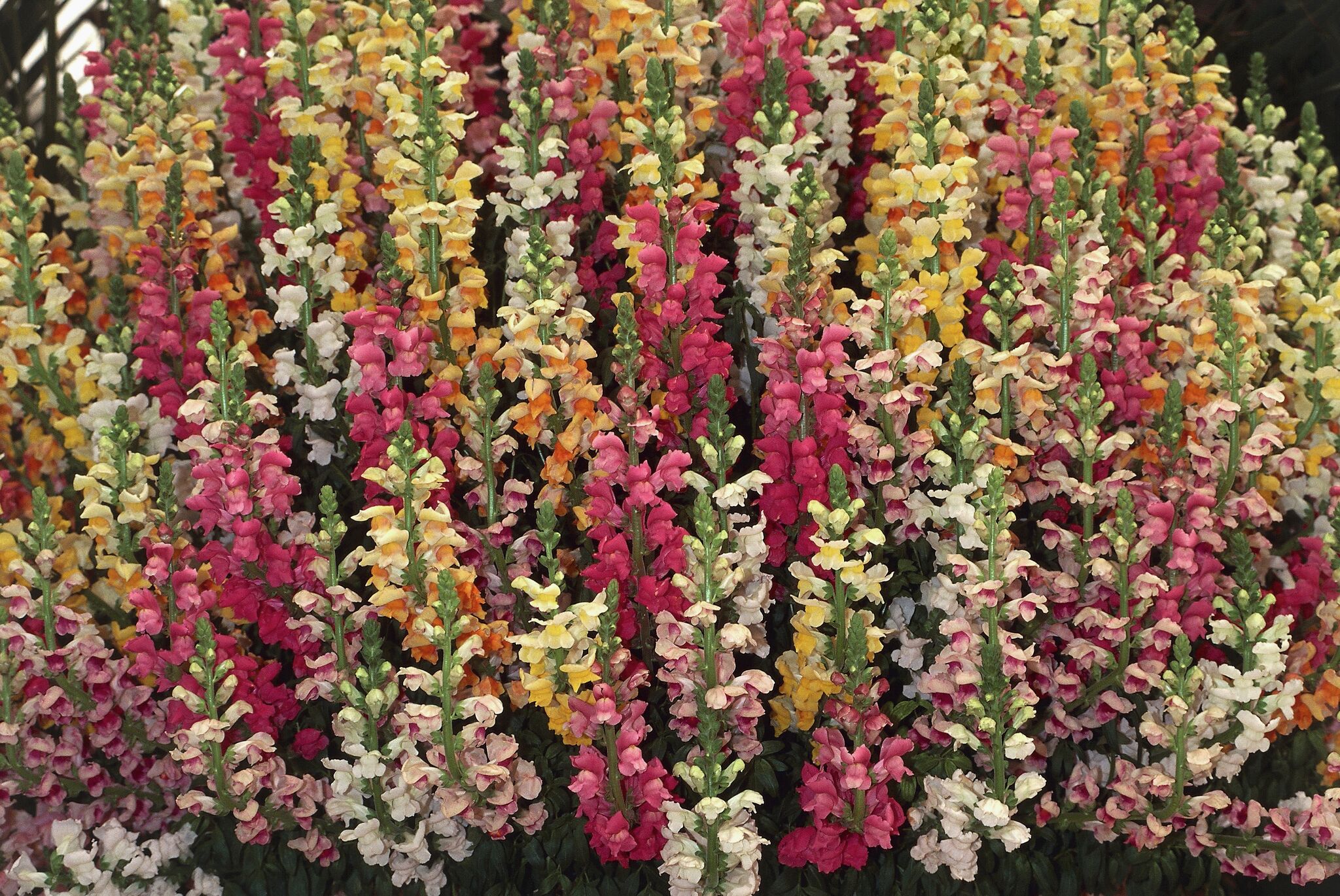
Despite our limited rainfall and hot weather this spring, we do have some exciting bloom situations.
A good show from snapdragons can be predicted after our usual January freeze, and this year, they are again fulfilling the promise. If you managed to obtain some of old-fashioned Rockets, they are especially spectacular with their deep reds, oranges, yellows and whites in tall bloom stalks over their containers and rows in the cut flower garden. I always debate about whether to pull the freeze-injured snapdragons in favor of zinnias, and this year I am especially glad I didn’t — even if it means migrating monarch butterflies will have to do without some zinnia nectar as they pass through this month on their way to the Midwest and Canada.
Pansies are still providing some color, but the winter annuals in the flower garden that are really helping the snapdragons decorate our landscapes are the calendula and sweet peas. The calendula, with their fresh new yellow and gold blooms, are fulfilling the claim of warming up the winter garden (even if we aren’t sure we always need any warming), and the sweet peas are providing intense colors and pleasant fragrances. Both also work along with snapdragons for indoor flower bouquets.
Concerning providing nectar for migrating monarchs, even if you temporarily sacrificed some space for zinnias to take advantage of the spring snapdragon bloom, blue curl planted as a wildflower in the landscape can fill the gap. They are growing in both the sun and the shade, and in addition to providing nectar for the monarchs, they are also attracting bees and hummingbirds. Collect some of the seed they produce for your neighbors to increase the neighborhood bounty next year.
If you have a thin soil situation and are in a neighborhood that didn’t get much rain, you probably have areas of bare soil where you used to have lawn grass. It is also a good bet that many of the areas have a very low growing wildflower producing a dime-sized lavender flower with three petals. It is not particularly showy, but it is widespread and interesting. Based on the information in my reference book “Wildflowers of Texas” by Michael Eason, I think it is called “hairy tube-tongue” (Justicia pilosella). I am curious about its natural history and how its seed was spread so widely. So far, I haven’t seen any black swallowtails land on the blooms for nectar, but I am expecting it. Is it in your landscape?
As a stark contrast to the “hairy tube tongue,” the pomegranates are also blooming. There are many different selections including very large plants (15 feet) and very small plants (18 inches), some are fruit producers and some are ornamental, but all produce a bright orange flower that is decorative over a long period (April into May). Pomegranates will survive in both sun and shade but produce blooms and fruit better in the sun. Deer do not usually eat the flowers or stems. Manage the growth by removing a portion of old stems from the base every year.
Primrose jasmine grows in a mounding shape to 6 feet tall that is covered with yellow, tubular blooms every spring. It prospers in the shade, and the deer do not eat it. It is a good landscape plant to use if you have a large shady area to manage.
Salvia greggii is also blooming now. It is an evergreen, shade-tolerant perennial that offers a wide variety of flower colors including red, violet, pink, yellow, white and even bicolor. It is a favorite nectar source of hummingbirds.
Comments are closed.