
When I was growing up, my mother was a fan of inviting a stranger to set-piece dinners. You never knew who was going to turn up for a Christmas eggnog or, indeed, any occasion. Initially I resented this, but it was a feeling that ebbed as the dinner continued and whole new worlds were explored with Stranger A or B.
I now realise how versions of this — the stranger, the unexpected guest, the gatecrasher — are essential in so many aspects of life. They bring intrigue and a sense of movement. A novel without any surprises would be a snooze, the same for any film or play. It’s also true of gardening and I am developing my own small theory about this.
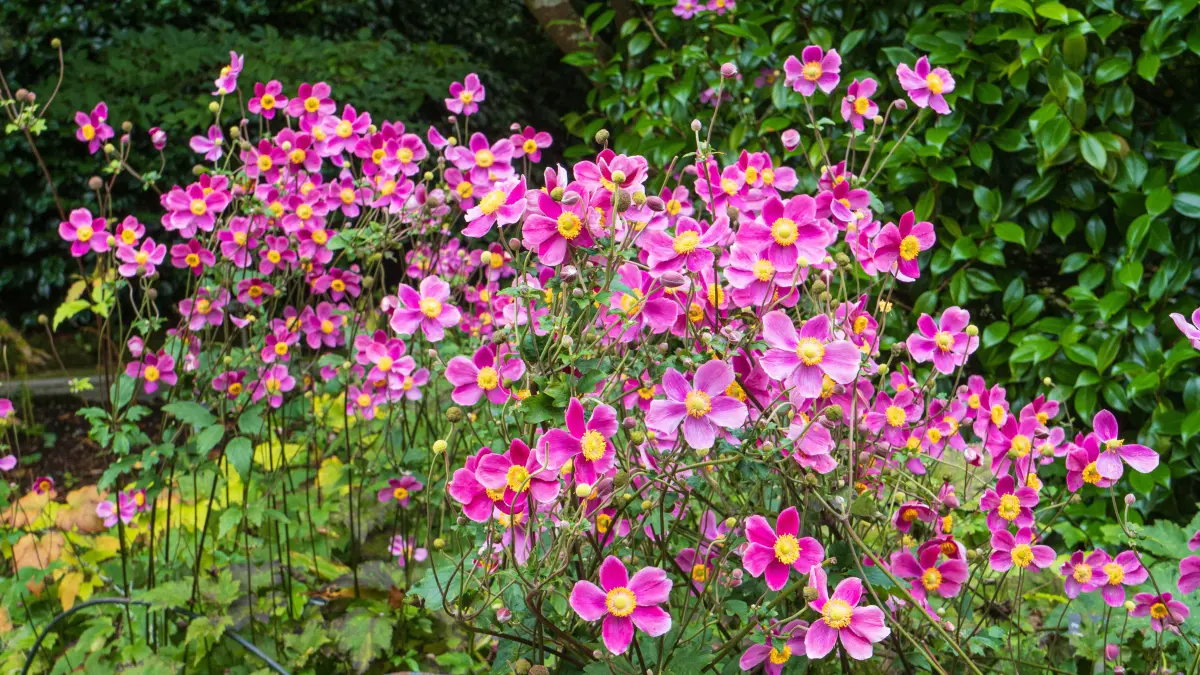
My Gatecrasher Theory of Gardening says that although we do, in theory, own our gardens, in reality they have their own ideas and perhaps we need to pay more attention to this. We all have our own persistent gatecrashers: mine have included green alkanet and garlic mustard, which seem oblivious to their weedy reputations. I’ve had a chestnut (as in tree) growing next to a rose in a container which, every year, produced just one full “handset” of leaves. Borage, poppies, feathergrass, nasturtiums and marjoram roam at will. Nettles always find the veg patch and Japanese anemones are forever restless.
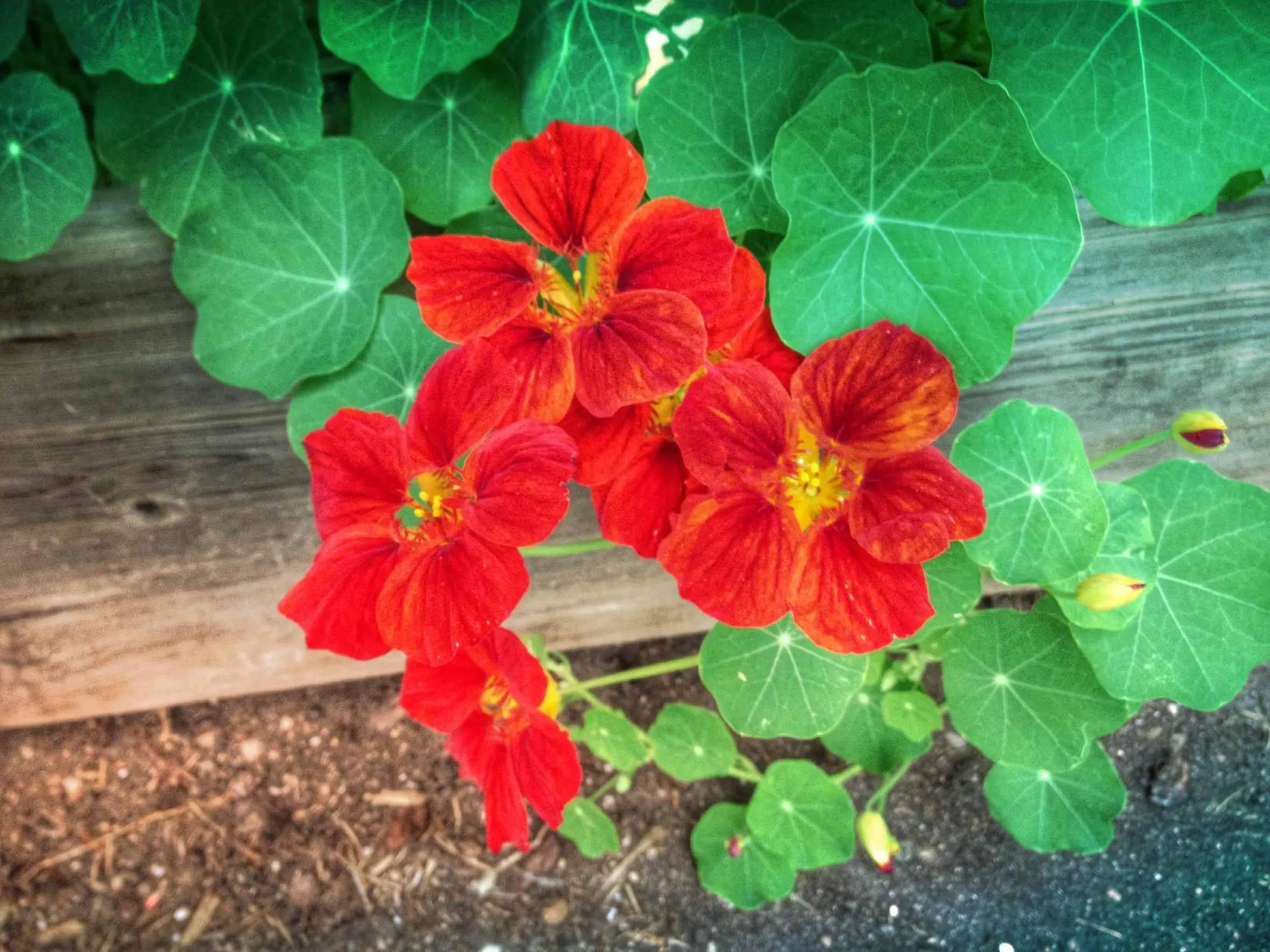 Red nasturtiums — another gatecrasherAlamy
For years I fought these uninvited guests, weeding and digging them out. I was attached to my planting plans and viewed most strangers as enemies. The garden paid almost no attention to me and carried on inviting incomers. For the past year, in my new garden, I’ve made myself wait to see which plants pop up. Over the winter I have procrastinated about making plans. I’m happy to say I’m over my “gardener’s block’, but the unusual concept — for me — of employing patience has resulted in a new attitude.
I had a minor epiphany earlier when I was at a garden centre choosing trees. I love birch, which is admirable for all sorts of reasons: it’s a pioneer that never minds being the first to arrive, its small green leaves are beautiful in the morning light and its white bark brightens up the winter scene. My plan was to buy three multi-stem birch and make my own little grove. It’s a fairly basic garden design idea to plant in threes, group trees together, create a living feature.
I found the trees, took them out of their rows, photographed them (I find this helps me “see” their shapes better). I was headed to get a cart when I found myself migrating to another section of trees. Later I realised I was (already!) bored with my safe little birch threesome. I wanted a gatecrasher, something different, to mix it up, create interest. I gravitated towards some fruit trees and found myself inviting a medlar to my little grove. Of course it doesn’t “go” with the birch — but that’s what makes it so much more interesting.
My garden is home to many intriguing gatecrashers at present, including hellebores, a mystery clematis and an enthusiastic rose that was a birthday gift, a whole different category of gatecrasher. There’s a heather in my bay tree (sounds like the title of a book, doesn’t it?) and a foxglove in my hostas. Mexican fleabane is everywhere. I note with something near pride that on my green roof a lilac has self-seeded. It’s very stunted and I almost ripped it out, but then thought that it was so plucky trying to grow there that I would leave it be. I am my mother’s daughter: the strangers are being invited to the party and I am (mostly) pleased.
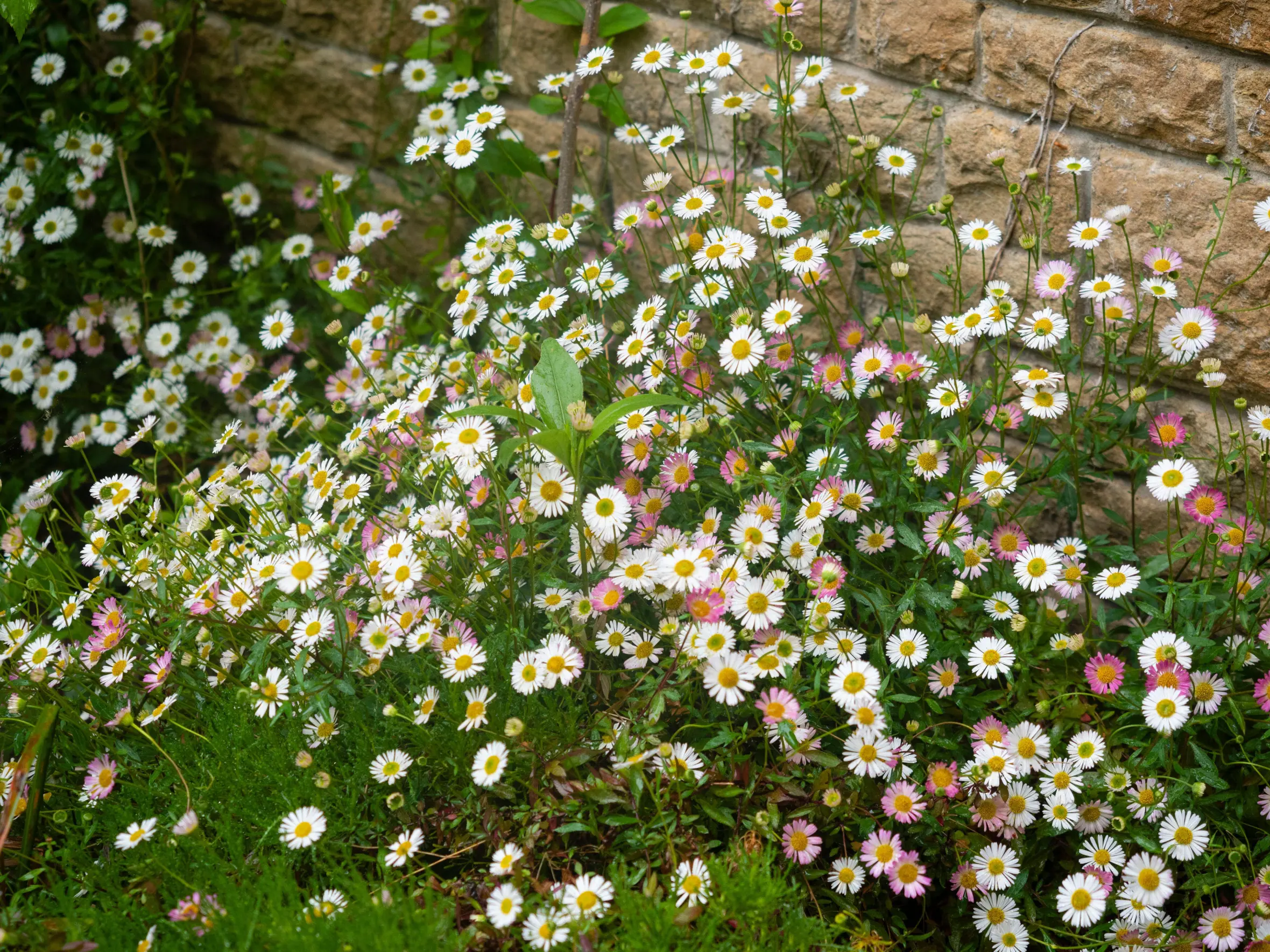 The small white and pink daisy flowers of Mexican fleabaneAlamy
Gardener’s question
Q. My 50-year-old camellia tree has been in full bloom this year, with a succession of attractive white flowers. However, after lasting for just a few days each flower assumes a rusty colour and falls away. What is the likely cause and how to prevent this?
Douglas Grubb
This is most likely camellia flower blight, caused by the fungus Ciborinia camelliae. It was first found here in 1999 and is increasingly common. The flowers develop brown spots that spread across the petals until the flowers fall. There is no chemical solution and your battle strategy is to concentrate on interrupting the fungal life cycle.
When the flower falls, raisin-like structures (sclerotia) at the petal base remain in the soil. In spring these produce mushroomy growths called apothecia, which release clouds of fungal spores upwards to infect the (new) flowers. Fight by removing all fallen or affected flowers. In autumn disturb the soil underneath to destroy the sclerotia. Another, admittedly drastic, option is to plant autumn-flowering camellias instead.
Send your garden queries to gardenquestions@thetimes.co.uk
Comments are closed.