
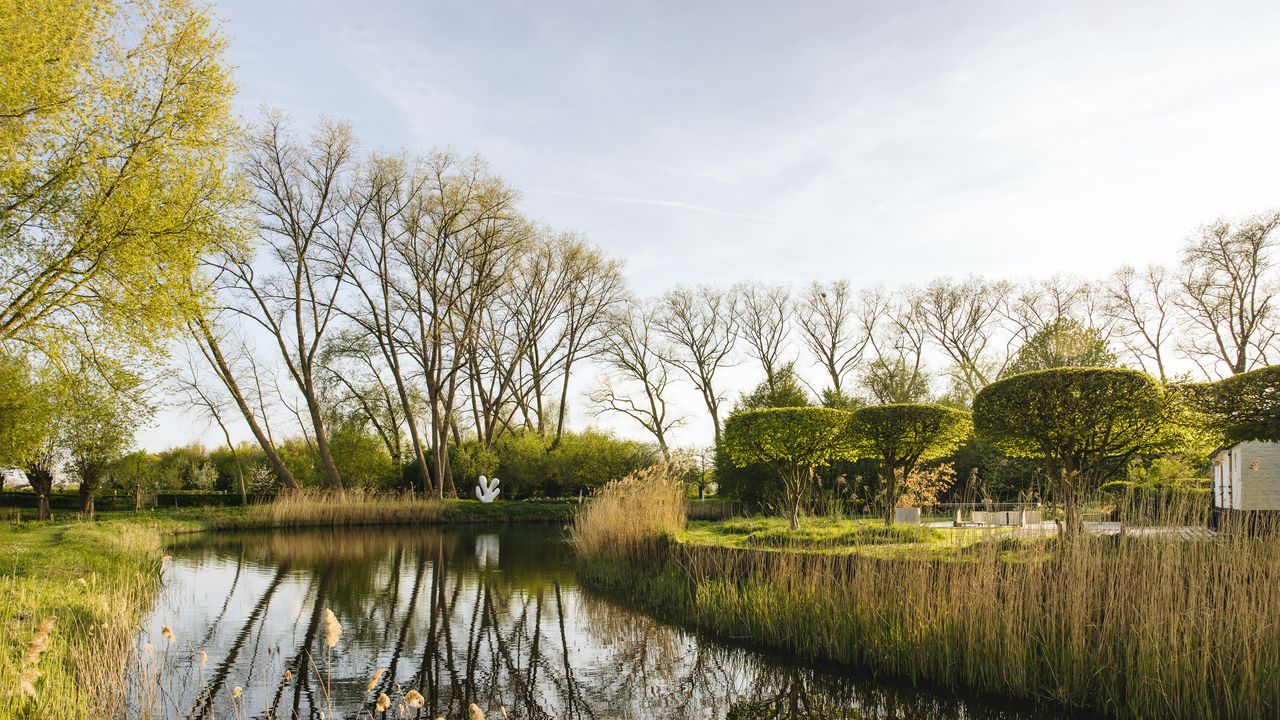
Most gardens look the same in Flanders. Clipped and formal, they are predominantly green, with neat hedges and topiary giving a sense of finely tuned structure and control. In total contrast, the garden of Bonem Hoeve, near Damme, is not remotely influenced by this local idiom. In fact, it is the very antithesis of other gardens in this area of Belgium, with 39 hectares of land designed in a free-flowing way, shaped by art as well as nature. Surrounded by moats and waterways, this fortified farmstead dates back to the 13th century, when nearby Bruges was connected to the sea by a natural inlet, the Zwin river. Today, at the centre of the property, an unassuming cluster of attractive, white-painted farm buildings is set on what is essentially an island, isolated yet reassuringly secure in this watery landscape.
When Marc Ooms bought Bonem Hoeve in 2005, he commissioned the Belgian landscape designer Erik Dhont to help him reimagine the land around the buildings to give it more structure and shape. Erik opened up waterways, planted architectural avenues of trees and designed a new vegetable garden and greenhouse. He also introduced monumental topiary frames, initially conceived for yew, but now used to train hornbeam into a series of abstract, blocky shapes. These living sculptures echo the extraordinary pieces that Marc collects from artists such as Richard Long, Antony Gormley and Claudia Comte, which are carefully placed in this tranquil setting to enhance vistas and create focal points.
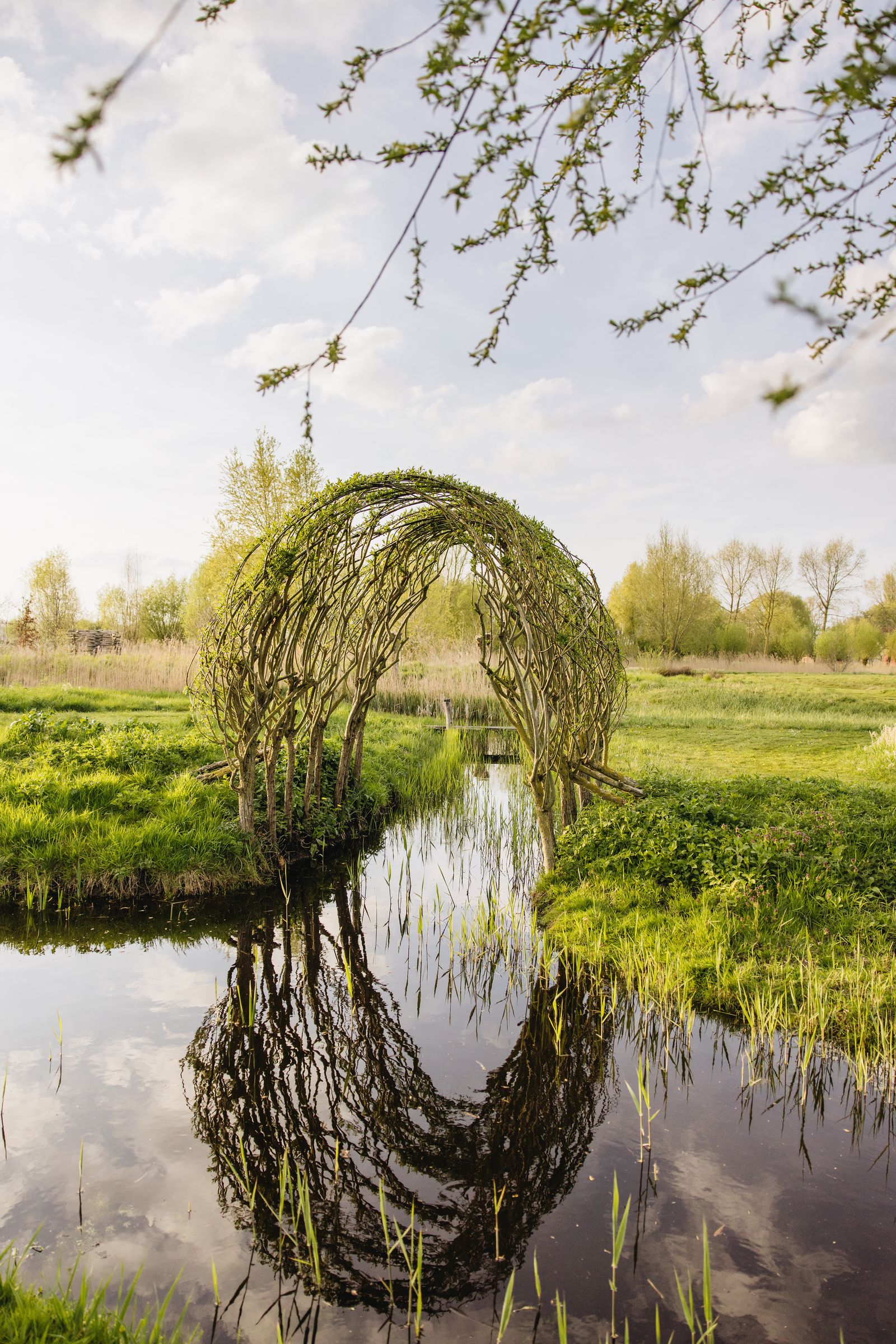
Perfectly reflected in the water, a living willow arch extends over a drainage canal in the pasture beyond the moat, which is gradually being regenerated.
Eva Nemeth
Since 2012, the garden has evolved further under the eye of head gardener Gijsbert Smid who has not only continued the artistic direction of the garden by introducing surprising new elements, but turned it into a haven of biodiversity as well. With a background in organic farming and gardening, Gijsbert also studied art for a short time in Antwerp and the job here has allowed him to tap into these various areas of expertise. Since he started, more of the surrounding pastureland has been acquired, which Gijsbert is slowly allowing to regenerate. Wildflowers are now returning and thickets of native shrubs and trees, such as hawthorn, birch, field maple and willow, encourage a huge diversity of bird and insect life.
Comments are closed.