
All of us who like to garden have heard of “Tulipmania,” the craze that took hold in the Netherlands in the 1630s, when tulips were rare, newly imported from the East. Their arrival coincided with broadening prosperity that made having one’s own flower garden fashionable, and people paid ridiculous prices to get particular bulbs. Historians have debunked the idea that Dutch society fell apart when the tulip bubble burst. But there’s no doubt things got frantic for a couple of years. The stories always made me sure that I, for one, would never be that kind of fool for a flower.
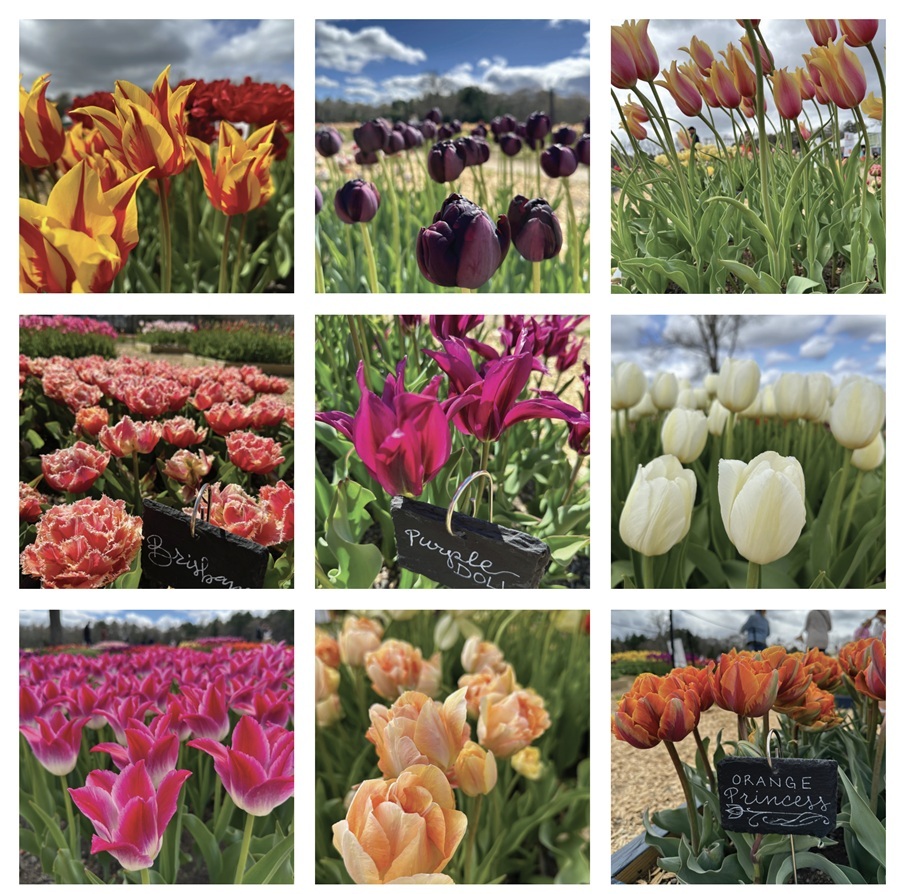 Standing amid the colorful blooms at a Wicked Tulips field in Rhode Island was a singular experience for the writer: “I swear it changes brain chemistry. For the better.” (Photos by Dan Stephens]
That is, until last spring, when I found myself staring into the mesmerizing face of a Red Saigon tulip, its blood red petals hiding an inner glow of iridescent blue. I was standing in the middle of the Exeter, R.I. tulip fields owned by Keriann and Jeroen Koeman. (This year, the couple’s Wicked Tulips website says that they have planted an “enormous field” in a new location in North Kingstown with 112 different varieties of tulips; they also grow tulips in Connecticut.)
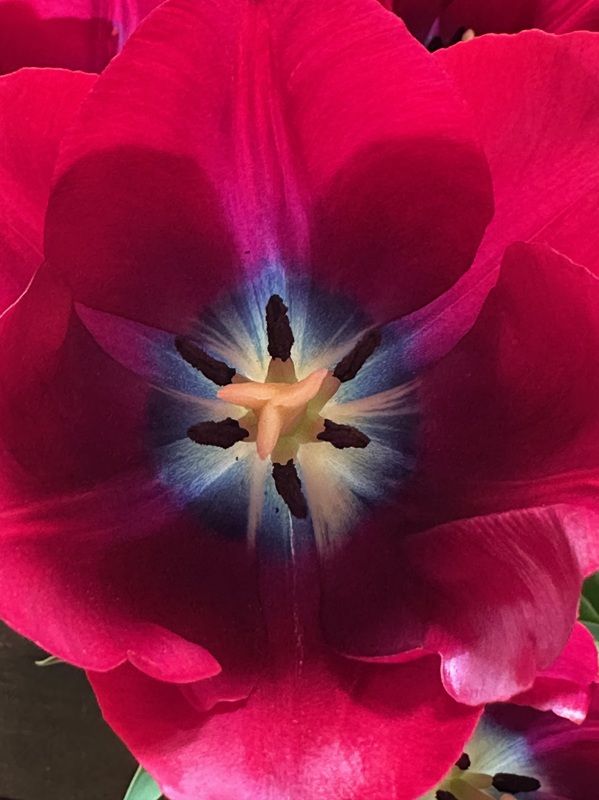 Once home, Red Saigon tulips open to reveal an iridescent blue inside.
I’d put this place high on my list after hearing about it from a friend years ago. I’m making another road trip this year because nothing quite compares to the singular experience of being surrounded by thousands of these ephemeral ambassadors of spring. I swear it changes brain chemistry — for the better. It’s the closest thing we in New England will ever have to those amazing wildflower superblooms in southern California or the poppy fields of Oz.
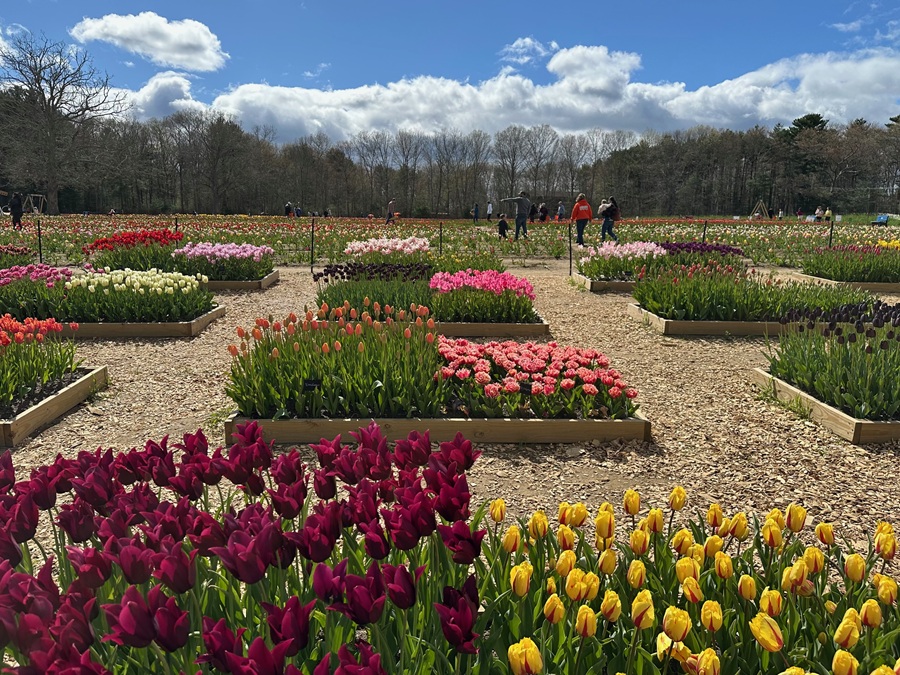 The display garden in bloom at the Wicked Tulips field in Exeter, R.I. last year. Behind it are the rows where pick-your-own stems can be pulled.
You can pick your own tulips to bring back home (but not from the display gardens) or simply be among the flowers and fellow tulip enthusiasts. The Koemans also sell tulip bulbs to be delivered and planted in the fall. Pay attention to what already might be blooming in your spot: contrasting colors offer pizzazz, exuberance, and, not infrequently, chaos, whereas similar colors create harmony.
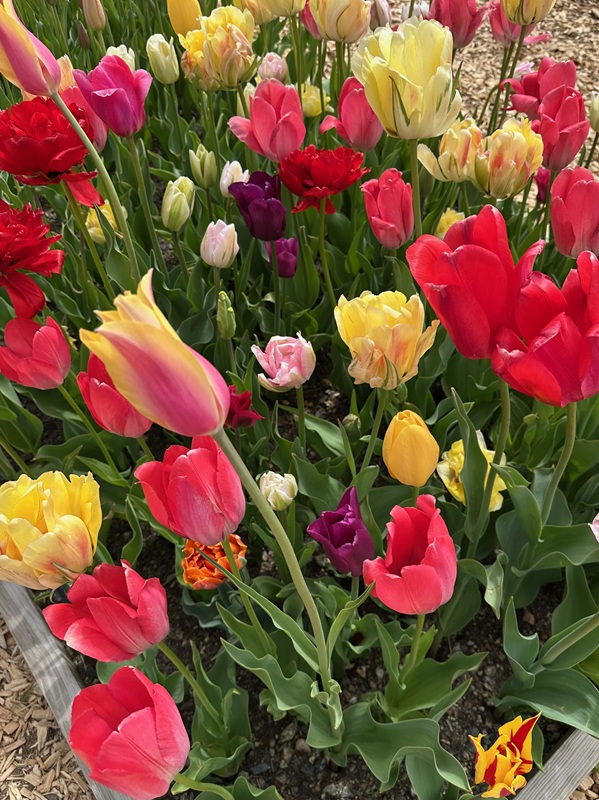 Contrasting colors can lend exuberance as this mixed patch of tulips does, though they can also look chaotic. Which is why it’s good to be conscious of the colors near where you’re planning to plant your tulips.
The tulip has a long and storied history and not surprisingly has changed its look along the way. Centuries of genetic manipulation have transformed the flower from its original delicate self to the colorful showstoppers of today.
Still, I like to think of the tulip before we humans came around, minding its own business, growing in vast swaths on mountainsides and in grassy fields in the steppes of central Asia, bending with the wind, making pollen for bees, creating its own beauty merely for the sake of the larger web of life.
Before You Go
The fields are in bloom from approximately mid-April until mid-May, but open days are weather dependent. Check the com website before you go.
Advance tickets are required. Weekday entry is $24.95; weekends $29.95;10 tulip stems to bring home are included in the price of admission.
No pets except service dogs are allowed in the fields.
No need to bring scissors: they want you to pull the stem up from its base while the bulb stays in the ground (it works).
The Red Saigons I chose to bring home were still green with only their red tips showing when I pulled them; that gave me a good two weeks of watching the blooms open and evolve.
Bring a bucket of water to keep your selections happy on the way home. The farm offers instructions on caring for them.
You might stay longer than planned. Bring a little extra cash to spend at local food trucks.
Weekends are busy. Go on a rainy day during the week and you may almost have the place to yourself.
Comments are closed.