
First cut is the deepest
Sigrie Kendrick – Apr 8, 2026 / 11:00 am | Story: 607557
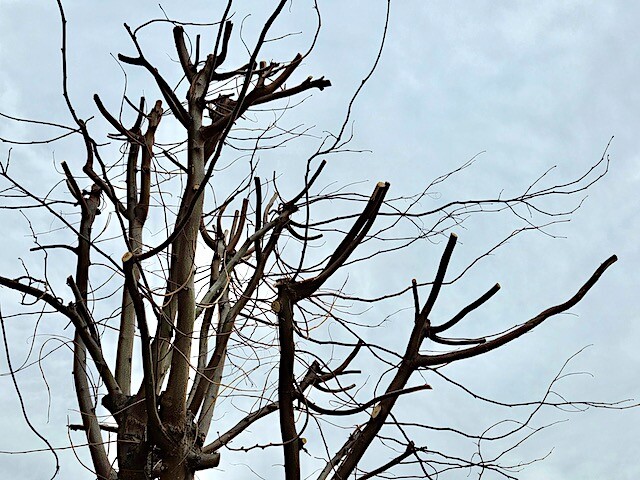
Photo: Sigrie Kendrick
This pruning job is a disaster on many levels, says Sigrie Kendrick. She says do not prune like this.
Pruning is one of those garden tasks where good intentions can go badly wrong, with long-term consequences.
The difference between a thriving specimen and a struggling one often comes down to how, when, and where you make your cuts.
There is a certain satisfaction in a well-pruned tree or shrub—clean lines, healthy growth and the quiet assurance that you’ve done right by your plants.
Pruning serves several purposes. It removes dead, diseased or damaged wood before problems spread, it shapes plants for aesthetic purposes and to fit their space and it improves air circulation and light penetration throughout the canopy, which reduces disease pressure.
For flowering and fruiting plants, strategic pruning can dramatically improve production. Understanding your goal before you pick up the shears is the first step toward pruning success.
One of the most common mistakes gardeners make is pruning at the wrong time of year. As a general rule, most trees and shrubs benefit from late winter or early spring pruning, just before new growth emerges.
At this point, the plant’s energy is about to surge upward, which means wounds close quickly and new growth follows soon after.
Spring-flowering shrubs such as Lilacs, Forsythia, and pruning group A Clematis are the key exceptions. These plants set their flower buds on wood produced the previous year, so pruning them in late winter removes the blooms before you ever get to enjoy them.
Instead, prune these immediately after they finish flowering in spring, giving them the rest of the growing season to develop next year’s buds.
Summer-blooming shrubs like Blue Mist Spirea (Caryopteris x clandonensis) and Rose of Sharon (Hybiscus syriacus), on the other hand, bloom on new wood produced in the current season. These can be pruned in late winter without sacrificing flowers.
Proper cut placement is essential to plant health. Always cut just outside the branch collar, the slightly swollen area where a branch meets the trunk or parent stem.
This collar contains specialized tissue that helps seal wounds, and preserving it gives the plant its best chance of recovery. Cutting flush against the trunk removes this tissue and leaves a much larger wound that is slower to heal.
For small branches, cut at a 45-degree angle just above an outward-facing bud. This angle sheds water away from the bud and encourages growth to spread outward rather than crowding the centre of the plant. Use the sharpest tools you can maintain. Clean, sharp cuts heal far faster than ragged, torn ones.
Bypass pruners are preferable for live wood, as they slice cleanly rather than crushing the stem.
Sterilize your tools between plants, especially when dealing with diseased wood by using a solution of rubbing alcohol or diluted bleach. This simple step prevents you from spreading pathogens from one plant to the next.
Don’t top trees. Topping, the drastic cutting back of main trunks and large branches to stubs, is one of the most harmful practices in all of horticulture.
Topping creates massive wounds the tree often cannot seal properly, invites decay and disease, and triggers a flush of weak, fast-growing shoots that are poorly attached and prone to breakage in storms.
A topped tree is structurally compromised and rarely recovers its former health or form. If a tree has outgrown its space, consult a certified arborist about crown reduction or removal.
Don’t remove more than one-third of a plant at one time. Heavy pruning stresses plants severely. Removing too much foliage at once reduces the plant’s ability to photosynthesize and can trigger a panicked, weak regrowth response.
Spread major corrective pruning over two or three growing seasons if a plant needs significant reshaping.
Don’t leave stubs. Cutting too far from the trunk or parent branch leaves dead wood that decays back toward the living tissue, opening a pathway for disease. Every cut should have a clear purpose.
Don’t prune in the fall. Late-season cuts stimulate tender new growth that won’t have time to harden before frost. This new tissue is vulnerable to cold damage, and the wounds themselves may not close before winter sets in.
Don’t ignore your tools. Dull, dirty tools spread disease, crush rather than cut and make the job harder than it needs to be. Sharpen blades regularly and clean them after every use.
Pruning rewards patience and observation and it is often beneficial to take a step back and view your work from afar. Before every cut, ask yourself why you’re making it.
Tip pruning, when your landscaper uses a hedge trimmer to create a geometric shape out of a gracefully-weeping shrub, it should be strongly discouraged.
A thoughtful approach, right plant, right time, right cut, keeps your trees and shrubs healthy, beautiful, and thriving for years to come. When in doubt, cutting less is almost always better than cutting more.
Go to www.okanaganxeriscape.org to stay up to date with everything Xeriscape. Consider joining the Dig with Sig team in the demonstration garden, between 9 a.m. and 11 a.m. on Friday to gain hands on knowledge of best pruning practices.
Sigrie Kendrick is the executive-director of The Okanagan Xeriscape Association.
The association is grateful for the ongoing financial support of the Okanagan Basin Water Board and proud to be collaborating on the Make Water Work campaign. Check out the Make Water Work plant list at makewaterwork.ca.
This article is written by or on behalf of an outsourced columnist and does not necessarily reflect the views of Castanet.
Comments are closed.