
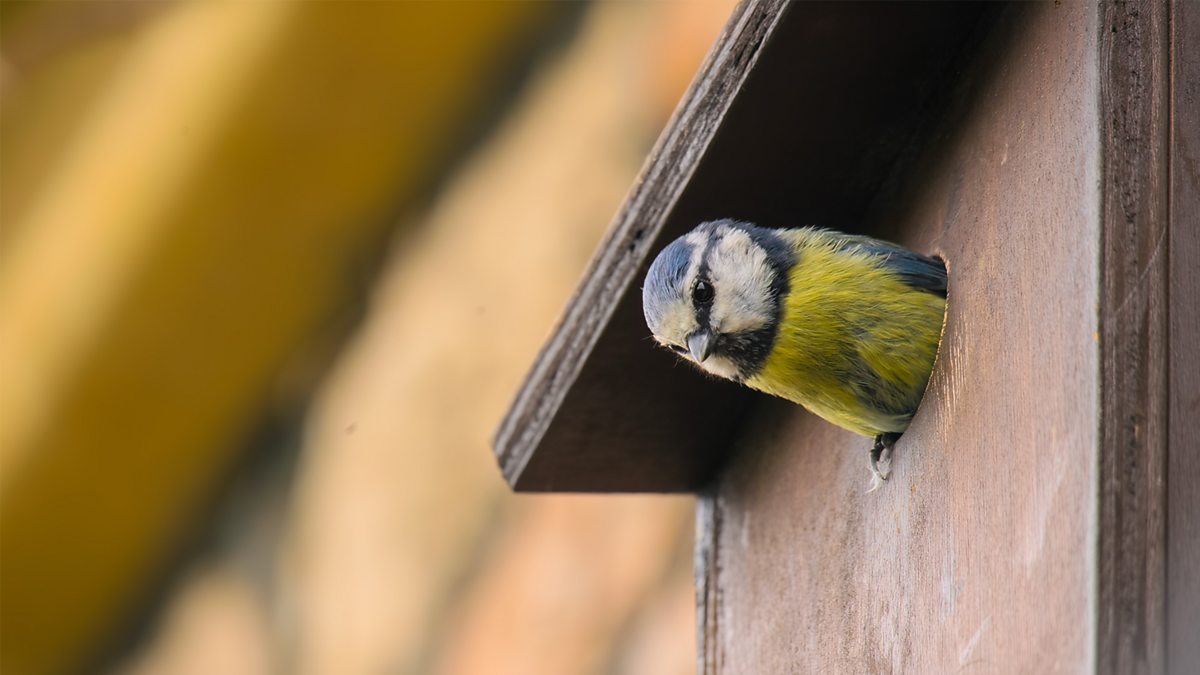
The answer is complicated – and the RSPB is currently updating its advice). Hanging bird feeders undoubtedly help blue tits survive harsh winters, when natural food sources are scarce – the spike in garden bird populations during winter months is testament to their value. But certain feeders can have a detrimental effect on other species. Greenfinches and chaffinches have declined by 67% (1967-2023) and 37% (2011-2021) respectively, due to a disease spread through bird tables and bird baths. As a result, greenfinches have been added to the UK Red List of birds of conservation concern.
The RSPB now recommends that gardeners feed in moderation, avoid using flat surface feeders (e.g. bird tables) and only use hanging feeders with good drainage that are cleaned at least weekly with mild disinfectant solution.
In addition, Dr Domioni’s research (backed up by our footage) suggests that feeders may also be luring birds into staying in urban areas that cannot support them during the breeding season.
But there are counter arguments. Feeding and watching garden birds provides a huge benefit for our mental health. And the more people engage with and care about garden birds, the more likely they are to take the steps needed to support them. Moreover, as hedgerows and woodland continue to disappear from the countryside, gardens and urban green spaces may be becoming an increasingly important refuge for birds that have nowhere else to go.
“The key is to combine bird feeding with habitat creation,” says Davide. “Put up feeders – so long as you disinfect them regularly – but also plant native trees and shrubs. Create the caterpillar-rich environment that makes breeding success possible, rather than just offering a winter lifeline”
Our cities were built for people. But they don’t have to be only for people. The sole survivor of our blue tit brood may have flown off into a world that, for now, isn’t quite ready for it. But with a few more native plants and a little less paving, that could change.
That flash of blue at the winter feeder is a small, brilliant thing. It would be a shame to lose it.
Comments are closed.