
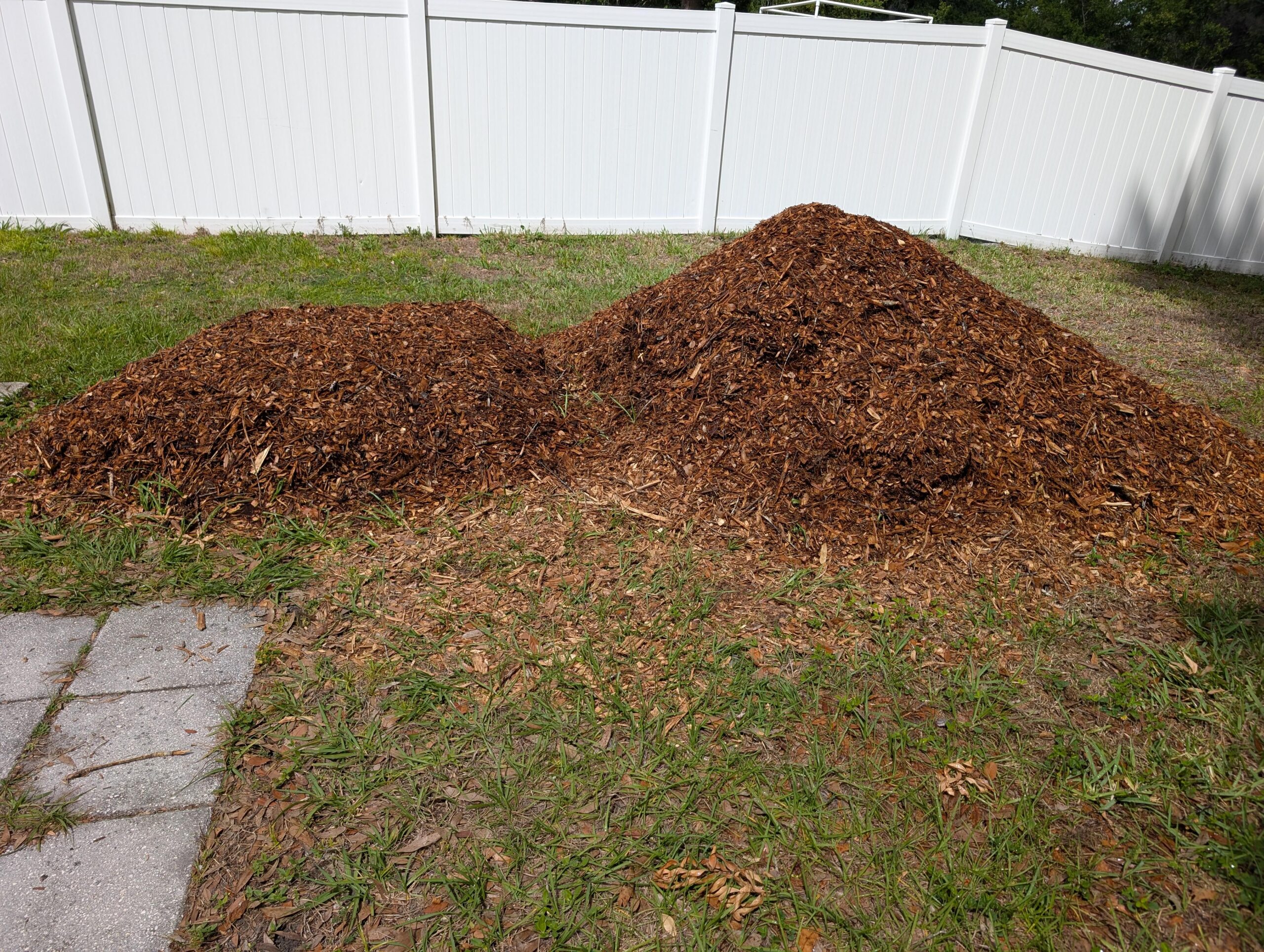
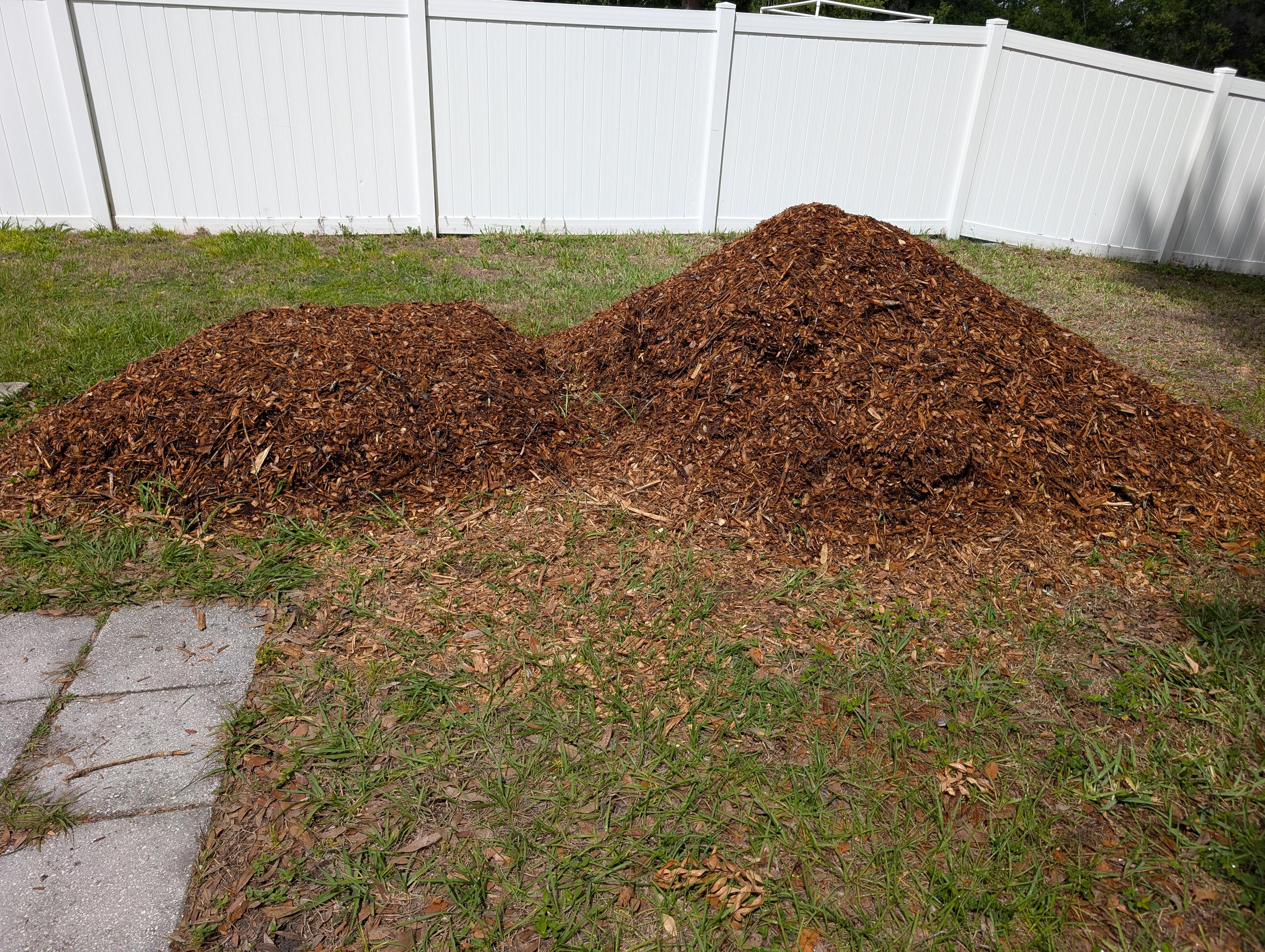
Pile on the right is just arborist chips, runs around 90 during the day as a control. The pile on the left is what I'm working on. About 1/4 coffee grounds and household fruit and veggies scraps and 3/4 arborist chips. Left pile has been steady about 120 for a week, when I started measuring the temp. The top dries out and I water a bit every other day or so, but maybe 2 inches down it's slightly more than damp.
Keep doing what I'm doing? I've seen here turn when the temperature drops. How much of a drop am I looking for? And yes, I know more pee.
by davaston
7 Comments
All depends on your goals, and what you want to use the end product for (and when). If you want something sooner rather than later, turn and then continue to give it a toss every other day or so.
You could stand to stack it a bit higher, or maybe top the whole thing off with a nice thick layer of the arborist chips from the pile on the right.
Turn it once a week. Or whenever.
Compost happens. You don’t have to do anything and it will form over time. Given you made these piles right in the middle of a lawn, I’m assuming you want to move the finished compost somewhere and are looking for to accelerate the process? If so, a deeper bin may help.
I had great success last year flipping basically everyday. I also was able to get about a 50-50 ratio using leaves and grass clippings (and kitchen scraps). That brought my temps steady between 130 and 170 for a few weeks. After that I deemed it good to go. Did that for a few batches so my experience is to get a good ratio ASAP and turn everyday or so for a month. Without the 50-50 ratio, my best guess is keep it damp, turn every couple weeks and you’ll have it ready in about a year.
There are a few studies indicating turning isn’t as beneficial as we think.
– Oxygen levels return to pre-turn in as little as 20 minutes
– Turning releases nitrogen, which are nutrients lost from your finished compost
– Turning releases other gases (which would’ve been sequestered), namely water vapor (important), but also emissions like methane
– Turning cools the pile
– Turning spreads existing hyphae & colonies (can be good, but also disruptive)
– More likely to demotivate quality composting (assuming you feel turning is a chore)
The frequent mixing does speed up the compost process (see Berkeley Method), but loses considerably more nutrients in the process. If your goal is simply quick waste management, frequent turning might be optimal. If you’re compost for the environment’s benefit, it’s not preferred.
My suggestion: turn as little as needed. To ensure aeration, use:
– Bulking agents (thick, long-term carbons like wood chips and twigs) mixed in. This keeps structure, and allows oxygen channels
– Space between floor & compost bottom using large carbons like sticks
– (If you plan to cover), use a lightweight carbon, like a thin wood sheet
You could also consider static aeration, by putting tubes (ideally vertical, but low horizontal works too) through the pile. This is generally preffered for larger hot compost piles, where mechanical turning would be very time/energy intensive.
I would just let it sit, wood chips is a really long and slow process. Keep it moist. Consider a tarp to prevent it from drying up.
I would mix in / bury nitrogen rich material / kitchen waste, and after a year or two, sift out some useful compost and let oversized wood chips remain another year.
120 is pretty great, you are doing good.
Do you have any reason you wanna go hotter?
If you add weeds or seeds or anything untoward you will kill off anything untoward with 145°F (about 63°C) for several days.
USDA Guide to Composting Dog Waste (thanks to /u/bbbliss for the link)
temperature depends on the C:N level:
more greens are needed for higher temps in an aerobic pile but typically you encounter issues with more greens if you don’t turn regularly. The greens have more moisture and are less fluffy.